ع
ع


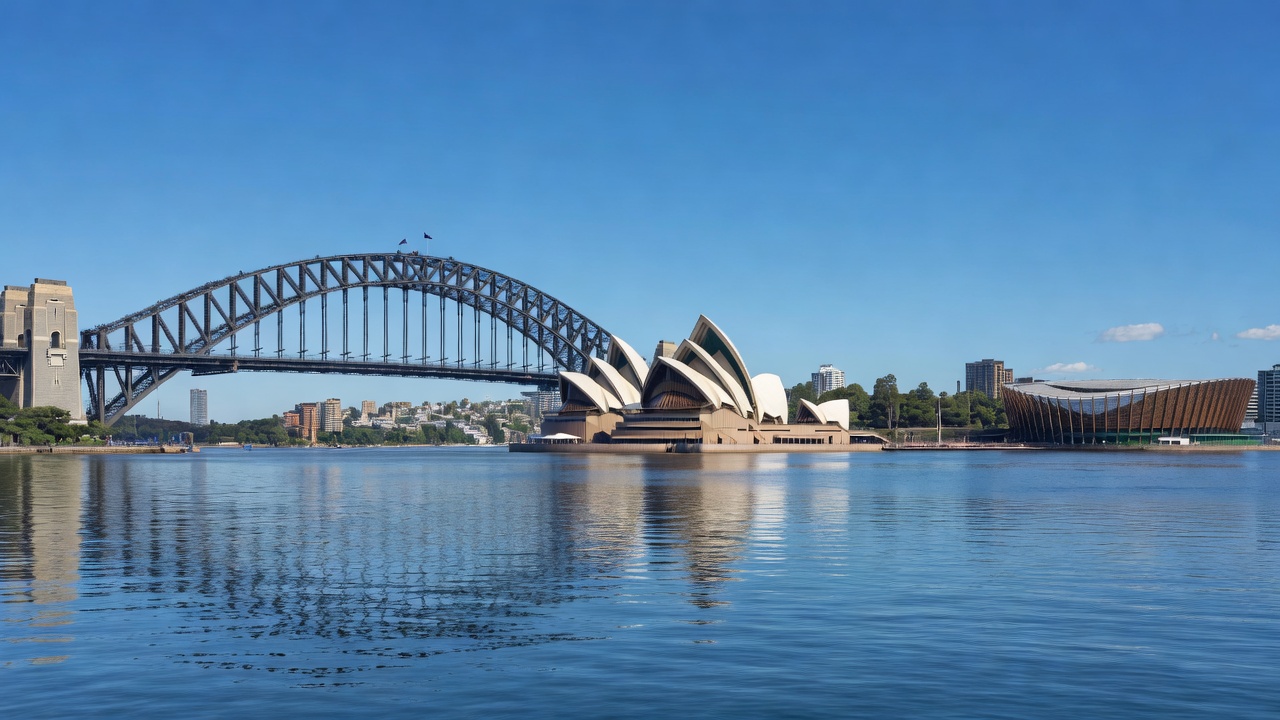
The official social media account for the TCS Sydney Marathon unveiled the design for the 2026 participation medal this week, prompting immediate questions after runners noticed that one of the depicted landmarks appeared to be Munich’s Allianz Arena rather than the Sydney venue the course passes. The circular medal includes an image in the bottom right that matches the German stadium’s distinctive diamond-shaped inflatable cushions instead of the local Allianz Stadium’s flatter façade with bronze fins, according to reports from both BBC News and 7NEWS.[[1]](https://7news.com.au/sport/athletics/sydney-marathon-makes-embarrassing-medal-design-error-c-22762275) Organisers had invited viewers to examine the details closely to see the story of the 42.2-kilometre course, which begins at the Sydney Harbour Bridge and ends at the Opera House.
First Nations artist Ambrose Killian created the gold and indigo pattern featured on one side of the double-sided medal, but he told BBC News that he bore no responsibility for the other artwork. The edge of the medal carries 42 half-round markings that represent each kilometre of the route, a detail provided in the organisers’ own description of the piece. No immediate comment has emerged from the Sydney Marathon team despite outreach from multiple outlets seeking clarification on how the mix-up occurred.
Social media reactions began positively before users began pointing out the discrepancy, with one commenter asking whether one of the buildings was in fact the Allianz Stadium in Munich and another responding that it was and calling the error part of running history, 7NEWS reported. The account’s post had described the design as capturing a beautiful Sydney skyline with the landmarks participants would encounter, yet the incorrect stadium image quickly became the focus of online discussion. Similar design errors have surfaced in other prominent running events, including last year’s Great North Run where finishers received medals showing the wrong city and river.
The 2026 edition comes as the event continues its rapid growth after joining the Abbott World Marathon Majors series, with more than 123,000 runners entering the ballot, a 56 percent increase on the prior year according to Destination NSW data. The 2025 race, the first as a full Major, saw 32,963 finishers from 117 countries cross the line, building on a 400 percent rise in participation since 2022 when the event had around 5,000 entries. Hundreds of thousands of spectators lined the course last year, contributing to record charity fundraising that exceeded $9 million for that edition alone.
Sydney first hosted a marathon in 2000 as a test event for the Olympic Games and has run annually since as a legacy of those Games, according to state government records. The New South Wales government backed the successful three-year candidacy that led to the announcement in November 2024 that Sydney would become the seventh Major alongside Tokyo, Boston, London, Berlin, Chicago and New York. This status has elevated the event’s international profile, drawing participants from more than 100 countries and positioning it as one of the fastest-growing marathons worldwide.
Event organisers have not yet detailed whether replacement medals will be produced or if the current design will be distributed as is to the expected 40,000 participants on August 30. The medal forms a lasting keepsake for runners who complete what has become one of the most visually striking courses in the Majors series. Past logistical issues with medals at other Australian events, such as delayed shipments for the Sunshine Coast Marathon earlier this year, have underscored the scrutiny these items receive from the running community.