ع



The Student List has registered 250 candidates, drawn largely from academics, artists and civil society figures vetted through citizens’ assemblies, for the parliamentary vote set for Sunday. Multiple polls in recent weeks have shown the race tightening, with some surveys indicating the movement could secure enough support to form a viable opposition bloc against the long-dominant Serbian Progressive Party. According to a Guardian report published this week, neither side appears prepared to concede defeat, raising the prospect of post-election tensions in a country the publication characterised as an electoral autocracy.
The protests that gave rise to this political formation began on 1 November 2024 after a concrete canopy at the newly renovated Novi Sad railway station collapsed, killing 16 people. A Journal of Democracy assessment traced the tragedy to rushed construction involving a Chinese consortium and local subcontractors awarded contracts without competitive tenders, with President Vučić reportedly pressing for an early opening ceremony. Students initially demanded the release of all renovation documents, full accountability for those responsible and an investigation into subsequent police actions against demonstrators.
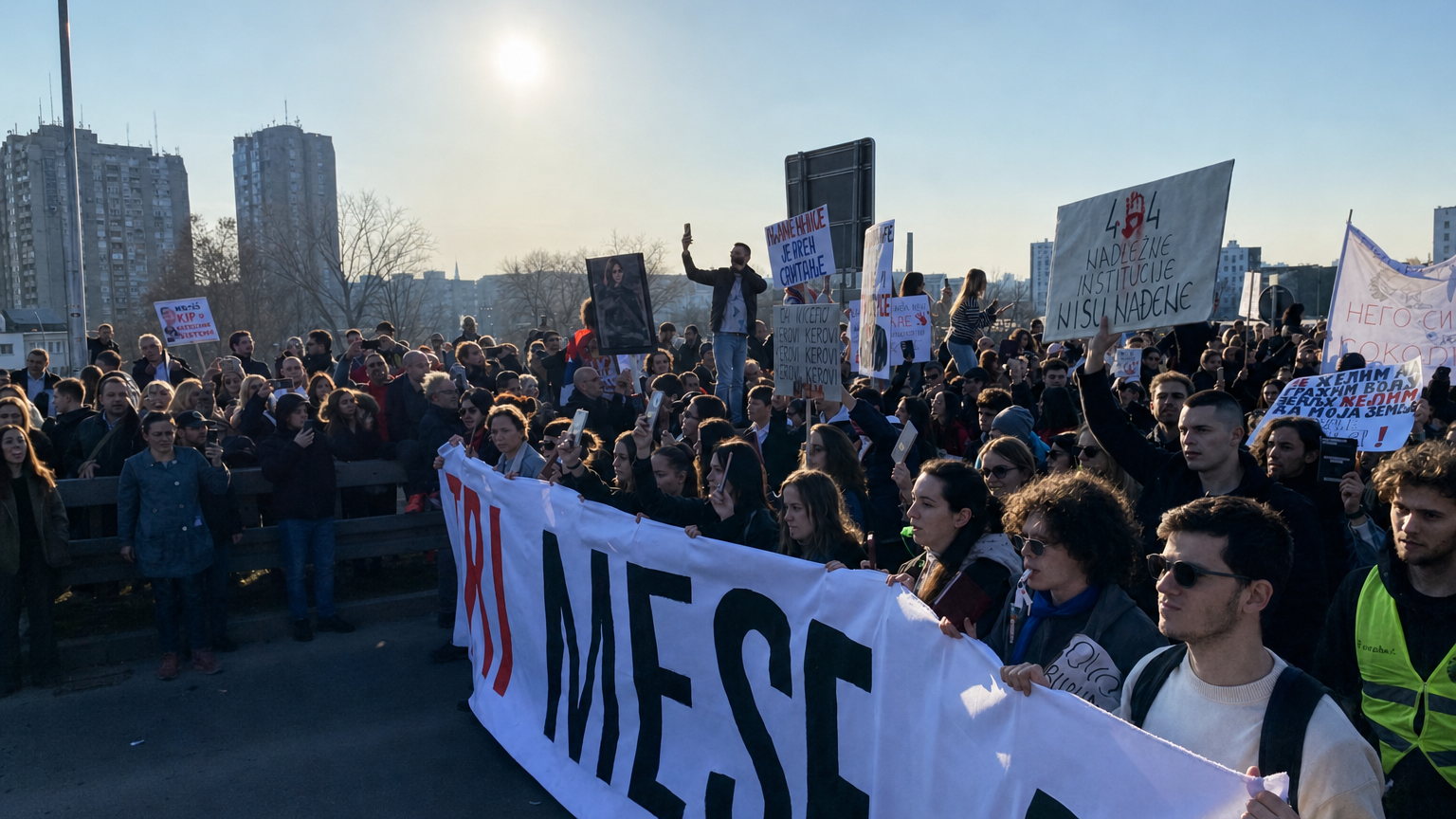
What started as targeted calls for justice quickly broadened into nationwide actions against systemic corruption, media control and institutional capture under the ruling party that has held power since 2012. By March 2025 more than 300,000 people had gathered in Belgrade in one of the largest demonstrations in Serbian history, according to figures compiled by regional monitoring groups. The decentralised movement, which avoided traditional political leadership, occupied over 60 university faculties for months, organised daily traffic blockades at 11:52 a.m. to mark the exact time of the canopy failure and drew participation from farmers, professors, lawyers and artists across the country.
Government responses have included arrests of nearly 1,000 protesters, beatings reported during clashes and public characterisation of the movement as a foreign-orchestrated attempt at a colour revolution, a Washington Post review of the events stated. Prime Minister Miloš Vučević resigned in January 2025 after one protester was seriously injured, while Vučić later stepped down from the presidency to reposition himself as a prime ministerial candidate. An analysis by the Heinrich Böll Foundation noted that these concessions failed to quell the demonstrations, which instead exposed the limits of the stabilitocracy model that had previously tolerated democratic backsliding in exchange for perceived regional stability.
A CRTA and Stanford University survey released in July found 45 percent support for the students compared with 36 percent for the ruling party, although subsequent polling has fluctuated as the campaign intensified. The OSW Centre for Eastern Studies observed that more than a third of Serbian citizens have taken part in some form of protest activity since the station collapse, reflecting widespread frustration with inflation above the EU average, stagnant wages and high public debt. The movement has also highlighted Serbia’s regression in international press freedom and corruption perception indices over the past decade.
In addressing why a student protest movement is challenging 12 years of Vučić rule in Serbia, external observers point to the Novi Sad disaster as a catalyst that crystallised long-simmering grievances over nepotism and unaccountable governance. The Guardian quoted CRTA programme director Raša Nedeljkov saying the ruling party’s once-homogeneous strength has eroded in the face of this unorthodox challenger. With the Student List hoping to mirror recent opposition gains in neighbouring Hungary, the coming vote will test whether sustained civic mobilisation can translate into institutional change in a hybrid regime.