ع



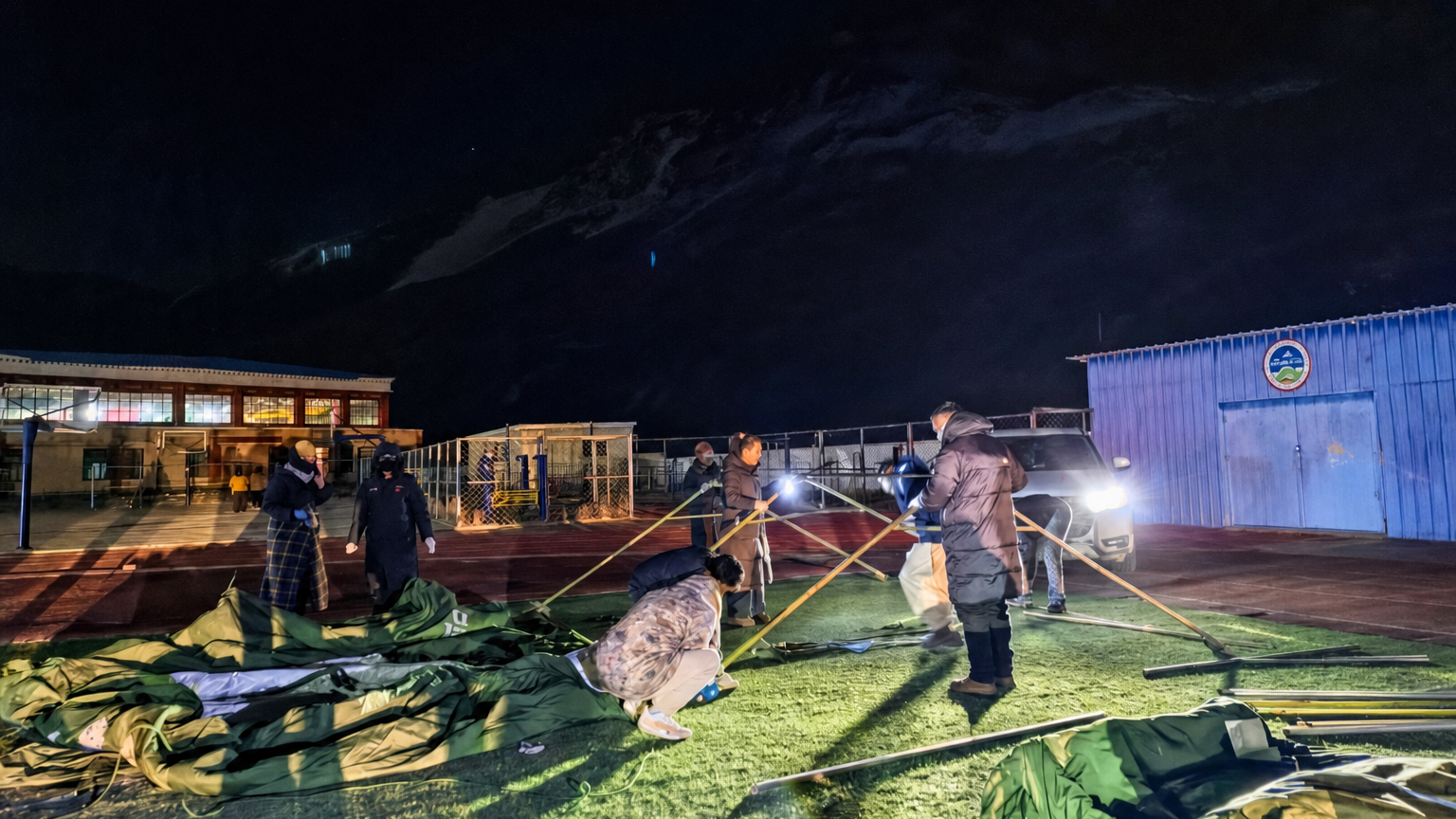
Chinese state news agency Xinhua reported that the earthquake struck at 10:33 p.m. local time, prompting authorities to activate a level II emergency response across Nagqu city. The temblor left 11 of the injured in serious condition while the other 21 sustained minor wounds as of early Friday morning. Local fire and rescue teams mobilized immediately and headed toward the epicenter where they began setting up tents to shelter those displaced from their homes.
The US Geological Survey placed the epicenter in a mountainous zone of Baqen county about 190 kilometers east-northeast of Nagqu and 390 kilometers from the regional capital Lhasa. China Earthquake Networks Center data showed the quake occurred at a shallow depth of 10 kilometers in terrain averaging 4,864 meters in elevation within five kilometers of the origin point. Township deputy head Lhawang Dagpo told Xinhua the shaking was clearly felt at his office which developed cracks in its walls.
More than 300 houses collapsed in the affected villages according to the Nagqu media office while officials continued evaluating the full scope of structural damage. Videos aired by state broadcasters depicted residents leaving their homes and gathering in streets or inside parked cars for safety. One resident described being jolted awake by the force of the tremor and hearing the house squeak as it shook.
Xinhua cited Nagqu emergency management officials in confirming the casualty figures and noted that at least two injured people were located in a village nearest the epicenter. The event marks the strongest earthquake to hit China since January 2024 according to China Earthquake Networks Center records. A series of aftershocks ranging from magnitude 3.0 to 4.0 followed in surrounding districts the center’s data indicated.
Reuters historical compilations show the Tibetan plateau experiences frequent seismic activity along the edges of the Qinghai-Tibet plateau where tectonic plates converge. A magnitude 6.8 quake struck a different part of Tibet in January 2025 killing more than 120 people and injuring nearly 200 others the news service reported. Such events often pose added challenges in the region’s high-altitude sparsely populated counties where rescue access can prove difficult.
Disaster relief work remained ongoing Thursday night into Friday with police and fire personnel erecting temporary housing for survivors the Nagqu media office said. Bloomberg and the South China Morning Post both drew on the same Xinhua figures in their coverage of the unfolding response. No immediate estimates of broader economic impact were released by regional authorities.