ع



With nearly 86 percent of votes counted, Prime Minister Benjamin Netanyahu’s Likud party and its far-right and ultra-Orthodox allies were projected to claim 53 seats in the 120-seat parliament while Gadi Eisenkot’s opposition bloc trailed with 48, according to Reuters tallies. Arab-led parties stood to win a record 15 to 19 seats and could hold the balance of power, The Guardian reported from Jerusalem. Yet all but one Jewish party has ruled out partnering with them, a stance that has persisted since the sole precedent in 2021 when such a coalition lasted only 18 months, data from multiple Israeli broadcasters confirmed.
Israel’s Central Elections Committee placed turnout at 77.7 percent, the highest level in more than two decades and roughly seven percentage points above the 2022 figure, the committee announced. This surge came in the first vote since the October 7, 2023 Hamas attack that triggered three years of conflict, the Atlantic Council noted in its post-election assessment. Analysts highlighted how the participation reflected intense public engagement on issues ranging from national security to governance amid Netanyahu’s ongoing corruption trial, which he denies.
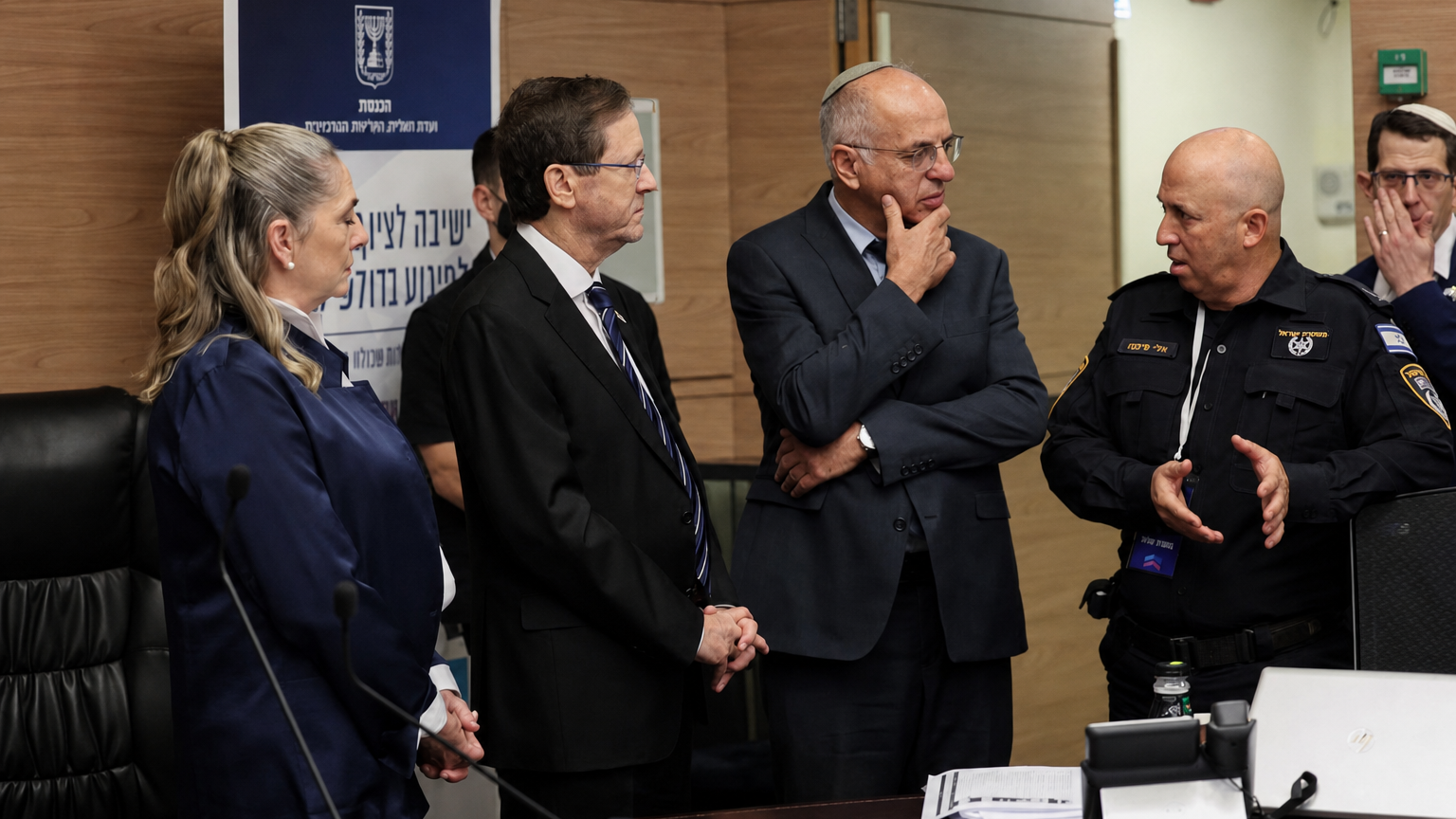
Coalition negotiations are expected to stretch for weeks before President Isaac Herzog tasks one leader with forming a government, The Globe and Mail stated in its overview of the results. If neither side succeeds, fresh elections could follow, a scenario that several analysts said would likely favor Netanyahu remaining as caretaker premier in the interim. Projections from Channel 12 and Kan 11 placed far-right figures Itamar Ben-Gvir and Bezalel Smotrich together on about 13 seats within Netanyahu’s camp, showing limited gains for those factions.
Israel’s election deadlock is a sign of the country’s deep divisions, as reflected across religious-secular lines, Jewish-Arab relations and differing visions for the state’s future, according to a Globe and Mail takeaway from the vote. The ultra-Orthodox community, now nearly 15 percent of the population, holds distinct views on military service and state subsidies compared with secular residents in urban centers like Tel Aviv, a pattern the Atlantic Council traced through successive ballots. Post-election comments from both Netanyahu, who called for a strong right-wing government, and Eisenkot, who claimed voters sought change, underscored these persistent rifts without bridging them.
Eisenkot, a former army chief leading the Yashar party, has publicly opposed including Arab parties in any coalition he might lead, Reuters correspondents reported from the ground. This position aligns with reluctance among other opposition figures to define partnerships with groups that have not uniformly labeled Hamas a terrorist organization, nonresident fellow Dan Schueftan told the Atlantic Council. Such dynamics leave both blocs short of the 61 seats required, with absentee ballots from soldiers and diplomats still to be fully integrated into the count.
Netanyahu’s previous coalition held 68 seats before this election but appears to have lost ground even as his personal support among Jewish voters remained solid, according to updated projections compiled by CBC News. The deadlock follows years of political instability that have included multiple prior votes and mass protests over judicial reforms, trends the Guardian linked to broader societal fault lines exposed since the war began. Final certified results are anticipated within days, after which Herzog will begin formal consultations with party leaders.