ع



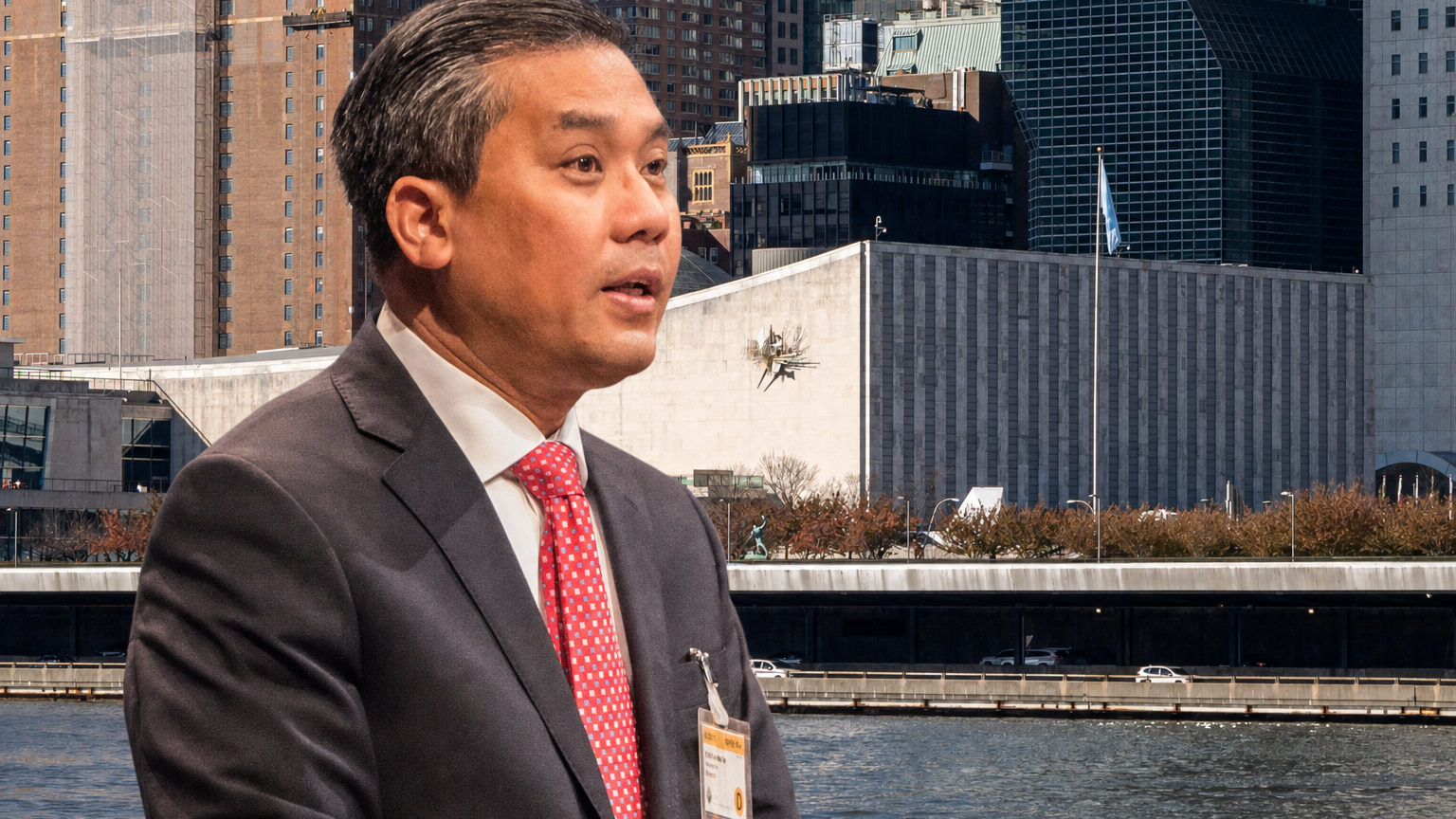
Kyaw Moe Tun, who has represented Myanmar at the United Nations since before the 2021 military coup, delivered an emotional address to the General Assembly Third Committee. The ambassador fought back tears as he described the toll of the ongoing conflict and called for stronger international engagement to protect civilians. His plea reflected years of appeals that have yielded limited results despite widespread documentation of abuses.
According to the Democratic Voice of Burma, Kyaw Moe Tun held up a scarf produced by the revolutionary community group Theatre 21 that bore the names and ages of victims killed since the coup. “I hold in my hand a scarf, a product of our revolutionary community Theatre 21. It is not just any fashion accessory,” he said, adding that a closer look revealed the names of the fallen. “The youngest was two months old. The oldest was 105 years old,” the ambassador stated.[[1]](https://english.dvb.no/myanmar-ambassador-holds-up-scarf-bearing-victims-names-in-tearful-address-at-un/)
Kyaw Moe Tun urged member states to “stop their silence on our suffering” and help end the crisis, according to video of the proceedings published by the BBC. He told the committee that the international community had “failed the people of Myanmar again and again.” The diplomat also asked the UN Secretary-General to invoke Article 99 of the Charter to bring the situation to the Security Council and prevent the country from slipping off the global agenda.[[2]](https://www.bbc.co.uk/news/videos/cqz0ve10jxn2o?at_campaign=rss&at_medium=RSS)
In previous interventions at the United Nations, including one earlier in October 2026, Kyaw Moe Tun reported that more than 8,500 people have lost their lives while over 15,000 others remain arbitrarily detained. The conflict has displaced millions inside Myanmar and driven many more across borders, compounding the long-standing challenges faced by Rohingya communities. A statement from Myanmar’s mission to the UN highlighted that neither ASEAN’s five-point consensus nor Security Council Resolution 2669 had been implemented.[[3]](https://www.myanmarmissionnewyork.org/post/intervention-by-ambassador-kyaw-moe-tun-at-the-third-committee-of-the-eighty-first-session-of-the-u-1)
The military administration in Naypyidaw has continued to reject UN human rights findings, dismissing a recent report on the situation of Rohingya Muslims and other minorities as containing “fallacious arguments,” the Democratic Voice of Burma reported. Kyaw Moe Tun has faced repeated attempts by the junta to strip him of his credentials and charge him with treason, yet he retained his position after a recent vote in the General Assembly. Pro-democracy advocates outside UN headquarters have rallied in support of his continued role.
Special Envoy Julie Bishop, in remarks to the same committee session, detailed how people inside Myanmar and along its borders continue to face unspeakable hardship, including atrocities that have killed and injured civilians including children. She called for an end to the cycle of impunity and stressed that the surge in drug trafficking, arms flows and criminal networks now affects the wider region. Bishop’s assessment, drawn from multiple visits to the country and meetings with parties to the conflict, underscored that the situation represents a global concern that demands sustained attention.