ع
ع


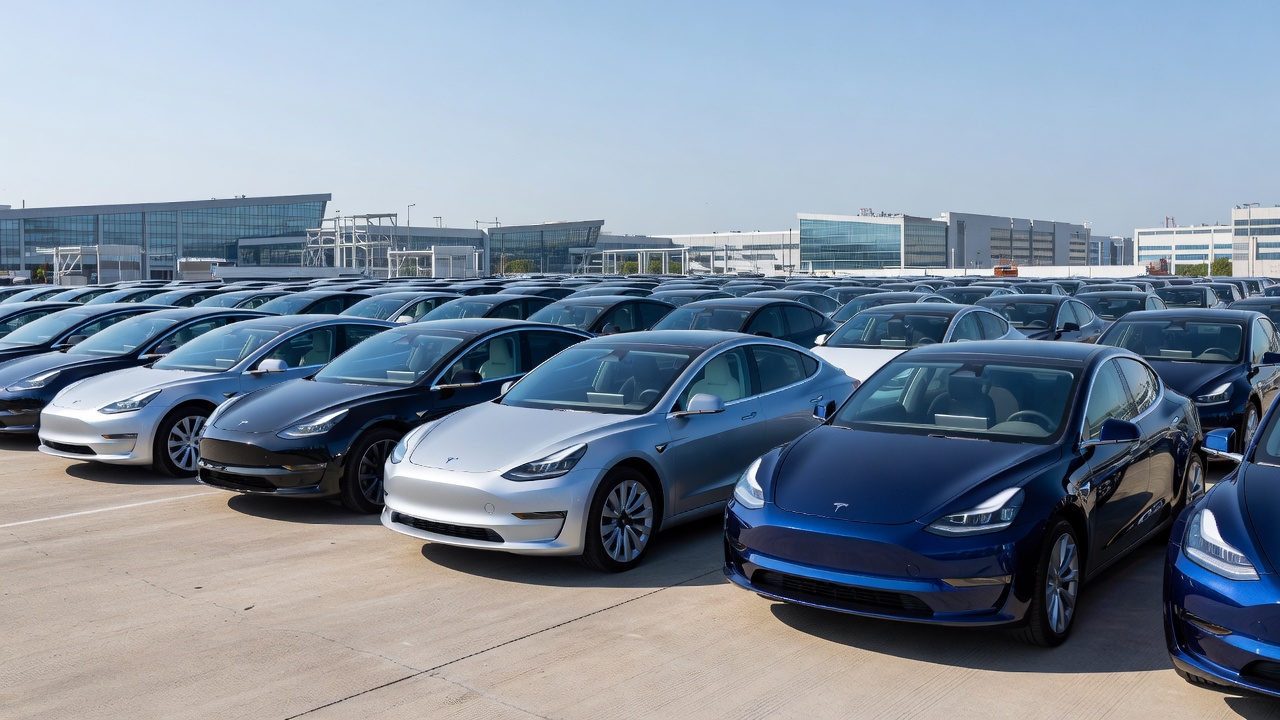
China’s State Administration for Market Regulation directed nine automakers to address safety defects in interior emergency door releases on more than 4.3 million vehicles, marking the country’s largest automotive recall to date. Tesla accounted for the bulk of the action with nearly 2.98 million Model 3, Model Y, Model S and Model X vehicles, many produced at its Shanghai factory between 2019 and 2026. The regulator determined that the mechanical releases, which blend into surrounding trim of similar color, could hinder occupant escape or outside rescue efforts when power systems fail, prompting free warning labels and over-the-air updates that automatically lower windows after collisions.
The recall, which takes effect September 25 for most affected Tesla models, forms part of a broader push by Chinese authorities to tighten vehicle safety standards ahead of a nationwide ban on hidden door handles for new cars starting January 1, 2027. According to the market regulator, manufacturers must also ensure interior signs explain door operation while requiring physical release mechanisms both inside and outside doors. This regulatory move positions China ahead of the United States and European Union on the issue, driven by the rapid growth of electric vehicles where such minimalist designs have become widespread.
SAMR figures show eight Chinese brands including Xiaomi, Leapmotor, Xpeng, Geely, Chery, Dongfeng, BAIC and FAW are collectively recalling about 1.3 million vehicles for comparable door-related defects, with Xiaomi targeting more than 390,000 SU7 sedans and Leapmotor addressing 371,000 units. In a separate filing on the same day, Tesla agreed to update software on 2.74 million domestically built Model 3 and Model Y vehicles to strengthen its driver monitoring system after regulators found that checking for a hand on the wheel fell short of ensuring drivers kept their eyes on the road. The combined actions reflect intensified oversight of advanced automotive technologies in the world’s largest car market.
Industry analysts have pointed to multiple fatal incidents that underscored risks with electronically dependent door systems. Chinese carmaker Xiaomi came under scrutiny after two 2025 crashes involving its SU7 model, one of which killed three people on a highway in Tongling city when occupants reportedly became trapped, according to state media reports. Tesla itself has faced lawsuits in the United States, including one from the survivor of a 2024 Cybertruck fire in California that killed three college students, where lawyers argued the lack of reliable mechanical exterior releases left passengers unable to escape.
Car industry analyst Stephen Dyer from consultancy AlixPartners told the BBC that even experienced users sometimes struggle to locate interior switches in unfamiliar vehicles, while the minimalist design reduces wind drag but introduces usability challenges. Nanyang Technological University associate professor Lyu Chen described a door handle as seemingly simple yet safety-critical in the seconds after a crash when delays in rescue can prove fatal. Engineering instructor Lim Hong Wee from the National University of Singapore noted that the planned remedies stop short of mandating fully mechanical solutions independent of software or power systems.
Tesla began equipping its Model S with hidden door handles when sales started in China in 2014, a design that influenced many local electric vehicle makers as the country built the world’s largest new energy vehicle market. The State Administration for Market Regulation has required uniform application of the fixes across all affected models, with some vehicles already carrying labels exempted from repeat installation. Regulators in Europe have drafted similar standards to ensure handles function without power while the U.S. National Highway Traffic Safety Administration continues reviewing potential requirements for emergency exit systems.