ع
ع


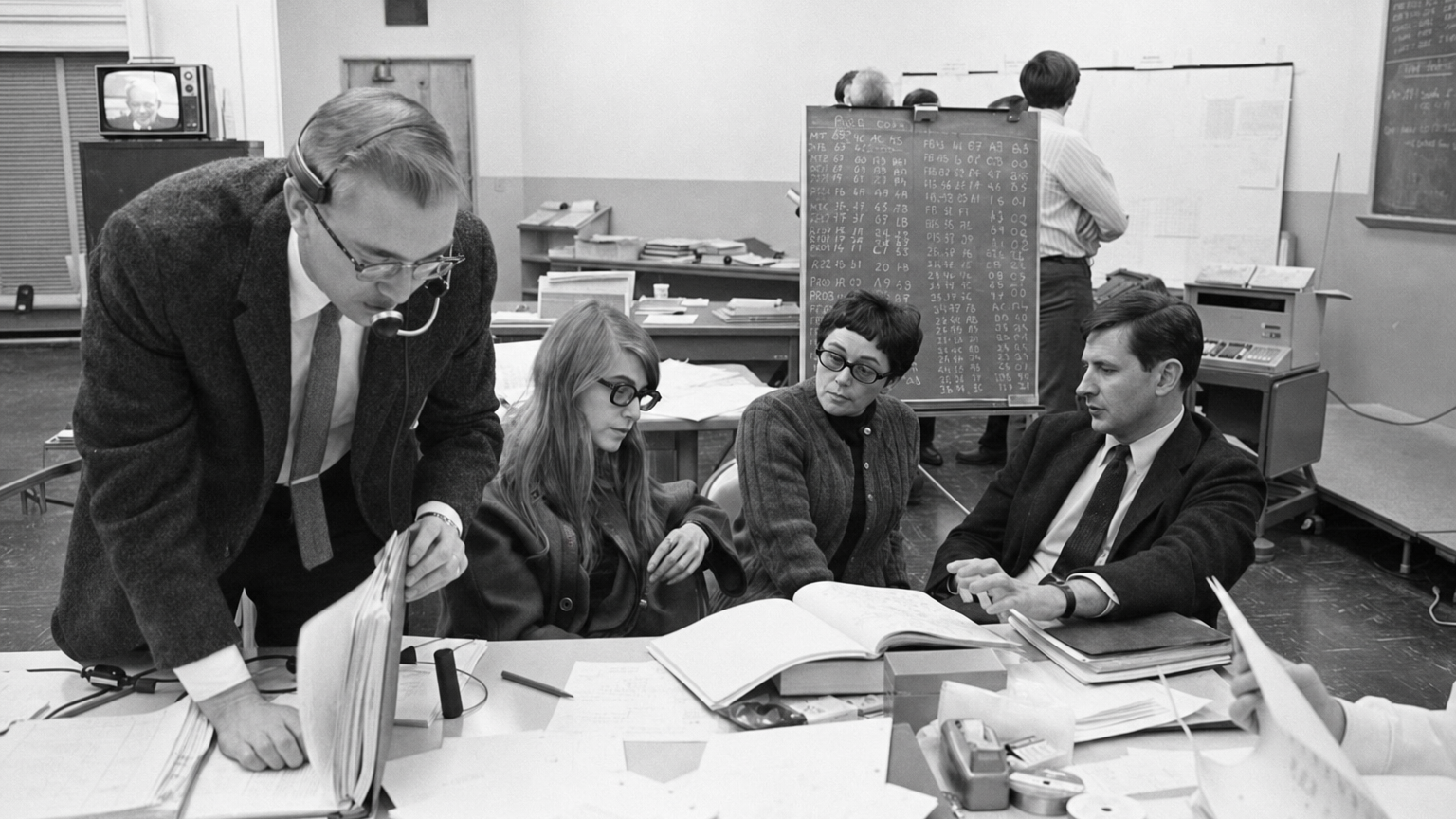
The Massachusetts Institute of Technology announced that Margaret Hamilton died on Sept. 30 in a Cambridge hospital at the age of 90. The New York Times reported that her daughter Lauren confirmed the death. Hamilton led a team of roughly 100 engineers at MIT’s Instrumentation Laboratory that created the onboard flight software for the Apollo command and lunar modules, an effort that proved critical when an alarm sounded three minutes before the Eagle touched down on July 20, 1969.
MIT News stated that Hamilton began work at the institute in 1959 and directed the Software Engineering Division through the mid-1970s, a period when she oversaw all in-flight software for the Apollo program and later Skylab. A 1971 letter she wrote to Datamation, cited by Wikipedia, explained how the system recovered from overload by interrupting less important tasks and prioritizing those required for landing. The New York Times noted that the computers carried only 72 kilobytes of memory, forcing the team to develop error-detection and recovery routines that operated without precedent.
According to MIT News, Hamilton coined the term software engineering to describe the rigorous discipline her group applied to what had been an informal practice. She authored more than 130 publications that helped establish the field, the institute’s obituary stated. Britannica reported that she concentrated specifically on code to detect system errors and restore information after crashes, innovations that NASA later credited with preventing an abort of the Apollo 11 mission.
The Presidential Medal of Freedom was awarded to Hamilton in 2016 by President Barack Obama, whose citation, quoted by multiple outlets including The Guardian, said her software architecture produced giant leaps for humankind. MIT News recalled that she described the era by saying there was no choice but to be pioneers. Boston Globe accounts placed her at Mission Control monitoring the landing from MIT while the software autonomously corrected the overload and allowed the descent to continue.
After leaving MIT, Hamilton founded Higher Order Software in 1976 and established Hamilton Technologies a decade later, Britannica noted. Her later work developed a Universal Systems Language based on lessons from Apollo, the Computer History Museum reported. Draper Laboratory, the successor to the Instrumentation Lab, issued a statement praising her leadership in ensuring astronauts landed safely and returned home.
Hamilton is survived by her daughter Lauren, a son-in-law, two grandsons and four great-grandchildren, according to MIT’s announcement. The source code for the Apollo Guidance Computer remains publicly available on GitHub, a resource cited by several technical obituaries. Her career bridged an era when computer science degrees were rare and women programmers faced additional barriers, as she herself recounted in interviews.