ع



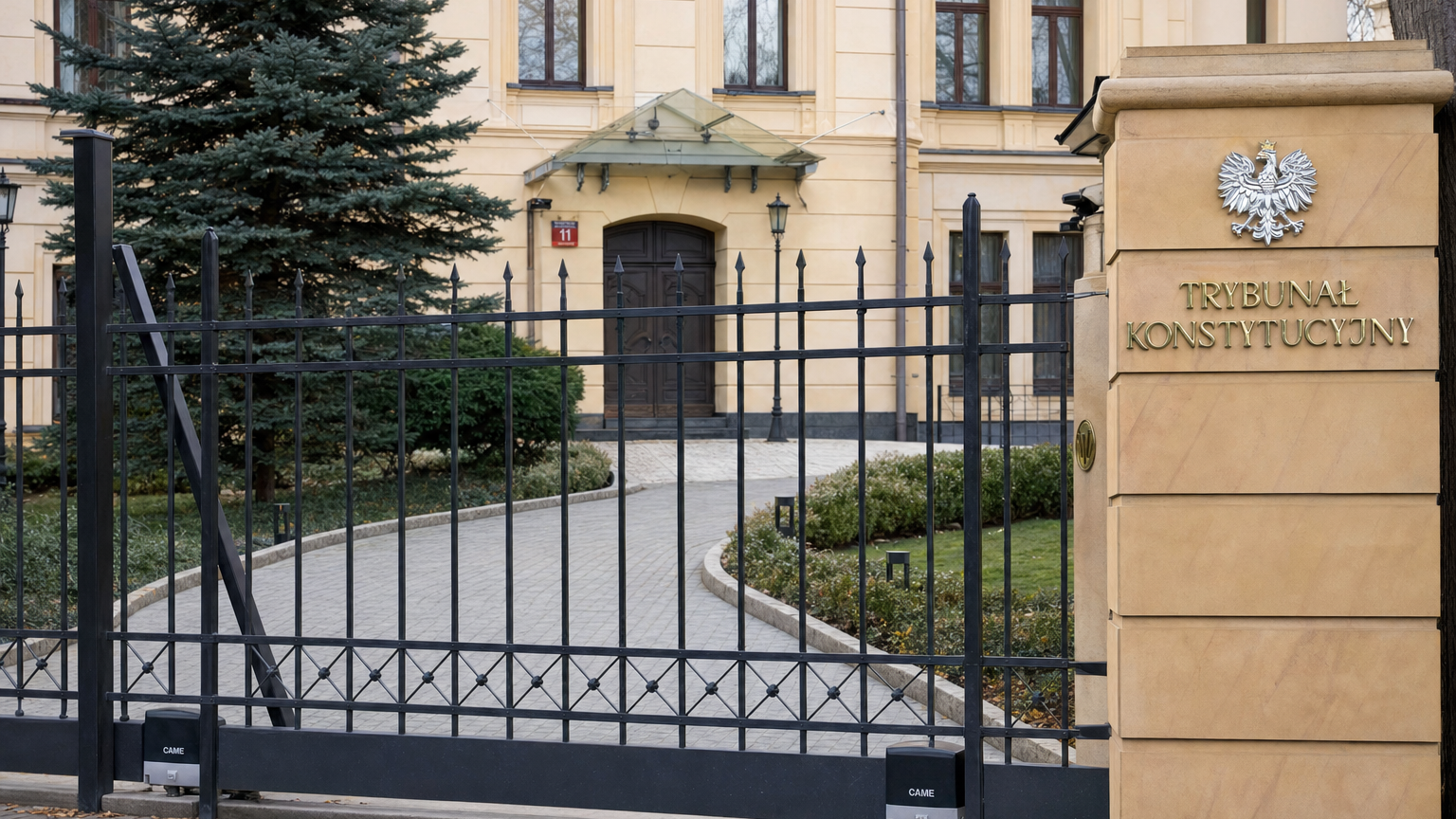
Polish police including riot units took up positions outside the Constitutional Tribunal on October 30 2026 after Judge Anna Korwin-Piotrowska suspended its president Bogdan Święczkowski and deputy Bartłomiej Sochański for one month and announced she was taking charge of the court. The justice minister had sought to lift the pair’s immunity so they could face charges for blocking newly elected judges from performing their duties according to Al Jazeera and Reuters reporting. Święczkowski who was appointed during the previous Law and Justice administration immediately rejected the move and labelled it a coup d’etat while the tribunal’s official account warned that all persons participating in these actions are committing the crime of a coup d’etat.
Protesters supporting the ousted leadership gathered at the Warsaw building where some threw objects at officers and cut through fencing prompting the detention of three people as Politico reported. PiS leader Jarosław Kaczyński joined the demonstration and attempted to enter the premises while accusing Prime Minister Donald Tusk of creating a police state and calling for immediate presidential intervention. Officers maintained a perimeter to prevent access to the court but did not enter the building itself according to statements from Warsaw police cited across multiple outlets including AFP.
President Karol Nawrocki who maintains close ties to the opposition cut short a trip to Senegal and turned his plane around mid-flight stating that at a moment like this the president must be in Poland. Nawrocki has refused to swear in several judges nominated by the current parliament a stance that has contributed to the ongoing deadlock a Reuters review of the appointments process found. Tusk whose government took office in 2023 has defended the suspension as part of broader efforts to restore the rule of law after years of politicisation under his predecessors.
The events represent the latest escalation in a dispute that dates to 2015 when the Law and Justice party began appointing judges to the tribunal in a manner that drew widespread criticism. A series of European Commission assessments starting that year flagged systematic interference by the executive and legislature in judicial appointments and operations eventually triggering Article 7 proceedings against Poland. The tribunal later issued rulings challenging the primacy of European Union law including a 2021 decision that certain EU treaty provisions were incompatible with the Polish constitution according to documentation of the crisis compiled by the Commission.
Korwin-Piotrowska who took her own oath in parliament rather than before the president accused Święczkowski of treating the institution as a private fiefdom and failing to assign cases properly a claim echoed by Justice Minister Waldemar Zurek in statements to reporters. Over the preceding six months the suspended president had prevented judges elected by the current majority from assuming their roles which in turn paralysed much of the tribunal’s work. Police acted after receiving warnings of potential threats to judges and staff inside the building according to an official police communique relayed by TVN24 and Notes From Poland.
The Constitutional Tribunal which holds the power to strike down legislation played a central role in several controversial decisions during the previous administration including a near-total abortion ban and multiple challenges to EU legal supremacy. Efforts by Tusk’s coalition to introduce reforms have been repeatedly blocked by both the tribunal leadership and the president setting the stage for Friday’s confrontation. Further legal and political manoeuvres are anticipated as the two sides maintain competing claims over who holds legitimate authority at the court.