ع
ع


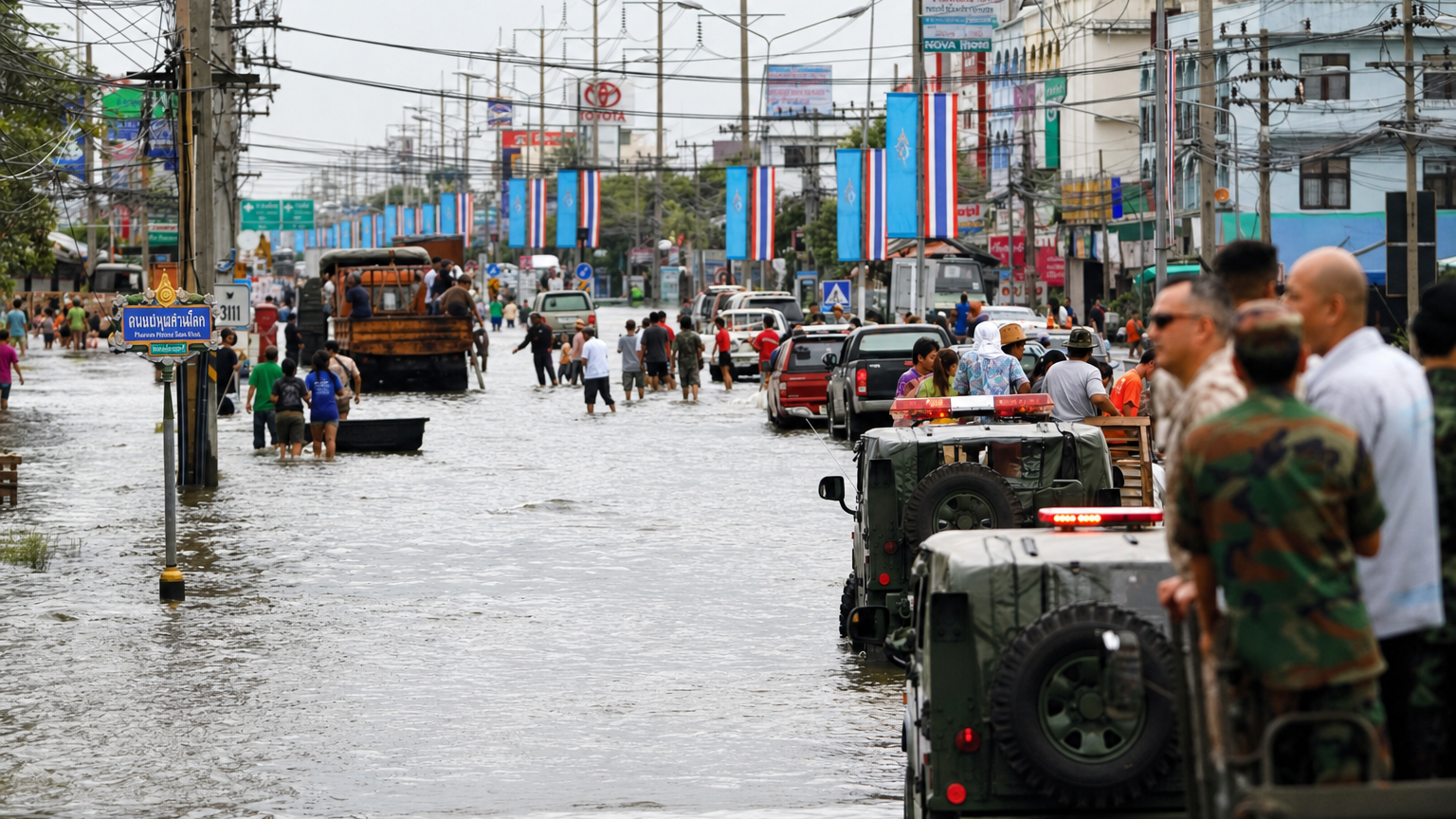
Vendors in Bangkok’s eastern Bang Kapi district stood waist-deep in floodwater on September 28 holding trays of meat, fish, fruit and vegetables while shoppers navigated past them in kayaks, according to Channel News Asia. The scenes resembled the country’s famed traditional floating markets as roadside stalls appeared along submerged streets and traders reopened in one of the hardest-hit areas. Reuters reported that residents converted the flooded zone in front of a commercial center into a temporary market by placing goods in styrofoam boxes and plastic containers that floated atop the murky water, with one man even using a large inflatable swimming pool to transport groceries.
The Bangkok Metropolitan Administration declared a disaster across all 50 districts after nearly 300 millimeters of rain fell in parts of the city over four days, The Guardian reported, citing the national weather agency. Thailand’s Ministry of Interior stated that the preceding week’s unusually heavy rains triggered serious flooding in 41 provinces, affecting more than 580,000 homes and causing at least eight deaths outside the capital, where no fatalities were recorded though damage to residences and businesses is projected to run high. Multiple outlets including CNA and Sinar Daily noted that while some indoor market stallholders reopened despite water sloshing at their feet, others kept their premises shuttered as pumping and drainage efforts continued.
Vendor Marisa Singprakhon, 33, shifted her goods from an indoor counter to the exterior to ease customer access, telling Reuters, “If customers have to go inside, it’s quite difficult, because the water level goes down and up. So, we stand outside the flooded area to sell goods to customers.” Buyers arrived in boats, canoes or on foot pushing shopping trolleys loaded with essentials through the water, according to AFP photographers whose images appeared across outlets such as Le Devoir and Yahoo News. A BBC video titled “Watch: Bangkok locals create floating market during floods” captured the adaptation, which has circulated widely on social media platforms including X where the Thai Enquirer highlighted videos of the trending phenomenon.
The development echoes community responses during Thailand’s major 2011 floods, when similar makeshift markets and vendor innovations such as modified vehicle snorkels emerged to sustain trade, a Syracuse.com report from that period documented. Coverage from Moneycontrol indicated that local businesses have sustained daily losses exceeding 3,000 baht as fixed costs persist amid reduced foot traffic and supply chain interruptions. Bangkok Governor Chadchart Sittipunt told a January 2026 forum covered by the Bangkok Post that the capital proved readier than in 2011 thanks to lessons from past events, though he warned that defenses may prove insufficient against accelerating climate impacts including rising sea levels.
A 2014 paper in the International Journal of Disaster Risk Reduction, hosted on ScienceDirect, found that Bangkok’s flood management lacks systematic coordination among departments and has not fully incorporated climate change projections, calling for transformational institutional changes alongside incremental infrastructure upgrades. More recent analysis in a 2024 npj Natural Hazards article on adaptation portfolios for the Chao Phraya River basin, which encompasses Bangkok, tested combinations of reforestation, reservoir operations and diversion measures, concluding that while some portfolios could reduce flood days they risked increasing drought periods through higher evapotranspiration. Bangkok Post coverage of a related forum quoted experts stressing that urban residents must learn to live with water rather than fight it, with adaptation framed as essential given projections of more severe events.
Authorities have mobilized emergency relief and accelerated drainage as residents prepare for potential further rainfall, according to Reuters dispatches. The Ministry of Interior data places the nationwide death toll at eight with no Bangkok fatalities linked to the weekend flooding, though the economic toll on small vendors and supply chains remains under assessment. Similar resilience tactics have drawn commentary on platforms such as YouTube, where CNA’s video on the floating market adaptation received viewer remarks praising Thai creativity in the face of disruption.