ع



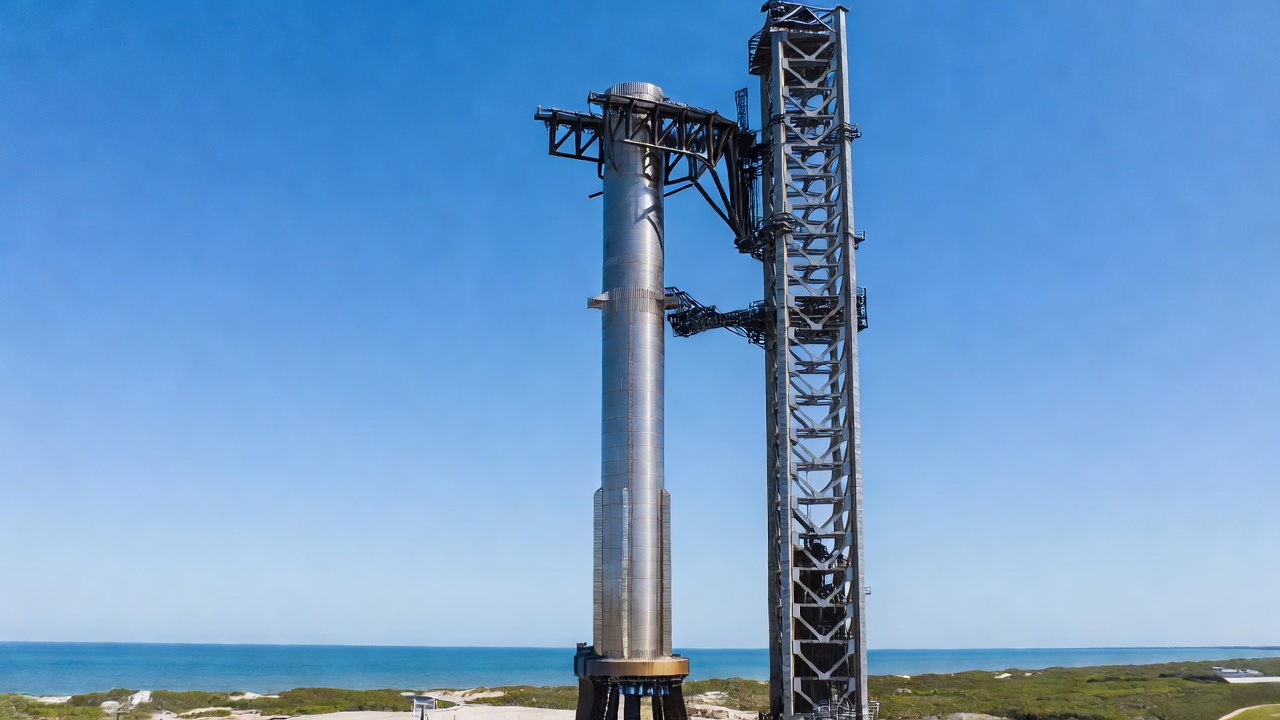
SpaceX conducted the fifth test flight of its Starship system on October 13, 2024, lifting off from Boca Chica, Texas, at 7:25 a.m. CT with the Super Heavy booster separating from the upper stage at an altitude of roughly 70 kilometres before returning for a precision catch. The 71-metre-tall booster slowed using its engines and was secured by the tower’s giant mechanical arms, known as chopsticks, after steering with grid fins during descent. Reuters reported that the manoeuvre marked the first time a booster was caught in this manner, with control room staff erupting in applause as the vehicle came to rest. Elon Musk announced the outcome on X by stating “The tower has caught the rocket!!”.
The catch forms part of an iterative development approach for a fully reusable vehicle intended to carry heavy payloads, support NASA Artemis lunar landings and enable eventual Mars travel, a Reuters assessment found. The Super Heavy stage generates 16.7 million pounds of thrust from its 33 Raptor engines at liftoff, exceeding twice the power of the Saturn V rocket used in the Apollo era, according to NASA figures integrated in program reviews. This reusability without landing legs reduces turnaround time and costs substantially once operations mature. SpaceX had prepared thousands of vehicle and pad criteria prior to approving the catch attempt.
Earlier Starship flights from 2023 through mid-2024 encountered setbacks during boostback or landing phases, resulting in vehicle losses or controlled Gulf of Mexico splashdowns, a NASASpaceFlight.com historical compilation documented. Flight 4 in June 2024 achieved a soft splashdown, setting the stage for the bolder objective on Flight 5 where both stages met core goals including the upper stage’s reentry and Indian Ocean targeting. The company stated that data collected from all phases continues to refine hardware and software for increased reliability across future iterations.
NASA has identified Starship as essential for its Artemis III mission that aims to land astronauts on the moon, with the agency’s administrator offering congratulations on the booster recovery progress in related test updates, CNN reported from agency statements. The launch tower, dubbed Mechazilla, serves dual purposes as both launch structure and capture system, allowing the booster to be repositioned directly for refurbishment and refueling. Subsequent flights built on this foundation, with the booster catch repeated successfully in January and March 2025, The Space Road reported in its tally of program outcomes.
Musk shared additional imagery after the October 2024 event, including a sunrise view of the secured booster on the pad accompanied by a simple message, as carried on SpaceX platforms. The test also demonstrated hot staging separation and upper stage performance before its planned splashdown, adding layers of validation beyond the headline recovery. Industry observers noted the sonic boom from the descending booster could be heard across nearby South Padre Island.
By September 2025 the program had logged 10 test flights with a mix of booster catches and upper stage experiments despite occasional anomalies, according to a NASASpaceFlight.com analysis of cumulative results. Engineers examine telemetry, video and hardware post-flight to address issues such as engine performance or structural loads encountered in later missions. These incremental gains position the system for expanded roles in satellite deployment and deep-space exploration.