ع
ع


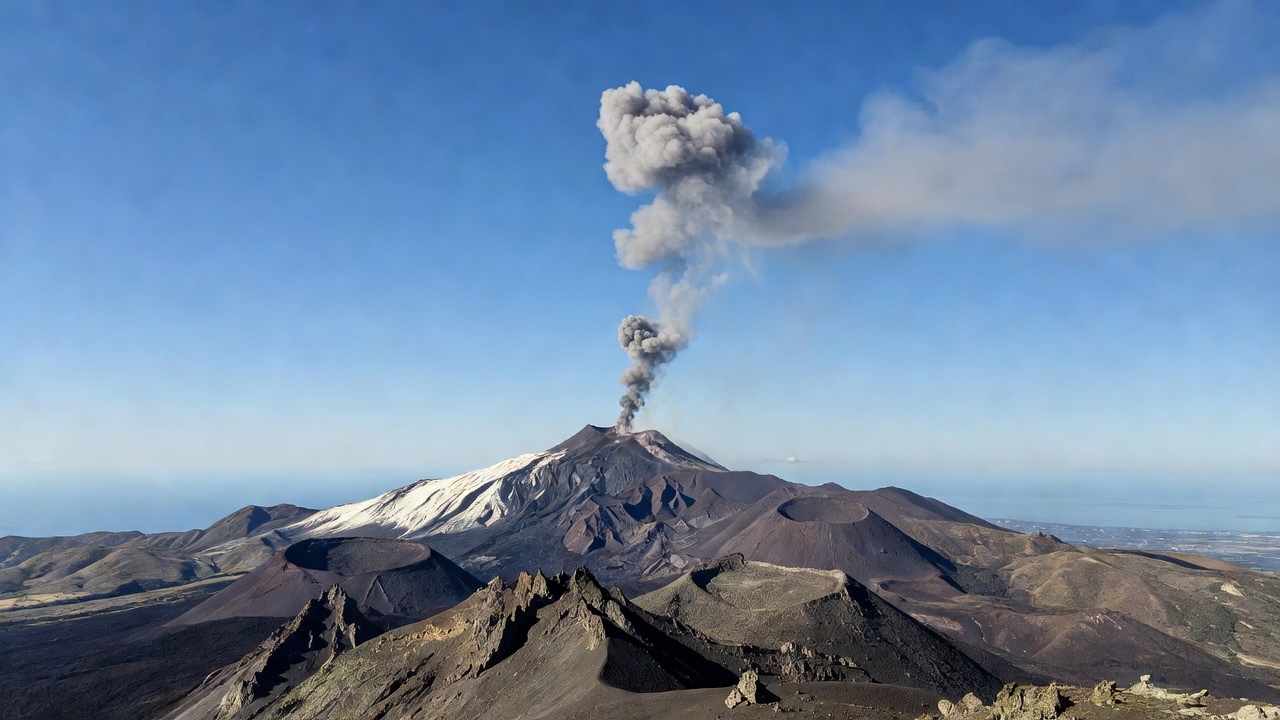
The operator of Catania Fontanarossa Airport announced the extension of airspace sector closures due to volcanic ash drifting across approach and departure paths, halting both arrivals and departures. Italy’s National Institute of Geophysics and Volcanology had raised the aviation color code to red following renewed ash emissions that began on September 14, with the plume reaching heights of around four kilometers. Airport officials advised passengers to verify flight status directly with carriers before traveling to the facility as conditions remained under constant review. Multiple international connections were among the dozens of services cancelled since Sunday according to dpa international reporting.
Catania ranks as Italy’s fifth-busiest airport, handling more than 12 million passengers each year, yet its location approximately 40 kilometers from Mount Etna has led to repeated interruptions. The 3,324-meter volcano, Europe’s tallest active peak, entered a phase of near-continuous ash release from summit craters combined with weak strombolian activity, according to the volcanology institute’s bulletins. Diversions have primarily routed aircraft to Palermo, with some services also redirected to Comiso as operators adjusted schedules around the evolving ash forecasts from the Toulouse Volcanic Ash Advisory Center.
An August 2026 eruption produced the longest closure in the airport’s recent history, keeping operations suspended for more than a week during peak summer travel and resulting in over 700 cancelled flights plus 350 rerouted services, Assoesercenti industry figures show. Those disruptions affected more than 100,000 passengers and generated tourism revenue losses estimated between 12 million and 24 million euros across accommodation, transport and related services on the island. The sustained ash output during that episode was linked to deeper gas-rich magma by the president of the Italian Volcanological Association in remarks carried by Reuters.
A peer-reviewed study published in the Journal of Applied Volcanology documented 24 separate airport disruption events attributed to Mount Etna across recent decades, placing the volcano among the top sources of such impacts globally. The analysis of 74 data-rich ashfall cases found an over 80 percent probability of closure even at trace ash thicknesses of 0.1 millimeters, with durations ranging from under one day to more than a week. Economic assessments within the research noted that network-wide losses from rerouting and cancellations frequently surpass costs of direct infrastructure repairs.
Sicilian officials have intensified discussions about establishing backup aviation capacity or relocating key facilities away from the volcano’s immediate influence following the back-to-back episodes, according to regional government statements. Consumer groups filed complaints with Italy’s antitrust authority after car rental rates in the area spiked by as much as 287 percent during the August crisis, highlighting secondary effects on ground transport. The National Institute of Geophysics and Volcanology continues to issue regular Volcano Observatory Notices for Aviation, with further airport updates anticipated as wind directions and eruptive activity shift.