ع
ع


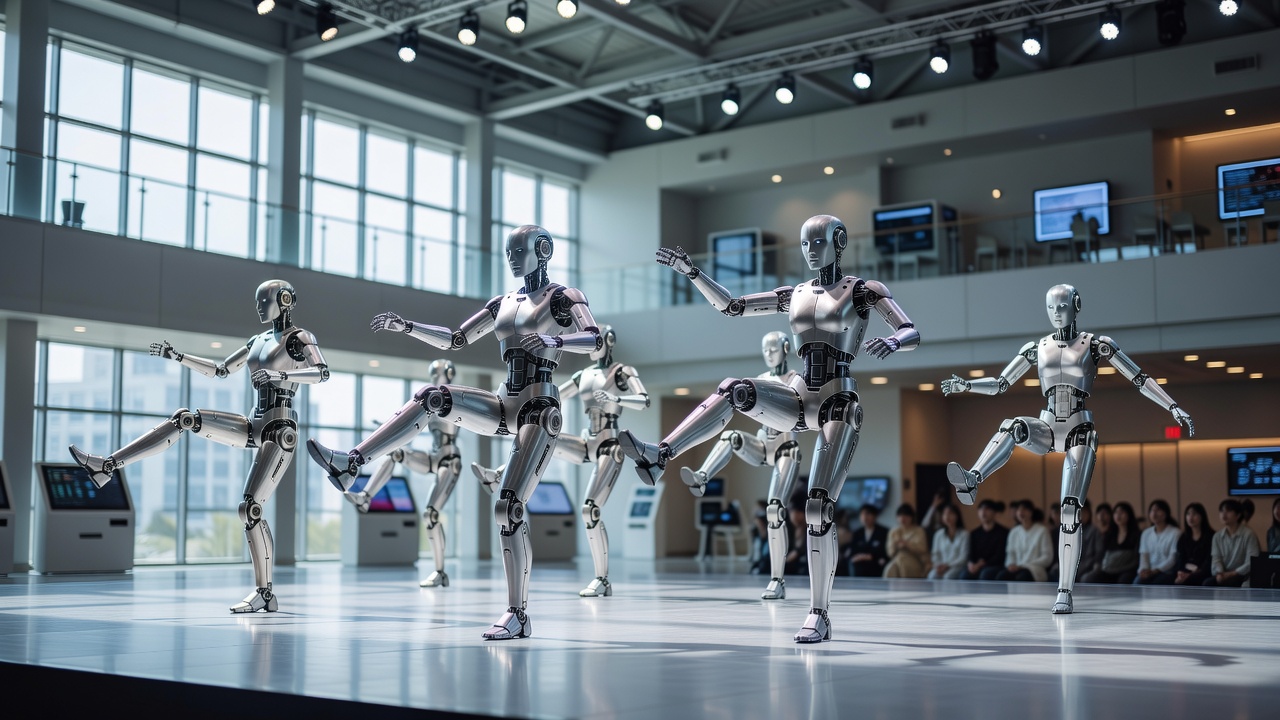
Galaxy Corporation officially opened its 16500-square-metre Galaxy Robot Park in Seoul’s Gangdong district on August 21 after a pre-opening period that drew more than 20000 visitors since July, according to Yonhap News Agency. The facility features an arena where humanoid robots execute synchronized dances to tracks including those by G-Dragon, Taemin and BLACKPINK’s Rosé, with the company scheduling three to six performances daily for a yearly total exceeding 1000 shows. Visitors can also interact with robot dogs, participate in robot boxing matches or have their portraits drawn by automated artists at the venue that its operators describe as the world’s first dedicated robot theme park.
Galaxy Corporation chief executive Choi Yong-ho told reporters the park represents the fusion of K-pop content with physical artificial intelligence and will serve as a launchpad for global expansion into markets such as the United States, the United Arab Emirates and Japan. In a statement carried by The Korea Herald, Choi outlined plans for a robot world tour beginning late this year that would allow simultaneous performances in multiple countries once choreography is uploaded to a single unit. The executive framed the project as preparation for a future in which humans and robots coexist, citing early sell-outs of weekend shows as evidence of public interest.
Motion-capture technology allows the androids to replicate K-pop dance routines with fluidity, after which the data can be shared instantly across units worldwide, a capability highlighted in coverage by The Guardian. The park also hosted what it called the world’s first robot fashion show in May and intends to launch a related clothing line, according to multiple Korean media outlets that attended preview events. These features build on Galaxy Corporation’s background managing artists including G-Dragon while positioning the company at the intersection of entertainment and robotics technology.
Major international operators have pursued parallel advances in robotic entertainment, with Walt Disney Imagineering developing aquatic manta-ray and dolphin-like robots for lagoon performances as part of a 60-billion-dollar decade-long investment in its parks, Bloomberg reported in June. Universal Creative deployed untethered quadruped dragon robots and patented new animatronic systems for its Epic Universe park in Orlando that opened last year, a CNET review found, noting 30 animated dragon figures across one land alone. Both companies maintain thousands of animatronic figures across their estates, though most remain fixed to ride tracks rather than performing free-roaming stage shows.
The broader market for robotics in entertainment is projected to expand at a compound annual growth rate of 10.3 percent from 2024 to 2031, according to research cited by DirectIndustry. A separate Market Intelo assessment placed the autonomous theme-park service robot segment at 800 million dollars in 2025 and forecast growth to 3.2 billion dollars by 2034 at an 18.5 percent annual rate, driven by applications ranging from cleaning units to interactive entertainment models. Disney alone operated approximately 6000 animatronics worldwide as of 2021, a figure that has since increased with new attractions, The New York Times reported.
Music critic Cha, quoted in The Guardian, questioned whether robots could replicate the emotional connection central to K-pop fandom despite technical proficiency in dance routines. Early visitor feedback at Galaxy Robot Park has been positive toward the novelty of close interaction with humanoids, though some adult observers noted occasional mechanical imperfections during performances. Galaxy executives countered that the park’s target audience, including children, responds strongly to the experience of treating robots as companions rather than machines.
Galaxy Corporation has indicated it will use data gathered at the Seoul site to refine overseas versions, with a second arena planned for Dubai before the end of 2026. The company also intends to introduce robot idols as a distinct act next year, separate from its existing human artist roster, according to statements compiled by The Korea Times. These steps form part of a wider industry shift toward blending artificial intelligence with physical performance that extends beyond South Korea.