

 ع
ع


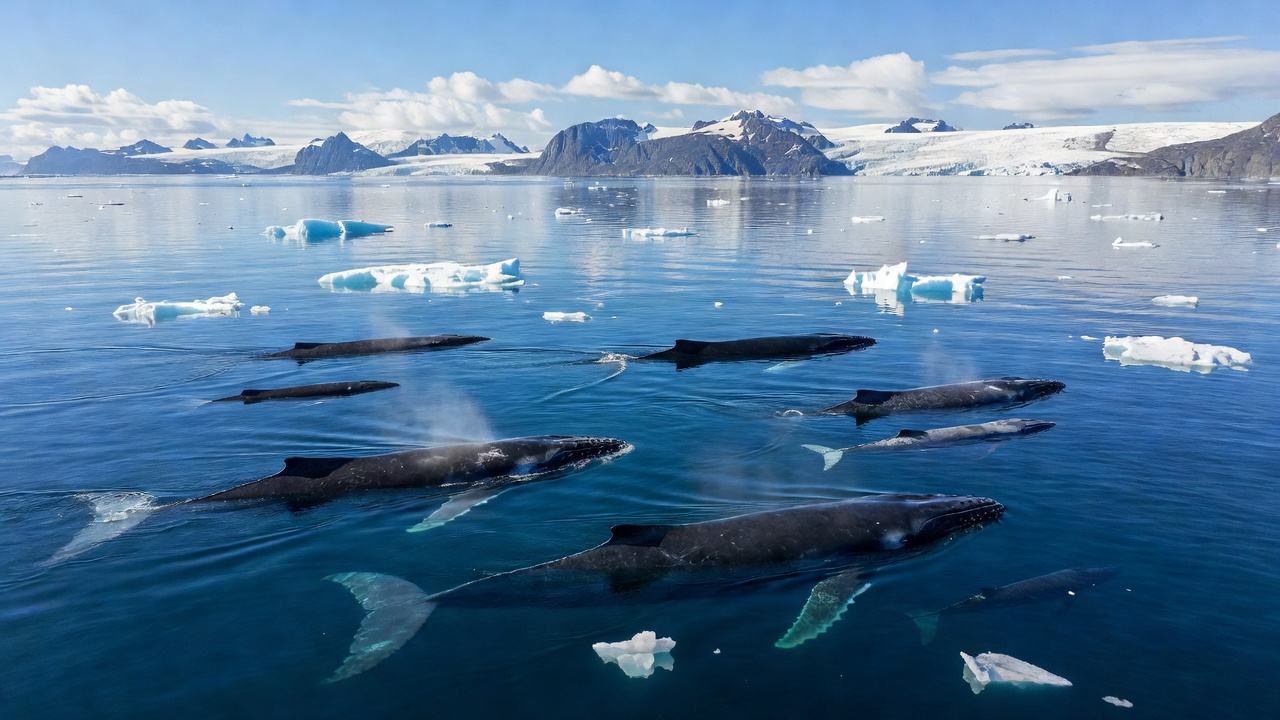
The Greenland Institute of Natural Resources conducted the research combining ship surveys, aerial observations from 2015 and 2024, satellite tracking data from 15 whales and reports from Inuit hunters to document the changes. According to the institute no humpback whales appeared in ship-based surveys of the East Greenland coast until 2006 with the first sighting followed by seven individuals the next year and 150 recorded by 2024. Prof Mads Peter Heide-Jørgensen who led the work from the institute described the transformation as probably the most radical ecological change observable anywhere in the subarctic while noting that the baleen whales had historically been excluded by persistent ice cover.
Estimates from the study place the 2024 summer presence at 4,000 humpback whales 6,000 fin whales and 6,000 minke whales in the Greenland Sea where the mammals have formed seasonal feeding frenzies. These opportunistic feeders are projected to consume at least 800,000 tonnes of fish and krill during one summer season as prey species move into the warming waters now reachable along the coast. The institute’s assessment published in Frontiers in Marine Science characterises the development as part of a broader regime shift in the regional marine environment.
National Snow and Ice Data Center figures show Arctic sea ice extent has declined by 13 percent per decade since 1979 while volume has fallen 63 percent since 1982 opening new habitats across the region. Assessments from the World Meteorological Organization indicate the Arctic has warmed nearly four times faster than the global average further accelerating ice loss and associated ecosystem changes. Although the baleen whales appear to benefit from increased food availability and reduced ice barriers the institute’s data indicate that Arctic endemic species such as narwhals and belugas face growing competition or displacement in shared areas.
Arctic WWF reports place the global narwhal population at roughly 110,000 with some Greenland stocks showing signs of decline under shifting environmental conditions. Prof Heide-Jørgensen stated that for some species climate change is not necessarily a problem as it opens up new opportunities but other species are losing their habitat. The observations have also raised questions in Greenland about possible redistribution of whales from West Greenland waters where subsistence hunting remains a sensitive cultural and economic practice.
A NAMMCO progress report on marine mammals outlined International Whaling Commission quotas for West Greenland covering 164 minke whales 19 fin whales and 10 humpbacks annually during the 2026-2031 period. Separate analysis published in a 2024 Frontiers in Environmental Science review documented comparable shifts in migration timing and distribution for multiple whale species across the Arctic tied to sea ice variability. The Greenland Institute emphasised that ongoing monitoring remains necessary to distinguish between genuine population growth and simple relocation within North Atlantic habitats.