ع
ع


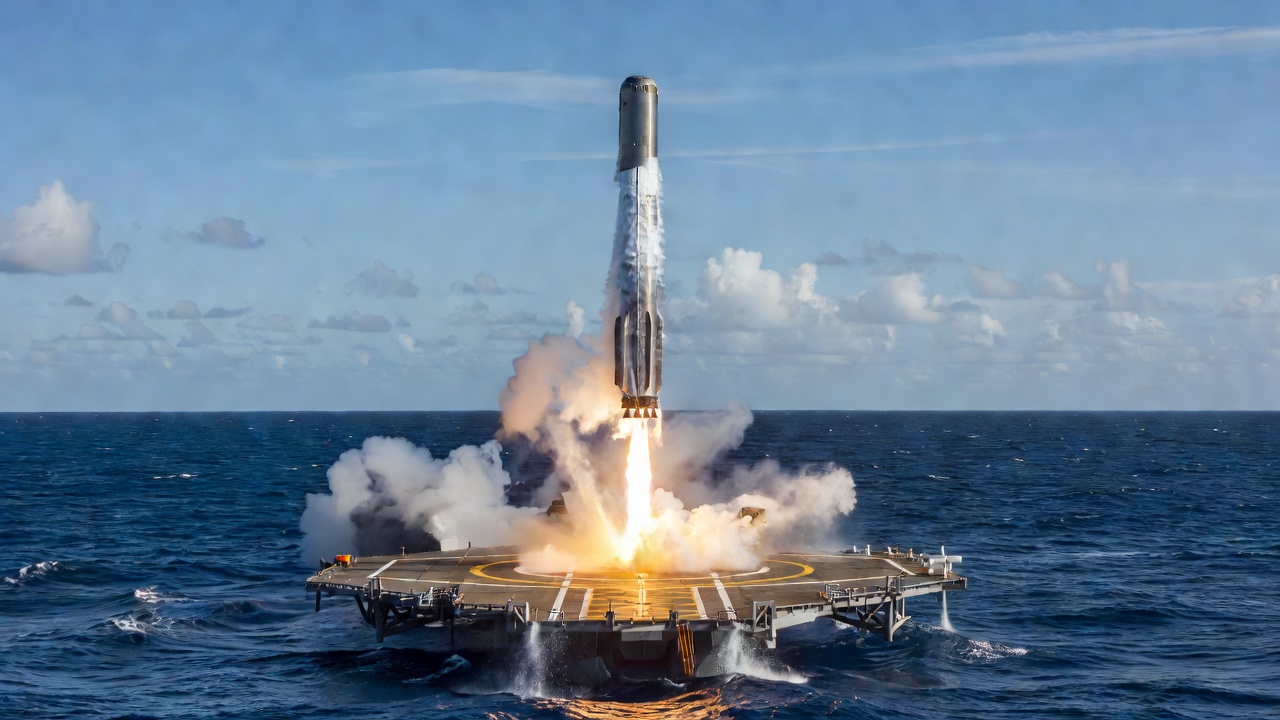
Blue Origin launched its New Glenn rocket for a third time on April 19, 2026, transporting AST SpaceMobile’s BlueBird 7 satellite toward low Earth orbit from Cape Canaveral Space Force Station in Florida. The mission featured the first reuse of a New Glenn booster which successfully landed after liftoff but a malfunction in the upper stage resulted in the satellite being deployed into an off-nominal orbit the company and industry reports indicated.
The rocket lifted off at approximately 7:25 a.m. EDT with the first stage performing as planned before separating and returning for a propulsive landing on Blue Origin’s droneship in the Atlantic Ocean. This achievement marked a key milestone in the company’s efforts to develop reusable orbital launch capabilities. According to Blue Origin the New Glenn is designed to carry more than 45 metric tons to low Earth orbit supporting a range of commercial and government missions.
Blue Origin has positioned New Glenn as a competitor in the growing commercial space launch market with the vehicle measuring more than 98 meters in height and utilizing seven BE-4 engines on its first stage that generate significant thrust. The second stage is powered by two BE-3U engines. Data from industry trackers indicate that the first flight occurred in January 2025 with this third mission aiming to build on prior successes while testing booster recovery.
The BlueBird 7 satellite represents the next generation for AST SpaceMobile’s planned constellation featuring a large phased-array antenna of nearly 2,400 square feet intended to enable direct broadband connectivity to standard mobile phones without ground-based towers. The company has stated that these satellites will support high-speed data services across extensive coverage areas. Previous BlueBird satellites launched in 2024 established initial capabilities with the full network projected to include dozens of such platforms.
However shortly after the scheduled deployment time Blue Origin acknowledged via social media that the satellite reached an off-nominal orbit due to an issue with the second stage’s performance. SpaceNews reported that the upper stage malfunction stranded the payload prompting plans to deorbit the satellite. AST SpaceMobile confirmed that while the spacecraft powered on the orbit was lower than intended and not sustainable for operations.
The launch aligns with broader industry trends toward reusable rockets that reduce costs and increase access to space as noted in QNA’s coverage of the mission. Blue Origin is also involved in NASA’s Artemis program contributing technologies that could support future lunar missions. The setback on the third flight comes as the company seeks to increase its launch cadence to meet growing demand for satellite deployments.
QNA reported that the mission tested technologies for reusing orbital rockets as part of efforts to advance space capabilities. The BlueBird 7 was described as the second satellite in its new generation equipped with enhancements for better signal transmission directly to devices. Such developments are critical for expanding global communications coverage particularly in remote regions.