The Middle East leads global infrastructure transition, Siemens report finds, according to a study that surveyed 400 regional executives and revealed strong consensus on accelerating the shift toward sustainable systems this month. The Siemens Infrastructure Transition Monitor 2026 identifies energy resilience, smart grids and artificial intelligence as central to addressing the combined pressures of economic diversification, population increases and decarbonization targets across the UAE, Saudi Arabia, Egypt, Qatar and Oman.
The report shows that 66 percent of respondents back speeding up the energy transition while 64 percent consider smart grids vital for its success and 61 percent credit AI with improving infrastructure resilience, Siemens said. These results build on the global edition of the study released in October 2025, which surveyed 1,400 executives and similarly prioritized energy resilience ahead of COP30, a Siemens press release stated. Interviews with industry leaders supplemented the quantitative data to offer deeper context on implementation strategies in key sectors.
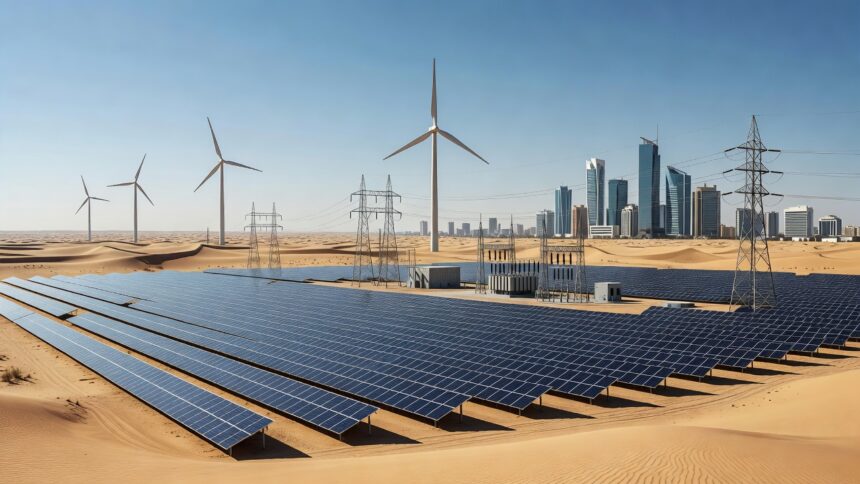
Economic diversification efforts are reshaping infrastructure needs in the region, with a focus on integrating renewables and enhancing grid capabilities to handle growing loads from electrification, according to the Siemens assessment. The study notes that resilience has become the new measure of efficiency, requiring systems that can predict, isolate and learn from potential failures. Organizations are increasingly investing in on-site renewables and storage as well as AI-enabled smart buildings to cut energy costs and emissions at the same time.
An earlier Siemens Middle East Power Outlook projected that the region would require an additional 277 gigawatts of generation capacity by 2035 to meet demand growth while replacing aging assets, Siemens Energy data shows. The current monitor stresses grid modernization as essential to accommodate variable renewables and support emerging sectors such as data centers and electric vehicle charging networks. This scale of expansion aligns with national visions that place sustainable infrastructure at the core of long-term economic planning.
The research highlights collaboration between government and business as key to achieving these infrastructure goals, with the Siemens report indicating that partnerships are already yielding progress in pilot deployments across the Gulf. Smart technologies are viewed as unlocking gains in productivity and sustainability, extending beyond energy into transport and building management. In commercial developments, AI applications help optimize operations while advancing overall decarbonization objectives set by regional authorities.
As the first dedicated Middle East edition of the biennial Siemens Infrastructure Transition Monitor, the document draws on executive perspectives from multiple industries to map the transition pathway. It frames the region’s approach as one of optimism paired with urgency in response to both immediate demands and future climate commitments. The findings provide a benchmark for tracking progress against global infrastructure trends identified in the wider Siemens study.