

 ع
ع


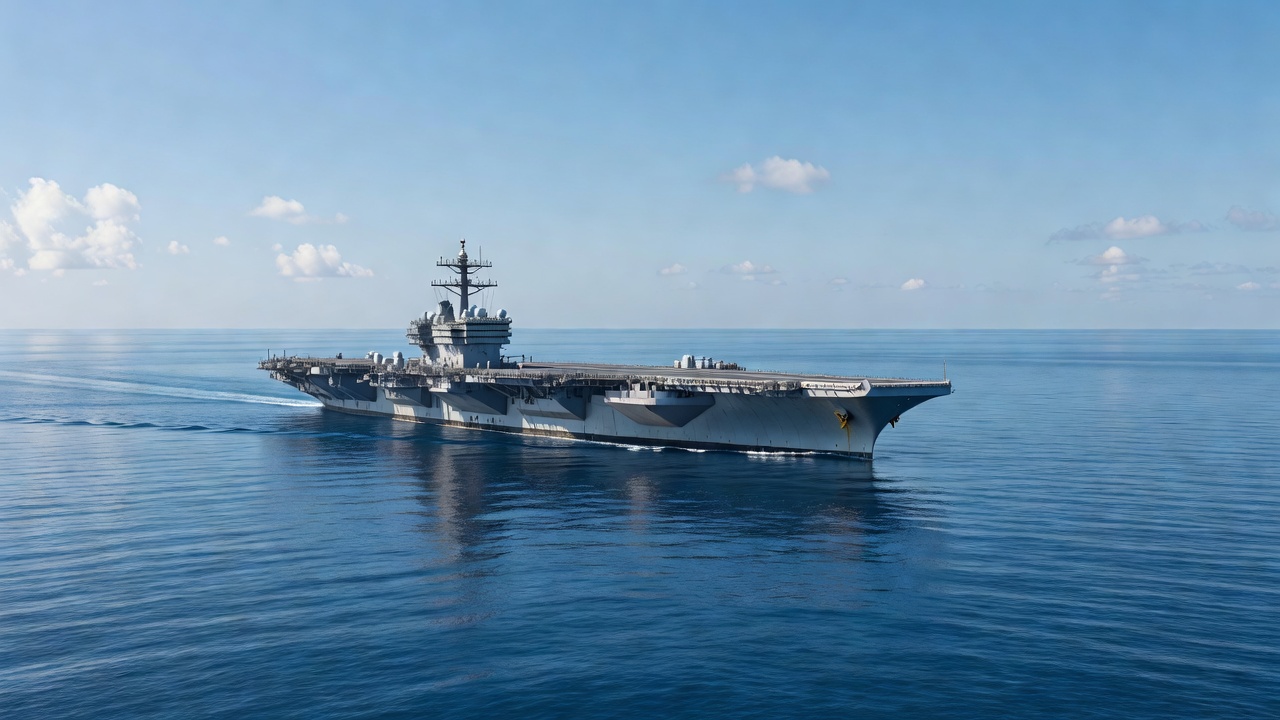
The USS Abraham Lincoln has remained at sea for more than 260 days without a port call as part of operations tied to the conflict with Iran, according to multiple accounts from families and lawmakers who have raised alarms over conditions that include food rationing, water contamination and deteriorating morale. Family members told reporters that some sailors have lost dozens of pounds, endured moldy showers and broken toilets, and faced exhaustion from relentless noise and vibrations, prompting at least one instance in which a crew member had to be stopped from jumping overboard. A U.S. official told Al Jazeera that the Navy had not observed an increase in suicidal ideations or attempts aboard the ship, while noting the presence of five chaplains, a psychologist, a social worker and additional behavioral health technicians among the crew.
Retired Navy veteran Jonny Burnell, who spent 111 days aboard the USS Carl Vinson in 2001 as a military photographer, told BBC News that he witnessed a shift from initial excitement to what he termed a visible deadness in shipmates’ eyes as the months passed. “There was one point where there was a visible kind of deadness in the shipmates’ eyes,” Burnell said, adding that the hardest aspect of his role was observing the sadness daily. He recalled sleeping in cramped “coffin racks” with aircraft arrestor cables running through the wall behind his head, producing constant noise from planes landing, taking off and guns firing that left little opportunity for genuine rest.
Nimitz-class carriers such as the Abraham Lincoln typically accommodate between 5,000 and 6,000 sailors and air wing personnel who must generate thousands of meals each day within a confined steel environment that limits personal space and outdoor access for many watchstanders. A CNN analysis of U.S. Navy deployment records found that the median length of stateside aircraft carrier tours has steadily risen since 2020, frequently surpassing the service’s recommended seven-month or 210-day cycle. Three deployments that began in 2024 exceeded 250 days at sea, with subsequent missions in 2025 pushing past 270 days in some cases.
U.S. Department of Veterans Affairs figures show that veterans died by suicide at a rate of 34.7 per 100,000 in 2022, roughly double the 17.1 per 100,000 rate recorded for nonveterans that year. Former Veterans Administration mental health policy chief Dr. Harold Kudler, interviewed by the BBC, explained that shipboard isolation combines prolonged boredom with bursts of extreme alertness in an environment where troops often cannot identify a clear front line. “You don’t know where the front is,” Kudler said, describing how such uncertainty can intensify mental-health struggles for both enlisted personnel and officers who remain unsure of the mission timeline or return date.
Admiral Brad Cooper, commander of U.S. Central Command, stated that the Lincoln currently registers among the lowest number of mental health cases when measured against the Navy’s 11 other aircraft carriers, while cautioning that extended sea service remains inherently difficult. “This doesn’t mean all is perfect,” Cooper said, adding that mental health requires the same attention as physical and spiritual well-being. Democratic senators and representatives have nonetheless requested detailed information from defense leaders on metrics used to track crew welfare, disruptions to the mail system that delayed care packages for months, and overall living conditions.
The USS George Washington is expected to arrive in the region within days to relieve the Lincoln, according to fleet tracking updates, yet that carrier itself faced a series of suicides in 2022 while pier-side in Virginia that an investigation attributed in part to substandard living conditions and lapsed standards. A 2023 Navy report on those deaths concluded that senior leadership had allowed standards to slip, letting sailors down in the process. Burnell likened his own vessel to a floating prison where some crew members resorted to extreme measures, including drug sales, simply to secure early removal from the deployment.