

 ع
ع


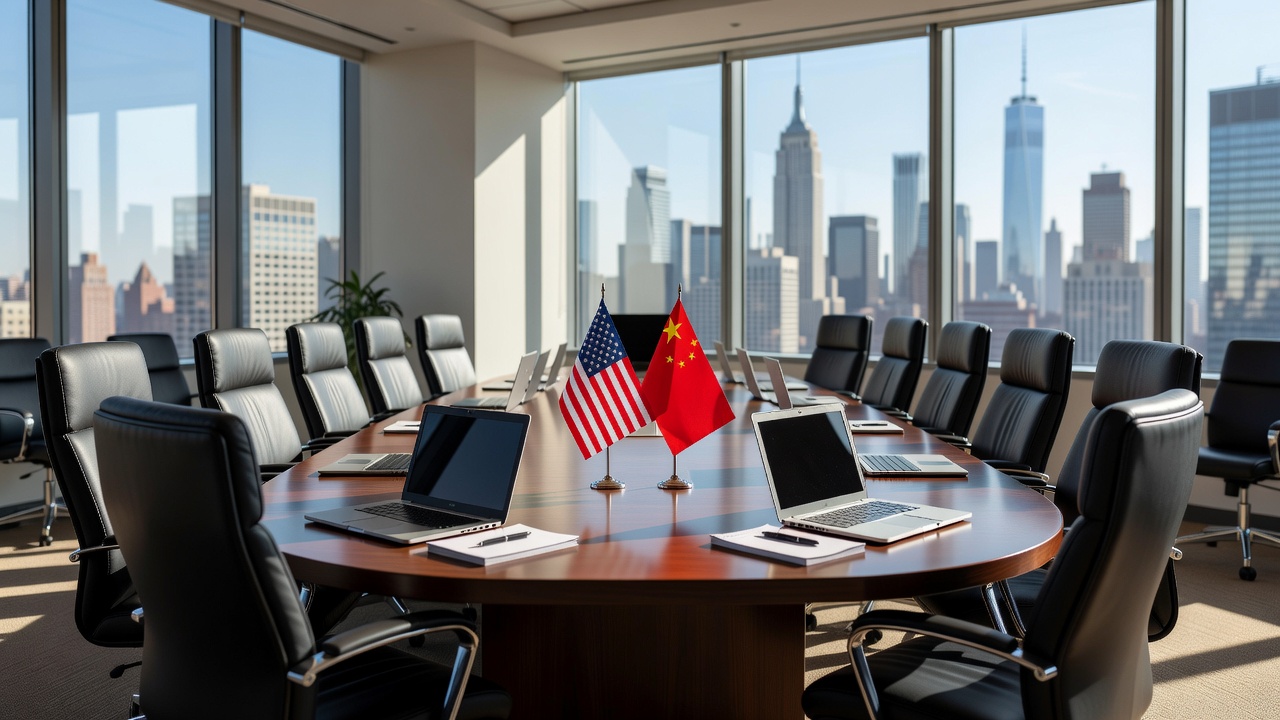
US Treasury Secretary Scott Bessent concluded talks with Chinese Vice Premier He Lifeng in New York by floating a notification mechanism for AI-related incidents that reach national security levels, according to a CNN report on the September 20, 2026, meeting. Bessent told reporters the two sides had examined setting up a dedicated US-China AI dialogue that would stress transparency between the world’s top two AI powers on shared threats and goals. The discussions, which a CNN assessment found also touched on broader trade matters, are intended to build momentum toward the leaders’ summit.
Reuters reported earlier this month that the United States and China had been planning dedicated AI safety talks for mid-September as the first such official bilateral exchange in President Donald Trump’s second term. The news agency detailed how Washington seeks cooperation on monitoring AI-driven cyberattacks while Beijing views the dialogue as a potential deliverable for the September 24 summit. An Atlantic Council dispatch noted that both leaders have described AI as a strategic priority, with Trump claiming the United States leads and Xi calling it a key lever for global technological competition.
Trump and Xi first addressed potential AI consultations during a meeting in Beijing in May, although that forum was never formalized, a Newsweek analysis stated. The Hill reported that apocalyptic warnings about uncontrolled artificial intelligence have since added urgency, despite Trump’s past dismissal of existential threats as a hoax and mutual distrust that has slowed progress on safeguards. A Brookings Institution review highlighted how the two countries agreed in 2024 to maintain human control over nuclear weapons decisions involving AI, marking their only concrete bilateral understanding to date.
Chinese intelligence chief Chen Yixin warned in a September 13 essay that AI could threaten Communist Party control through political rumors generated by hostile forces, according to coverage in The Hindustan Times. The Atlantic Council found that Xi himself referenced risks of loss of control in a July speech at the World AI Conference in Beijing, pairing the concern with proposals for government responses. US Representative Ro Khanna, speaking on CBS, called for an international agreement at the summit that would ban recursive self-improving AI and add safeguards against misuse for biological or nuclear weapons.
A Foreign Affairs assessment from April pointed to vulnerabilities in Chinese AI models, which it said accept malicious instructions 12 times more often than leading US systems and prove susceptible to jailbreaking 94 percent of the time. The assessment also noted that China published an updated AI safety governance framework in September 2025 that echoes concerns over chemical, biological and nuclear weapon development as well as open-source models that could proliferate misuse. Officials from both sides have expressed openness to discussions on avoiding shared risks and preventing bifurcation of their AI systems, Treasury Secretary Bessent told Axios in a separate interview cited across multiple outlets.
Analysts at the Center for Strategic and International Studies observed that little concrete progress on AI safety occurred after the May summit despite the announced intent to open a new track, with structural tensions persisting over commercial model superiority and security threats. The Council on Foreign Relations noted that semiconductor exports and AI safety protocols featured in earlier talks but yielded limited advances on core disputes such as chip controls. Any agreements reached at the upcoming summit may remain superficial yet could open space for future coordination, according to a US News and World Report summary of expert commentary.