

 ع
ع


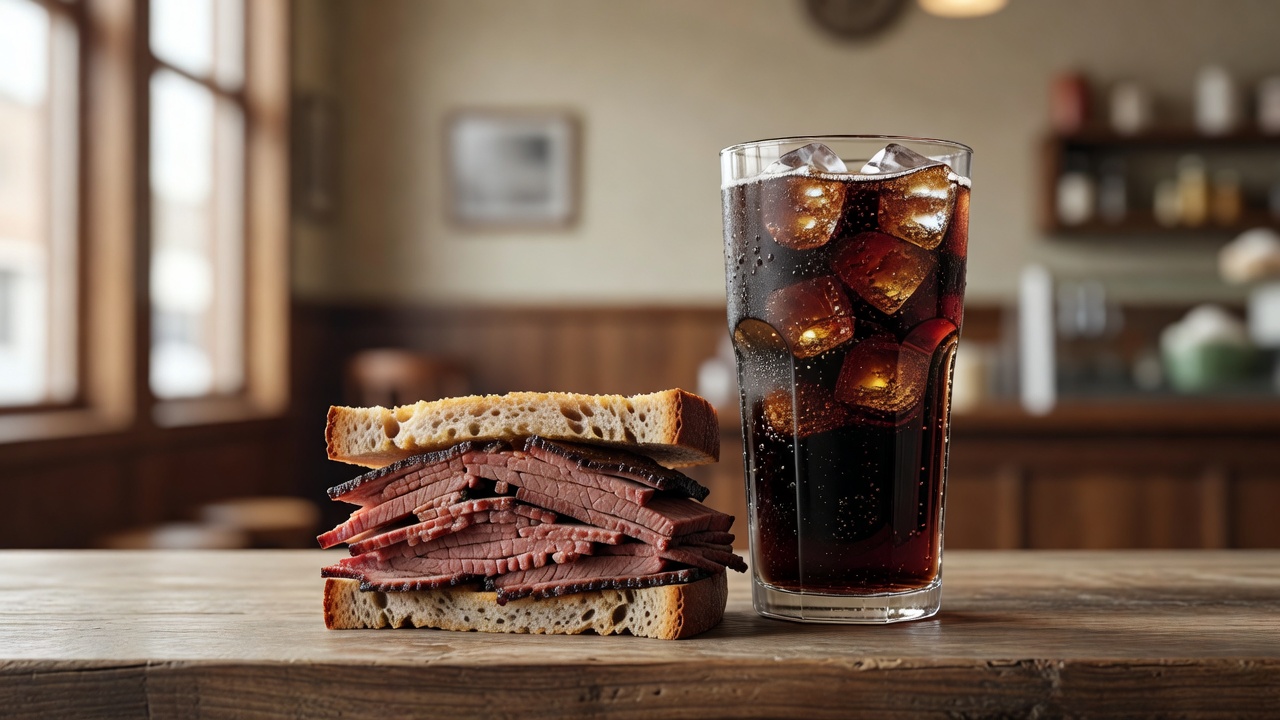
Schwartz’s Deli on St. Laurent Boulevard has been serving its famous smoked meat sandwiches with Cott black cherry soda for decades, but that pairing ended earlier this year when the canned version disappeared from supply chains. General manager Frank Silva told CBC News that the distributor informed him production had ceased due to rising aluminum costs linked to American tariffs. The deli, which orders around 100 cases a week, had to find a replacement quickly to meet customer demand, according to reports in the Montreal Gazette.
Silva, who has been with Schwartz’s for 37 years, noted that some patrons come specifically for the black cherry soda rather than the food. “People got hooked on it, so people come here for a smoked meat sandwich and a black cherry. That was always the case,” Silva said in an interview. The Montreal Gazette reported that the supply ran dry in March and this time the discontinuation appears permanent, unlike a similar shortage experienced in 2018.
Refresco, the multinational that bought Cott in 2018, cited the increased costs from U.S. tariffs on aluminum as a key factor in ending Canadian production of the specific canned soda, Silva explained to multiple outlets including CTV News. A provincial recycling deposit introduced in 2023 may have added to the financial pressures, he added. The company did not provide comment when contacted by several Canadian news organizations covering the story.
The deli has since adopted Fleischer’s Original Black Cherry Soda, made locally in Brossard by the Fleischer Beverage Company, a former distributor of the Cott product. Silva said the new soda comes in a larger can that costs about double but is popular because it is Canadian-made. “It’s a bigger can, and it’s local, it’s Canadian, so people are really getting into it,” he told The Canadian Press. Customers have embraced the switch, with some preferring the taste of the Quebec-produced drink.
The change at Schwartz’s, founded in 1928 by Romanian immigrant Reuben Schwartz, illustrates the ripple effects of international trade policies on everyday consumer experiences in a business that has become a Montreal landmark. A Farm Credit Canada assessment of the food and beverage sector found that steel and aluminum tariffs increased costs for aluminum cans, projecting a 12.4 percent decline in gross margins for beverage manufacturers in 2026. Silva indicated that even if Cott returns, patrons are likely to stick with the Quebec alternative as the deli races through 120 cases of the new soda weekly.
Supply of the Fleischer’s soda has at times struggled to keep up, with Silva receiving only 87 cases from a recent order for 100, according to coverage aggregated by Ground News. This surge reflects a broader “Buy Canadian” trend among companies navigating the trade war, Le Devoir reported on Sept. 1. The deli’s adaptation highlights how tariff-induced supply chain disruptions are prompting shifts toward local producers across the beverage industry.