ع



A joint statement by the Ministries of Health and Water and Sanitation, the Gauteng provincial government and the City of Tshwane on October 19, 2026, reported 408 cases of gastrointestinal illness between October 7 and 18 in Tshwane’s Region 7, with the highest daily total of 72 new cases recorded on October 13 and a further 16 on October 18. Most patients were children under four years old, presenting with stomach cramps and diarrhoea, though no deaths have been reported to date. Laboratory tests by the National Institute for Communicable Diseases identified norovirus, Campylobacter and Shigella in patient stool samples, while water quality checks on October 14 found extremely high levels of E. coli and total coliforms at the Bronkhorstspruit Water Treatment Works and associated reservoirs.
The Department of Water and Sanitation investigation determined that the Bronkhorstspruit Water Treatment Works had not chlorinated its output from September 24 to October 14 after the City of Tshwane encountered a dispute with its supplier, which had quadrupled prices. Tshwane executive mayor Nasiphi Moya admitted the municipality’s failure, telling a briefing that officials had not escalated the chlorine shortage to leadership and that the metro had run out of the chemical. “We take responsibility for the negligence,” Moya said, according to the Mail & Guardian, adding that disciplinary processes against responsible officials were already under way through the city’s chief operating officer.
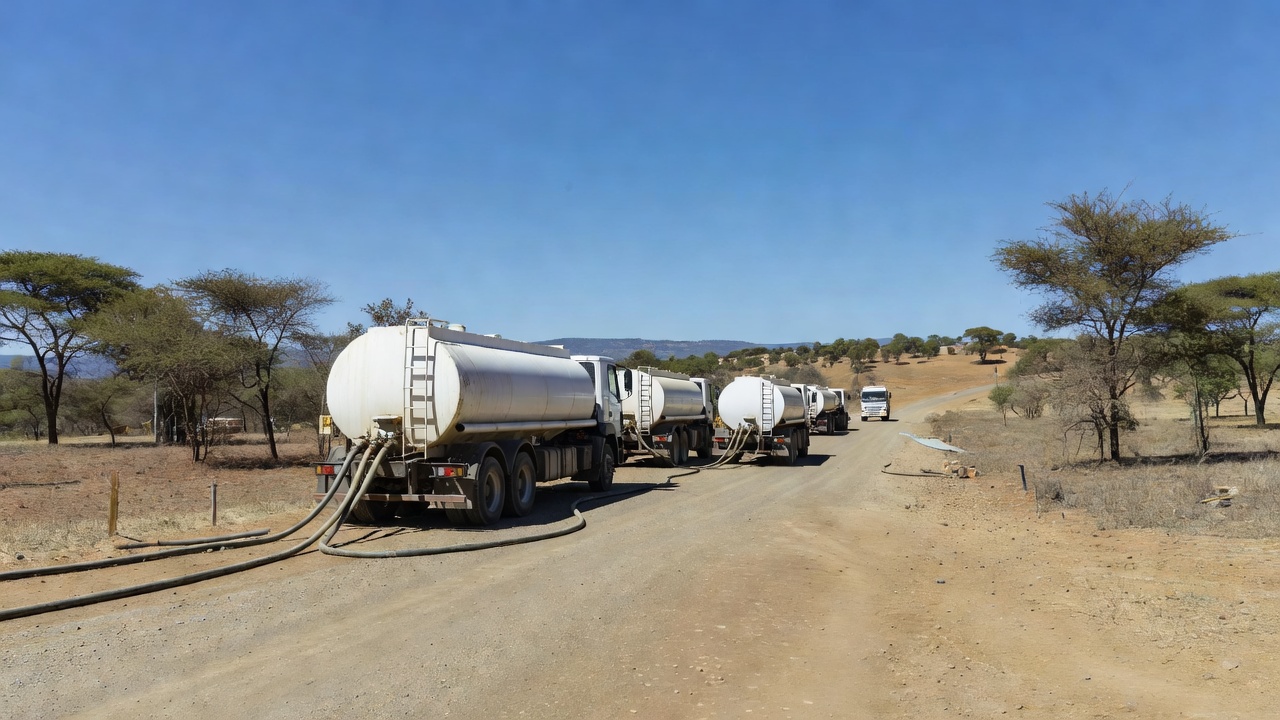
The Bronkhorstspruit River, the source for the treatment works, is heavily contaminated with sewage from dysfunctional wastewater treatment plants operated by Victor Khanye municipality and from failing City of Tshwane sewage pump stations, the joint statement noted. Authorities have warned residents in Zithobeni, Bronkhorstspruit, Dark City, Rethabiseng and Sokhulumi not to drink the tap water or use it for cooking, washing or bathing, even after boiling, and have restricted its use to flushing toilets until further notice. The City of Tshwane has deployed 36 water tankers supplying safe water from Cullinan, while Bronkhorstspruit Hospital has established an isolation area with most patients rehydrated and discharged within a day.
This outbreak forms part of broader water and sanitation challenges across Gauteng, where the Department of Water and Sanitation’s 2025 Green Drop report identified 23 of the province’s 61 wastewater systems as being in a critical state. City of Tshwane data places average non-revenue water losses at 42.6 percent over the past year, with annual losses estimated between 1.35 billion and 1.7 billion rand, the Citizen reported. An independent commission of inquiry into a similar prolonged crisis in Hammanskraal, cited by IOL, traced failings in water provision and contamination back 16 years to 2005.
WaterCAN, a civil society organisation monitoring water services, has demanded an immediate inquiry and the suspension of senior officials overseeing the Bronkhorstspruit plant, describing the incident as unacceptable in the national capital. Moya noted that a comparable chlorine supply disruption had occurred the previous year but was resolved through negotiations with the supplier. The investigation also found that pumps, sand filters and other equipment at the treatment works were not functioning properly.
Deputy Water and Sanitation Minister David Mahlobo stated that some water samples had tested positive for a non-pathogenic variant of Vibrio cholerae, though the joint statement confirmed no cholera bacteria were present in patient specimens, as reported by News24. Further tests are continuing to rule out additional contaminants. The City of Tshwane has reopened the treatment works after restoring chlorine supplies but maintains that independent verification is required before the water is declared safe for consumption.