ع
ع


President Donald Trump announced on September 20 that his long-proposed 250-foot triumphal arch will double as a military complex capable of storing and rapidly deploying large numbers of drones along with snipers positioned on the roof and plaza areas. The president wrote on his Truth Social platform that he agreed to the conversion at the strong request of the U.S. military and for national security purposes, adding that the facility will also hold large quantities of sniper ammunition. Trump stated there will be no facility like this anywhere in the world, according to the Washington Post report on his post. The shift comes after months of presenting the structure primarily as a tourist attraction and monument, a New York Times assessment found.
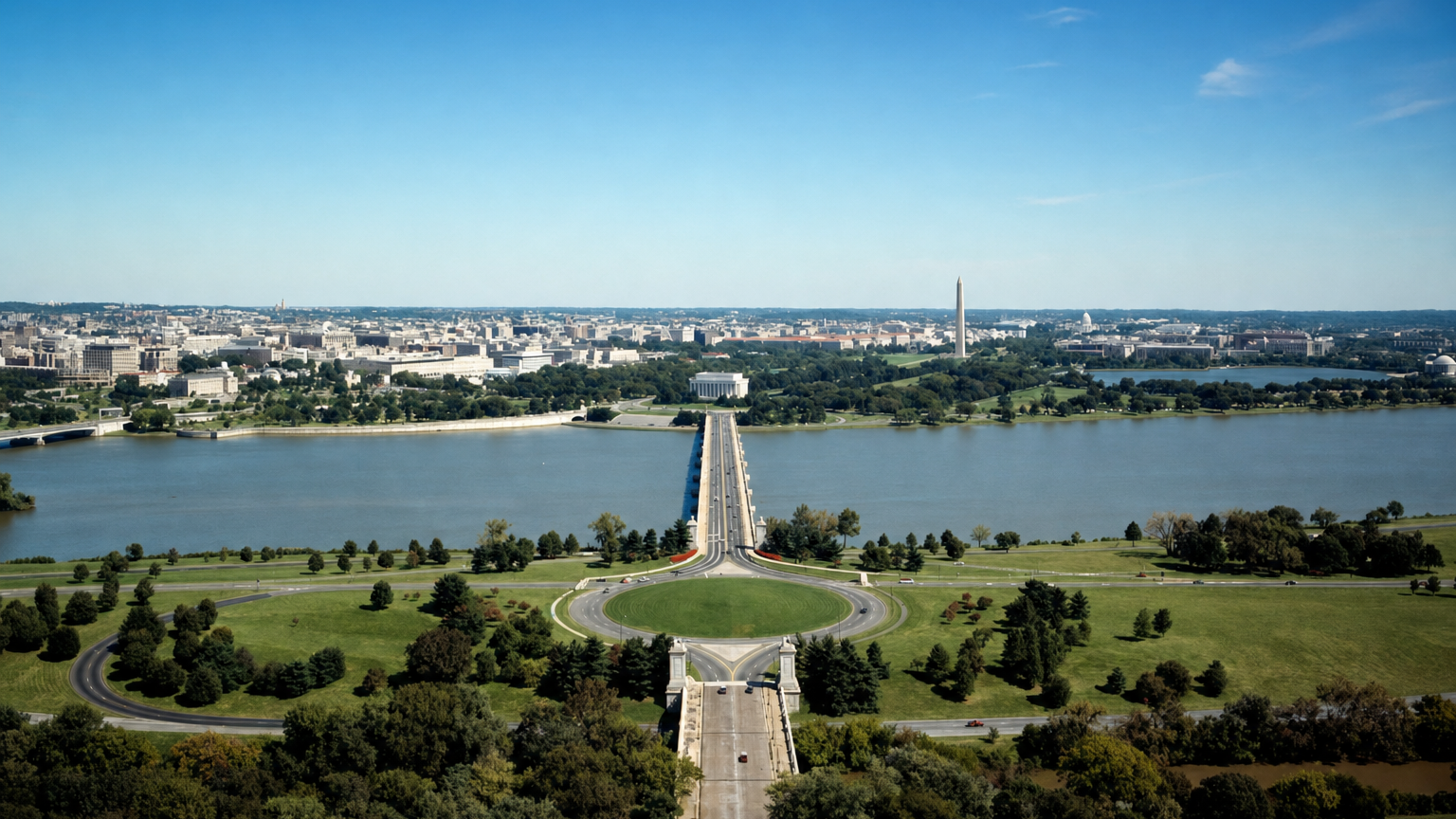
The arch, planned for Memorial Circle at the entrance to Arlington National Cemetery across the Potomac River from the Lincoln Memorial, was originally conceived to mark the 250th anniversary of American independence. Designs filed earlier in 2026 feature a 250-foot-tall structure modeled after the Arc de Triomphe but significantly larger at nearly 100 feet taller, topped with a golden winged Lady Liberty figure flanked by two golden eagles. Inscriptions reading “One Nation Under God” and “Liberty and Justice for All” appear in gold on the facade, according to renderings reviewed by the Commission of Fine Arts. Trump has described the project as the greatest triumphal arch in any capital city, a claim repeated in multiple administration statements since late 2025.
Construction timelines have accelerated under the Trump administration with excavation work scheduled to begin within weeks of early September announcements and full operations potentially starting in November. National Park Service documents obtained by ABC News outline a two-to-three-year build involving 20-hour daily shifts year-round, multiple cranes reaching 320 feet tall and heavy equipment to drive foundations 75 feet to bedrock. The aggressive schedule aims to complete the project before the end of Trump’s current term, Interior Secretary Doug Burgum indicated in a social media post referenced by The New York Times. Preliminary site testing and a $500,000 environmental assessment awarded to an Oregon firm have already taken place.
The Commission of Fine Arts, composed largely of Trump appointees, approved the design in May after the president rejected suggestions to reduce its scale by removing the winged angel and golden eagles. That panel provided an advisory nod without enforcement power, while the National Capital Planning Commission is expected to weigh in further, a Reuters dispatch noted. The Federal Aviation Administration continues reviewing potential aerial hazards given the arch’s proximity to Reagan National Airport and a Pentagon heliport, as structures over 200 feet require such evaluations according to federal guidelines. Trump has maintained the arch befits the capital of the world’s most powerful nation.
Opposition has mounted from military veterans, historic preservation groups and advocacy organizations concerned that the towering monument will overshadow Arlington National Cemetery and disrupt sight lines to other landmarks. A lawsuit filed by Vietnam War veterans in February argues that congressional approval is required for monuments on National Park Service land in Washington, PolitiFact reported in its review of the project’s evolution. Preservationists have warned that proceeding without full clearances could set precedents for other contested Trump-backed construction efforts around the capital, according to a Washington Post analysis. Public comments submitted during review periods ran overwhelmingly negative.
Cost estimates for the arch have ranged as high as $100 million before the military additions, with the National Endowment for the Humanities allocating $15 million and additional funds directed toward related planning through the National Civic Art Society. Trump initially suggested using leftover private donations from his White House ballroom renovation but taxpayer resources have since been committed, a Reason magazine overview of the funding trail showed. The project’s scope has evolved from an initial proposal under 60 feet to the current 250-foot height symbolizing one foot per year since independence, Al Jazeera noted in its coverage of the September 20 announcement. Federal panels have fast-tracked aspects of the review process in line with other Trump capital initiatives.