ع
ع


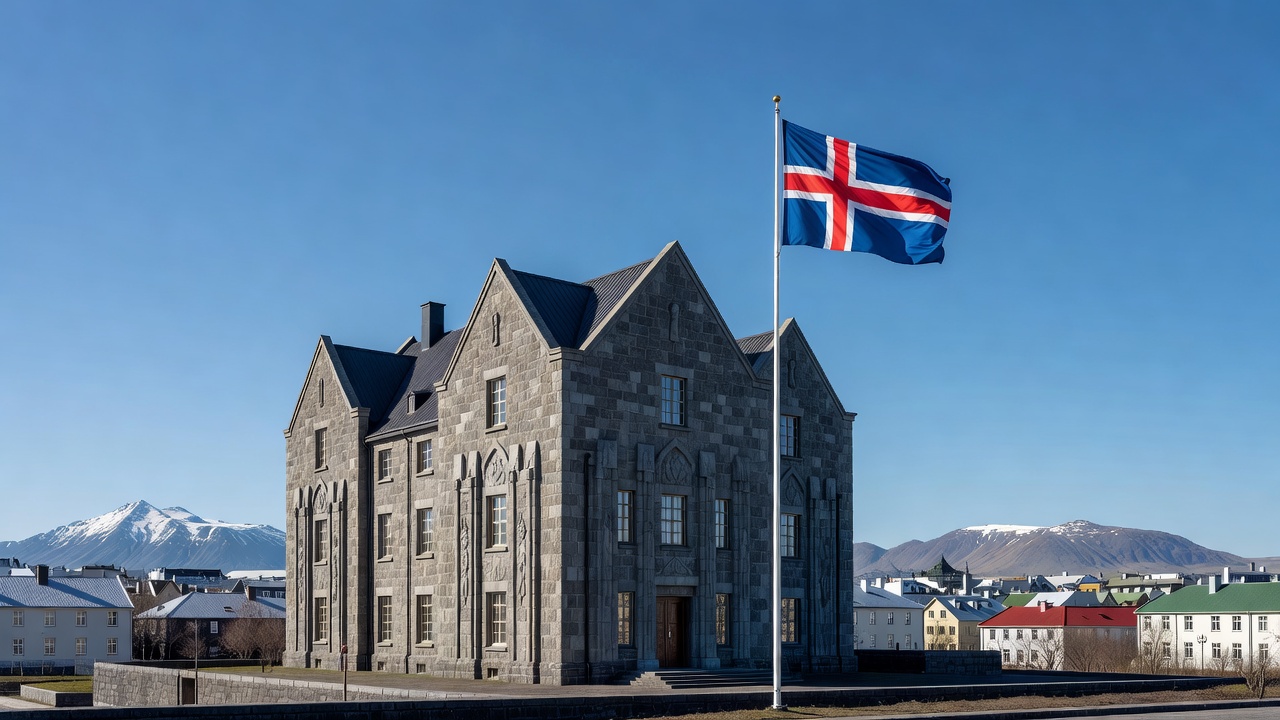
Icelanders are deciding Saturday whether their government should reopen accession negotiations with the European Union more than a decade after suspending them a move that would not automatically bring membership but could lead to talks wrapping up in 18 to 24 months. The August 29 referendum has produced fluctuating polling numbers with a Gallup survey conducted August 24-27 and released the day before the vote placing opposition at 51.6 percent and support at 48.4 percent Reuters reported. Earlier Maskina polling for Visir had shown a slight edge for the yes side at 51.3 percent illustrating how the outcome remains too close to call as stations opened at 9 a.m. local time and close at 10 p.m.
Prime Minister Kristrún Frostadóttir’s center-left administration advanced the ballot after framing renewed EU engagement as a now-or-never proposition amid rising living costs and the war in Ukraine according to statements cited across multiple outlets including Reuters. A no outcome would set aside further speculation on membership the premier indicated while the opposition Independence Party led by Guðrún Hafsteinsdóttir has portrayed the question as one of handing decision-making on fisheries agriculture and natural resources to Brussels. The campaign has centered more on sovereignty than geopolitics even as Iceland maintains its NATO founding role and a 1951 bilateral defense pact with the United States Euronews noted in its coverage.
Fishing and marine industries represent a cornerstone of the economy with the Food and Agriculture Organization placing 2023 exports at $2.9 billion following marine capture production of 1.43 million tonnes the previous year. Opponents have voiced fears that the EU’s Common Fisheries Policy would erode national control over prized grounds a concern rooted in Iceland’s 1970s Cod Wars with Britain and its 1944 independence from Denmark. Yet a consultancy assessment from Arctica Finance concluded that membership would likely prove positive for larger operators by significantly raising quota values and enabling expansion even without full exemptions from the policy RÚV reported.
Economic arguments have figured prominently for the yes camp as Iceland confronts stubbornly high interest rates near 8 percent and inflation at 5.6 percent despite ranking fifth globally in GDP per capita. Integration into the customs union and eventual euro adoption could ease those pressures supporters contend while helping stabilize an environment where living costs exceed those of the next 10 most expensive countries per trade union data. Many voters however credit the nation’s post-2008 recovery and current affluence to its independent stance outside the bloc a perspective political science professor Eirikur Bergmann at Bifröst University has highlighted in commentary to various media.
Security considerations have played a secondary role in the debate despite Russia’s increased maritime activity near Icelandic waters and the country’s strong backing of Ukraine. Iceland signed a defense and security partnership with the EU earlier in the decade which officials described as an anchor in shared values and prosperity though the no side insists NATO and U.S. ties remain the foundation. The referendum arrives as external factors including tariff policies and statements from the second Trump administration have added urgency to the government’s push according to foreign ministry estimates and Wikipedia compilations of public records.
More than one in five of the roughly 400,000 residents had already voted early by Friday according to public broadcaster RÚV figures setting the stage for results expected overnight. A yes vote would revive an application originally lodged in 2009 with 27 of 35 negotiation chapters already opened and 11 provisionally closed before the 2013 suspension under a previous Eurosceptic government. Any final accession would still require a second referendum parliamentary approval constitutional amendments and ratification by all 27 EU member states as outlined in foreign ministry memos.