ع
ع


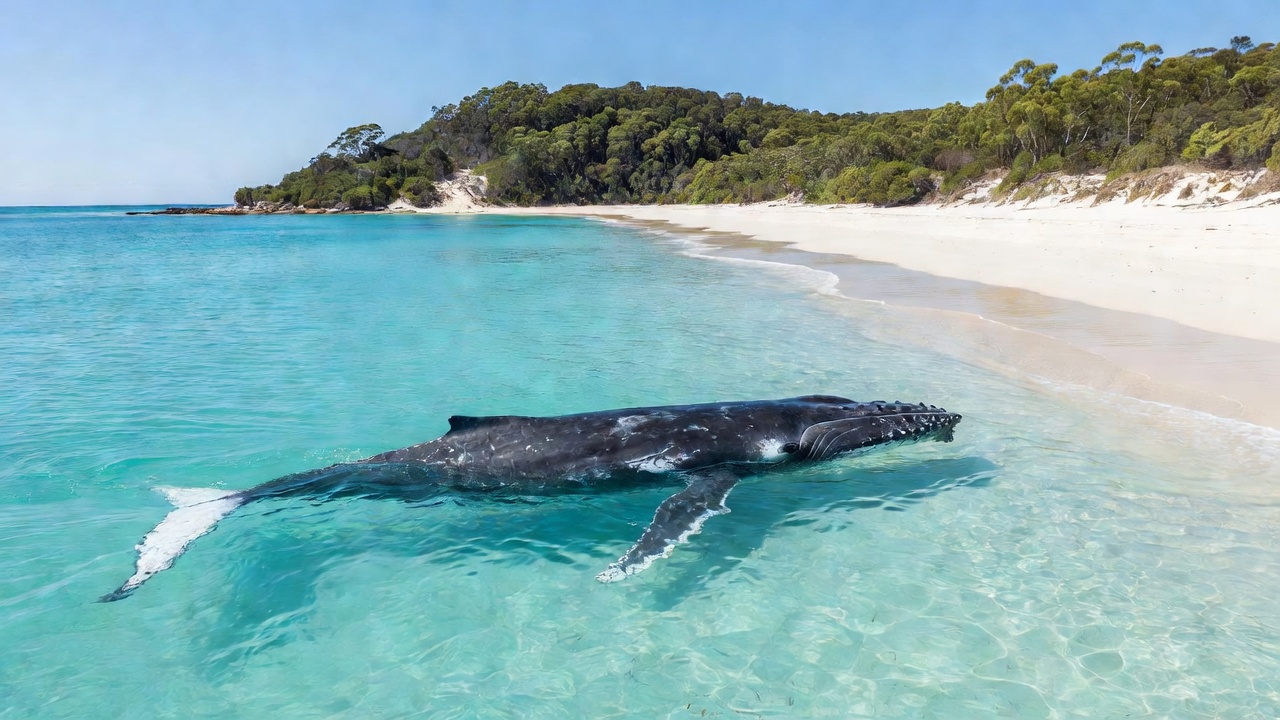
The 10-year-old Scarlet Smith discovered the humpback whale stuck in shallow water near the entrance to Wathumba Creek on the heritage-listed sand island and immediately began splashing seawater over its body to prevent dehydration. Her mother Chantelle Smith captured the moment on video and contacted authorities while the pair remained at a safe distance. According to a News.com.au report, Smith said the whale appeared responsive and noted “It was talking to us.” The family had been exploring the area approximately 46 kilometres from Hervey Bay when the encounter occurred.
Officers from the Queensland Department of the Environment, Tourism, Science and Innovation reached the remote site around 9am that Sunday morning. The department reported that the whale successfully refloated itself on the rising afternoon tide and swam into deeper waters without requiring physical intervention. Officials later confirmed the animal showed no signs of injury and returned to the ocean safely. This outcome aligned with the tidal patterns at Wathumba Creek, where the waterway forms a temporary saltwater lake at high tide.
K’gari, previously known as Fraser Island, receives fewer visitors at this particular creek entrance, limiting potential human interference with marine life. The Queensland Parks service describes the island’s marine parks as part of the humpback highway that attracts migrating whales from June to November each year. Data from the state environment department places annual visitation to Queensland waters by humpback whales at more than 40,000 individuals during peak migration periods.
The humpback population along Australia’s eastern coast has recovered substantially since the cessation of commercial whaling, when numbers had fallen to around 500. A 2024 assessment issued by the Queensland Department of the Environment, Tourism, Science and Innovation projected more than 30,000 humpbacks would enter state waters that season, reflecting sustained growth over recent decades. Federal authorities track these trends as part of broader marine mammal monitoring programs.
Strandings of individual whales and dolphins remain a recurring occurrence in Australian coastal areas, the federal Department of Climate Change, Energy, the Environment and Water has stated. Such events can stem from navigational errors, illness or tidal changes, with many animals managing to refloat naturally as conditions shift. The department’s records indicate both single and mass strandings take place annually across multiple states, prompting coordinated response protocols.
The Queensland Department of the Environment, Tourism, Science and Innovation reiterated that members of the public should never touch, approach or attempt to move stranded marine animals. Instead, sightings must be reported immediately to enable professional assessment and minimise stress to the creature. This guidance, repeated in the department’s statement on the K’gari incident, aims to protect both wildlife and human safety during such encounters.
Chantelle Smith later reflected on the experience in comments reported by News.com.au. She stated “I’m happy now… ruined the rest of the day… until we heard that it did.” The incident highlighted public interest in marine conservation, with video of Scarlet Smith’s actions circulating widely on Australian news platforms.