ع
ع


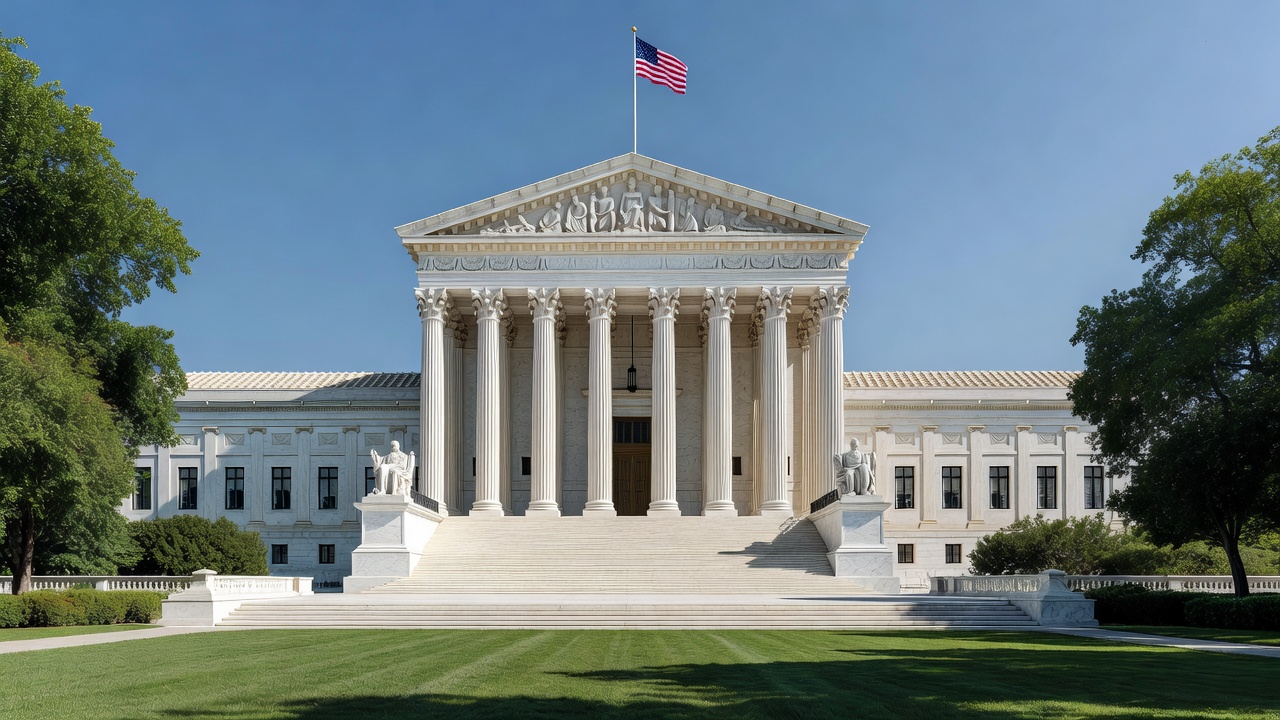
In an opinion authored by Chief Justice John Roberts, the Supreme Court held that the 14th Amendment extends citizenship at birth to virtually all children born on US soil regardless of their parents’ immigration status. The ruling affirmed lower court decisions that had blocked the 2025 executive order, which sought to exclude those born to undocumented immigrants or temporary visa holders from automatic citizenship. Six justices formed the majority, including Roberts and two Trump appointees who joined the court’s three liberals, according to the official opinion released Tuesday.[[1]](https://www.supremecourt.gov/opinions/25pdf/25-365_4hdj.pdf)
The decision rests on the 14th Amendment ratified in 1868, which states that all persons born or naturalized in the United States and subject to its jurisdiction are citizens. Roberts wrote that citizenship represents the right to participate fully in the political community, a promise the framers extended to every free-born person in the land. The majority rejected arguments that parents’ temporary or unlawful presence removes their children from US jurisdiction, grounding the interpretation in longstanding precedent that includes the 1898 Wong Kim Ark case.
Pew Research Center data shows that approximately 320,000 babies, or about 9 percent of all US births, were born in 2023 to mothers who were unauthorized immigrants or held temporary legal status. Of those, roughly 260,000 would have been affected by the executive order, including 245,000 born to unauthorized immigrant mothers where the father was neither a citizen nor lawful permanent resident. The figures reflect a rebound in such births after an earlier decline between 2006 and 2016, the center’s analysis found.[[2]](https://www.pewresearch.org/short-reads/2026/03/31/about-9-of-us-births-in-2023-were-to-unauthorized-or-temporary-legal-immigrant-mothers/)
President Trump responded on Truth Social by calling the outcome “too bad” and pledging to pursue legislation to end birthright citizenship without a constitutional amendment. “Congress should today start work on ending expensive, and unfair to our country, birthright citizenship,” he stated. Stephen Miller, a Trump adviser, posted on X that the ruling ranked among the most destructive in the court’s history, adding that American citizenship is not the birthright of the world.
Civil rights organizations welcomed the decision as a reaffirmation of constitutional principles. Dariely Rodriguez of the Lawyers’ Committee for Civil Rights Under Law said it solidifies what has been true for over a hundred years, noting that anyone born on American soil is a citizen irrespective of parental legal status. The American Civil Liberties Union, which represented plaintiffs in the case known as Trump v. Barbara, described the 6-3 outcome as a victory that prevents denial of citizenship to hundreds of thousands of US-born children annually.[[3]](https://www.aclu.org/news/immigrants-rights/supreme-court-rules-to-protect-birthright-citizenship-in-landmark-case)
Justice Clarence Thomas, in a dissent joined by Justice Neil Gorsuch, contended that the 14th Amendment was being repurposed for political projects far from its original intent to protect freed slaves who held no allegiance to other nations. Justice Samuel Alito called the ruling a serious mistake that confers citizenship on virtually anyone born in the country, including those arriving specifically for birth tourism. A separate dissent by Justice Gorsuch echoed concerns over the scope of the decision.
The case reached the Supreme Court after Trump signed the order on his first day back in office in 2025, prompting immediate legal challenges from multiple states and advocacy groups. Oral arguments in April featured a rare appearance by the president himself in the courtroom. The ruling leaves in place the broad interpretation of birthright citizenship that has defined US law for more than 150 years, according to court filings and analyses from groups tracking the litigation.