

 ع
ع


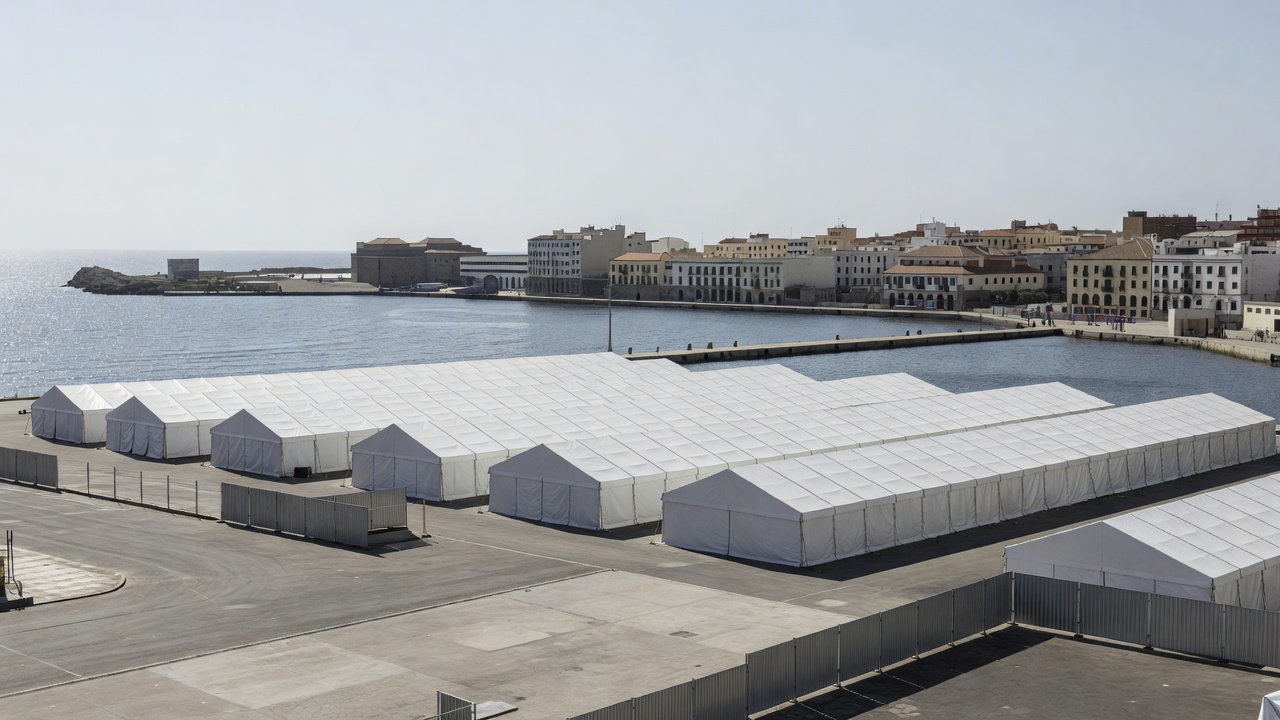
Spanish police and military units deployed more than 150 officers to launch an early morning operation on Friday to relocate migrants from settlements on Ceuta’s Trampolín and Benítez beaches to a newly prepared tented camp in the port area. The transfer began around 6:30 a.m. local time with migrants initially applauding before jostling for limited spaces led to crowds breaking through cordons and running along the designated route. Officers restored order by firing warning shots into the air and using batons, according to accounts compiled by Reuters and El País, after which the process continued under reinforced security with the situation brought under control within hours.
The port facility offers beds and showers for up to 1,700 adult men while minors are directed to separate housing, yet local Ceuta officials estimate more than 4,000 migrants currently occupy the beach areas with thousands more scattered across the enclave. Central government figures place the total remaining from the July surge at a lower level than the 13,000 cited by the autonomous city authority, a discrepancy that has persisted since most of the initial 72,000 to 80,000 crossers were returned to Morocco within days. Spanish Interior Ministry data reviewed by regional outlets shows the operation follows a 215 percent rise in irregular land entries into Ceuta during the first half of 2026 compared with the prior year.
Frontex statistics indicate a 46 percent increase in detections along the Western Mediterranean route in early 2026 driven by evolving smuggling tactics that shifted activity toward Algerian departure points amid tighter Moroccan controls. The July mass breach represented an unprecedented single event for the 18.5 square kilometre territory, overwhelming local resources and prompting emergency returns that nonetheless left several thousand in makeshift beach camps for subsequent weeks. EU border agency reports have highlighted Ceuta and nearby Melilla as persistent pressure points where seasonal spikes test coordinated responses across member states.
The relocation proceeds despite objections from Ceuta’s conservative local government and a police union challenge that a national court rejected on Thursday, clearing the way for use of 16,000 square metres of port land. Digital transformation minister Oscar Lopez called the move “a key step” that would speed up case processing and ease burdens on public areas, as quoted in multiple Spanish outlets. NGOs operating in the enclave have documented ongoing shortfalls in shelter capacity even as the new site opens, with many migrants having endured rough sleeping since the initial border surge.
Most participants in Friday’s transfer were adult males and older boys from sub-Saharan and North African origins who had remained after the July events, during which violence at the border left scores dead according to compiled tallies from international observers. The operation involved drones and coordinated escorts along a roughly one-kilometre path, with long queues forming later outside the camp for identification and registration. Local port authority president Juan Manuel Doncel criticised what he termed insufficient coordination between national and regional bodies in preparing the site.
Political fallout from the 2026 Ceuta migrant crisis has extended beyond Spain, contributing to Italy’s brief reimposition of border checks with Spanish travellers and intensifying debates within the European Union over burden-sharing mechanisms. Prime Minister Pedro Sanchez has faced criticism for his government’s handling of the crisis, which has strained relations with Morocco and tested EU migration policies. Ceuta, with a population of around 80,000 in just 18.5 square kilometers, has long been a focal point for migrant arrivals due to its location on the African continent.