ع
ع


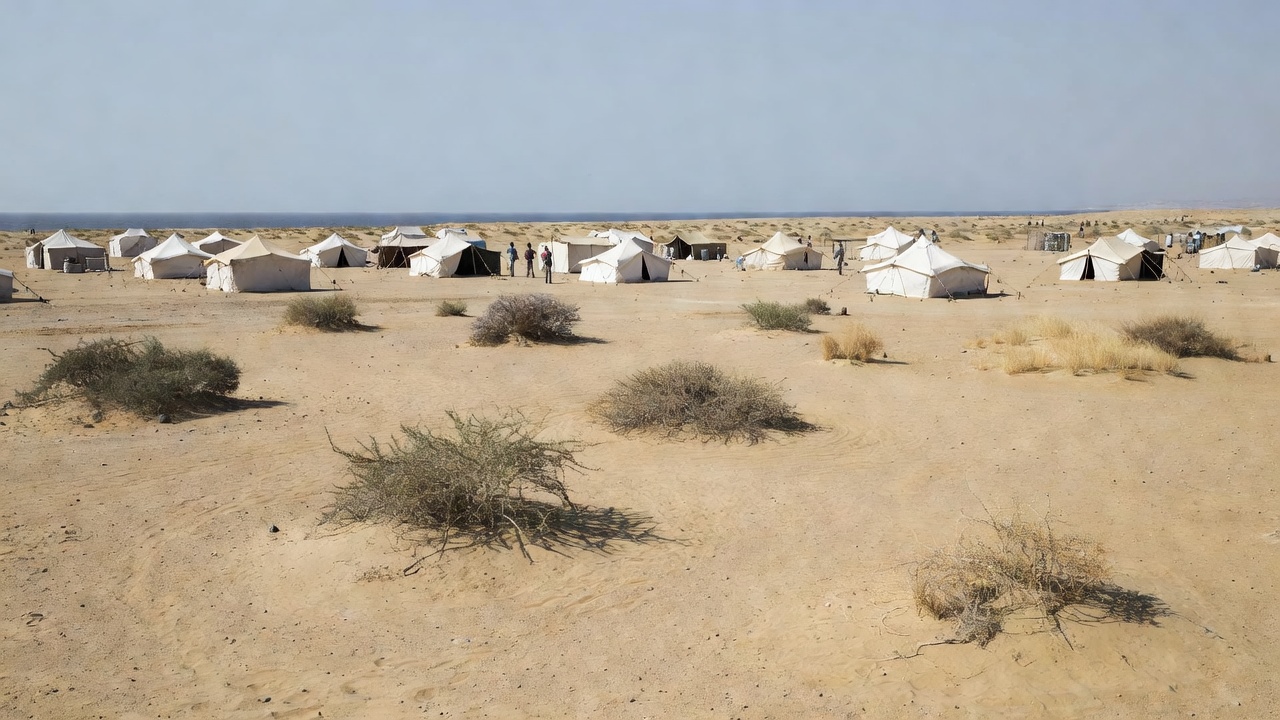
The UN Refugee Agency has documented nearly 3000 Yemeni refugees reaching Djibouti in under a week with more than half being women and children who endured dangerous boat journeys across the Bab el-Mandeb strait according to a UNHCR briefing. Refugees continue to arrive at coastal points including Obock Khor Angar Moulhoule and Godoria after trips in small vessels that often leave them with limited supplies. The agency has warned that the influx is straining resources in the Markazi refugee village which was already home to over 2700 Yemenis and 1500 Eritreans before the latest wave.
Frank Gardner’s BBC report titled Inside a camp for Yemeni refugees who have fled to Djibouti offered a firsthand look at the settlement highlighting the human stories behind the statistics released by UNHCR. The correspondent observed families who had fled recent battles along Yemen’s western coast many of them displaced for a second time after returning from earlier exile. Local Djiboutian families have hosted around 270 of the new arrivals sharing resources despite their own limitations the report and accompanying UNHCR assessment found.
Djibouti’s government held a high-level meeting on September 21 2026 to coordinate response to the refugee situation in the Obock region the national newspaper La Nation reported. Prime Minister Abdoulkader Kamil Mohamed presided over discussions that identified urgent needs for additional shelter sanitation tents food kits and improved electricity at the sites. Officials called for faster registration by the national refugee agency and enhanced medical caravans to monitor health risks such as diarrhoeal diseases particularly among pregnant women and unvaccinated children.
The escalation has displaced more than 100000 people inside Yemen since early September UNHCR figures show with fighting centered on the Red Sea coast where Houthi forces have gained ground. This internal displacement combined with the sea crossings has created a dual burden on humanitarian operations in the region. The International Organization for Migration noted that fuel shortages in Yemen had temporarily slowed departures but anticipated further movements once conditions improve.
Djibouti already accommodates more than 36000 registered refugees and asylum seekers with the majority from Somalia and Ethiopia according to UNHCR data from earlier in 2026. The new Yemeni arrivals are adding pressure to a system that includes urban refugees and those in camps like Ali Addeh and Holl Holl. Preparation is underway for up to 10000 additional people which could overwhelm school capacity and raise risks of disease outbreaks in overcrowded conditions.
Humanitarian partners are distributing core relief items and providing financial support but funding gaps remain a concern for sustained response a UNHCR statement indicated. Some refugees are being integrated into existing facilities while others stay with host families in Obock. The situation reflects the broader instability in Yemen where only 60 percent of health facilities are fully operational amid the renewed conflict according to World Health Organization assessments.