ع



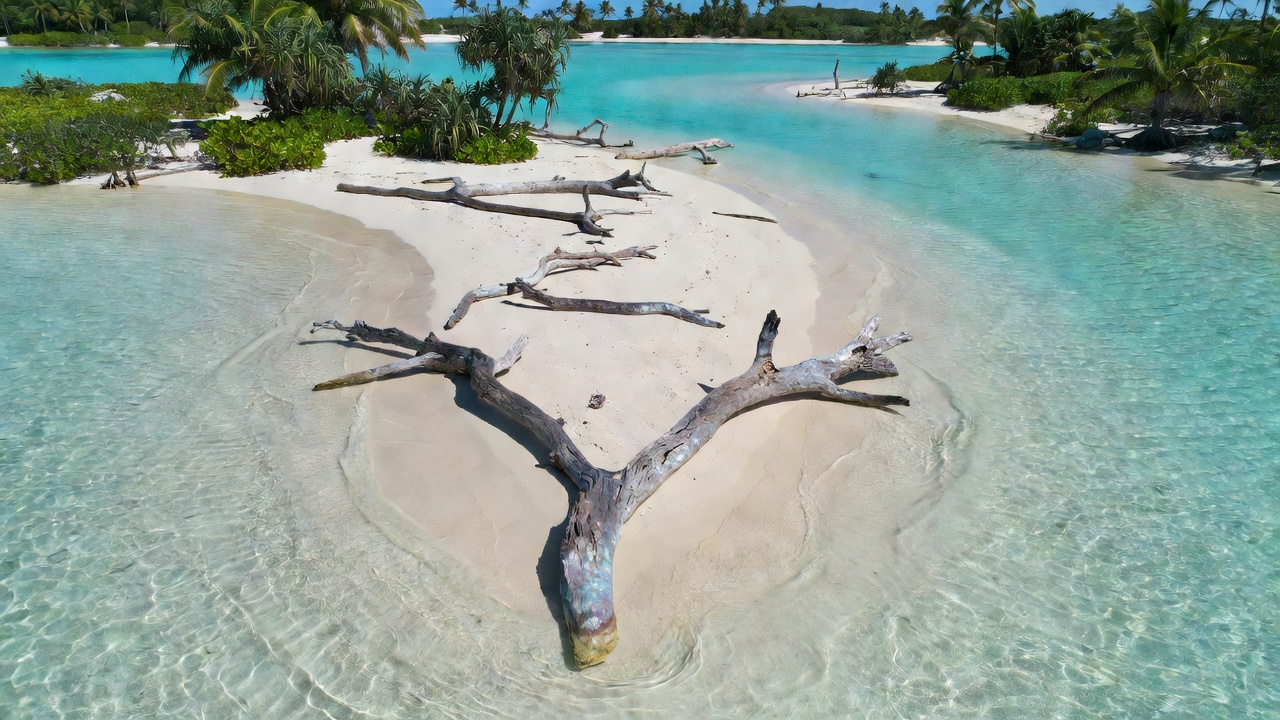
The Taraia Object expedition has ruled out the hypothesis that a visual anomaly in a lagoon on Nikumaroro atoll represented wreckage from Amelia Earhart’s Lockheed Electra 10-E, with researchers determining it was most likely a collection of large trees that had washed ashore. By the time the team reached the remote Pacific site in mid-October 2026 much of the debris had fragmented and dispersed leaving only a Y-shaped segment whose reflective surface resulted from a carbonate veneer rather than metal. Purdue University said in a news release that the feature formed through natural processes on the Taraia Peninsula sandspit which acts as a catchment area for material entering the lagoon via the Tatiman Passage. The findings came after underwater surveys with sonar and magnetometers combined with terrestrial archaeology though the work produced no conclusive link to the missing aircraft.
Amelia Earhart and navigator Fred Noonan disappeared on July 2 1937 while attempting to complete a round-the-world flight with their last reported position near Howland Island. One theory maintains the pair reached Nikumaroro then called Gardner Island and survived temporarily as castaways a premise explored by the International Group for Historic Aircraft Recovery through decades of expeditions that recovered items such as possible personal effects and bone fragments later lost but studied for consistency with Earhart’s profile. A report from that group along with broader historical analyses has kept the atoll theory active even as deep-ocean searches near Howland have covered thousands of square miles without locating the plane.[[1]](https://aerocorner.com/blog/amelia-earhart/)
The latest investigation originated from 2020 satellite images that showed an elongated white shape in the shallows prompting the Purdue-led effort given the university’s archival connection to Earhart who once served as a visiting faculty member. Project director Rick Pettigrew stated from the site that the long-running puzzle remained unresolved. “This mystery has been ongoing for 90 years and the mystery continues” he said. Steve Schultz of Purdue University noted the team had followed scientific methods yet “Unfortunately we weren’t able to find that smoking gun.”
Researchers recovered a steel tube about 30 inches long from the lagoon near the peninsula along with additional artifacts that will undergo further study to illuminate how debris moves across the atoll. Purdue University said in a news release that these items support the premise behind the hypothesis even if the specific Taraia Object proved natural. The expedition faced logistical challenges from severe weather and rough seas that delayed shore access yet the team completed both maritime and land-based work over several days.[[2]](https://www.purdue.edu/newsroom/2026/Q4/search-for-amelia-earharts-plane-continues-after-taraia-object-expedition-on-nikumaroro-rules-out-latest-hypothesis)
Comparable disappointments have occurred in other recent searches for Earhart’s aircraft including a 2024 sonar image released by Deep Sea Vision that appeared to show an intact plane resting more than 16 000 feet deep about 100 miles from Howland Island. A follow-up visit confirmed the formation as natural rock rather than the Electra a determination the company announced after high-resolution imaging replaced the initial distant sonar data. Such episodes underscore the difficulty of confirming targets in vast expanses of Pacific seafloor where similar shapes can arise from geological features.[[3]](https://www.smithsonianmag.com/smart-news/researchers-thought-they-found-amelia-earharts-missing-plane-it-turned-out-to-be-a-plane-shaped-pile-of-rocks-180985603/)
The Nikumaroro line of inquiry has persisted because of reported radio signals received after the disappearance and other circumstantial clues though no artifact has been definitively tied to the Electra. Purdue University which safeguards many of Earhart’s documents and personal items emphasized that the expedition tested one targeted hypothesis with rigorous methods. Analysis of the newly gathered materials may yet yield insights into whether the atoll holds any connection to the aviators’ fate nearly nine decades later.