
 ع
ع


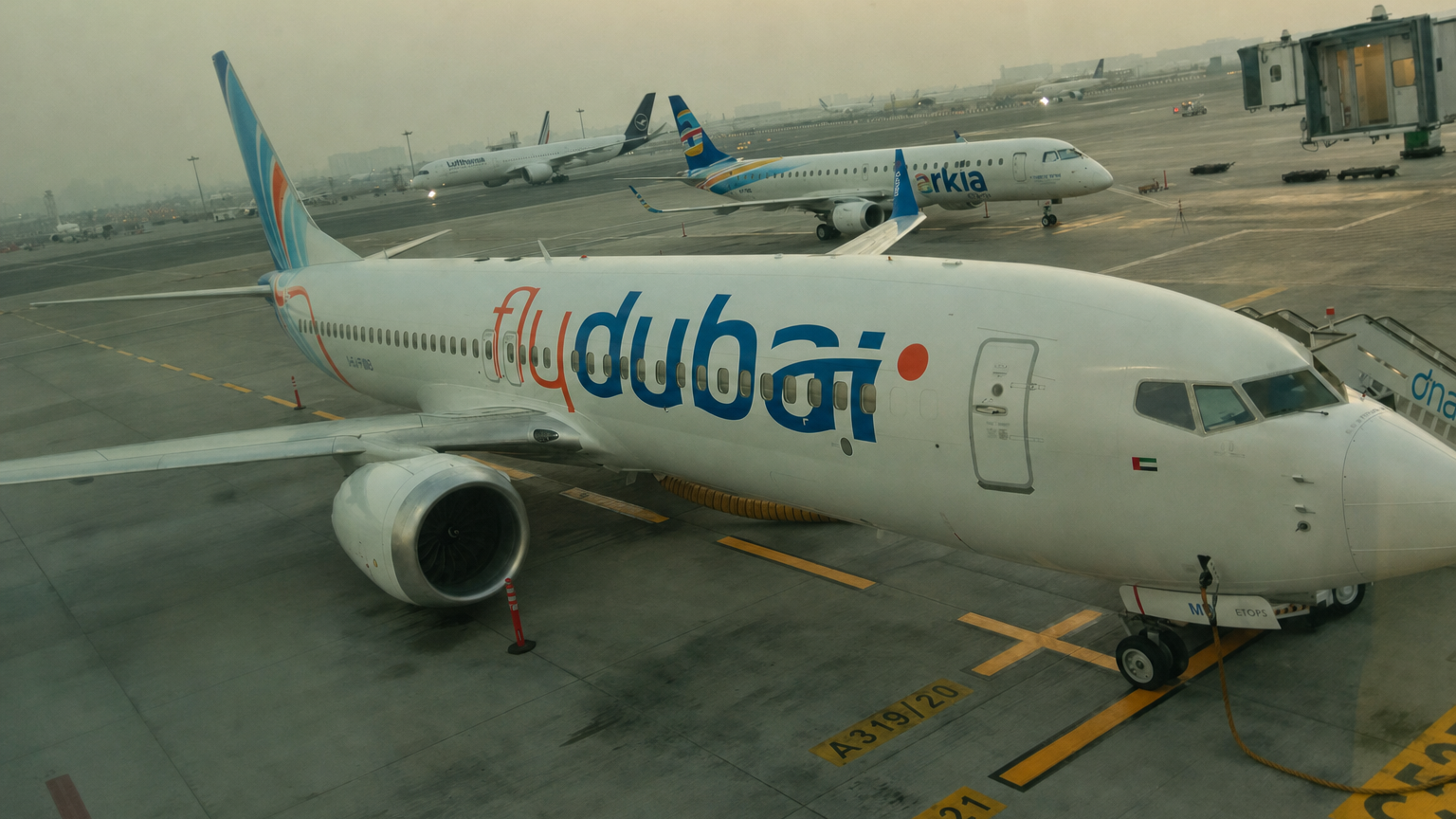
Flydubai Flight FZ1073 transmitted a general emergency signal followed by one indicating possible unlawful interference while flying over Jordanian airspace on Wednesday before landing safely at Tabuk airport in northwestern Saudi Arabia, flight tracking website Flightradar24 reported. The Boeing 737 aircraft carried around 180 passengers, many of them Israelis, and had been en route from Dubai to Tel Aviv when the signals were sent. An Israeli official speaking on condition of anonymity told Reuters that the emergency signals resulted from a physical altercation between the two pilots rather than any hijacking attempt.
The Israeli prime minister’s office stated that the incident was not believed to have been a hijacking, a determination echoed across multiple Israeli security sources. Israeli fighter jets were scrambled in response to the emergency signal, an Israel Defence Forces spokesperson told CNN, while Prime Minister Benjamin Netanyahu and Defence Minister Israel Katz held an urgent security consultation. The aircraft descended sharply from 34,000 feet to around 16,600 feet in just over two minutes near northwestern Saudi Arabia, according to flight tracking data reviewed by CNN.
Flydubai said in a statement that the aircraft landed safely at Prince Sultan Bin Abdulaziz International Airport in Tabuk with all passengers safe and accounted for. The airline added that its teams were working closely with relevant authorities and that further updates would follow as confirmed details emerged. A replacement aircraft was being prepared to transport passengers onward to Israel, the carrier indicated.
Passengers described hearing screams from the cockpit area before the door opened to reveal blood and an injured pilot, according to accounts given to Israeli media outlets including Ynet and i24NEWS. One passenger told Channel 12 that Israelis aboard helped restrain an individual during the incident, while another reported seeing a pilot with stab wounds from a pocketknife. These passenger testimonies, which emerged shortly after landing, contributed to early confusion about the precise sequence of events in the cockpit.
The diversion occurred against the backdrop of heightened regional tensions, though Israeli authorities quickly ruled out any connection to external security threats. Reuters noted that it remained unclear whether one of the pilots had intentionally transmitted the unlawful interference code during the altercation. CNN sources described the event as a “violent incident” between the pilots that forced the unscheduled landing in Saudi Arabia.
Flight tracking data from Flightradar24 showed the plane briefly disappeared from public view before reappearing after it had touched down in Tabuk. The airline later confirmed that no passengers were injured and that the focus had shifted to investigating the cockpit altercation, according to statements relayed by multiple outlets including The Times of Israel. Israeli police established a joint command center with other agencies to manage the response on the ground.