ع
ع


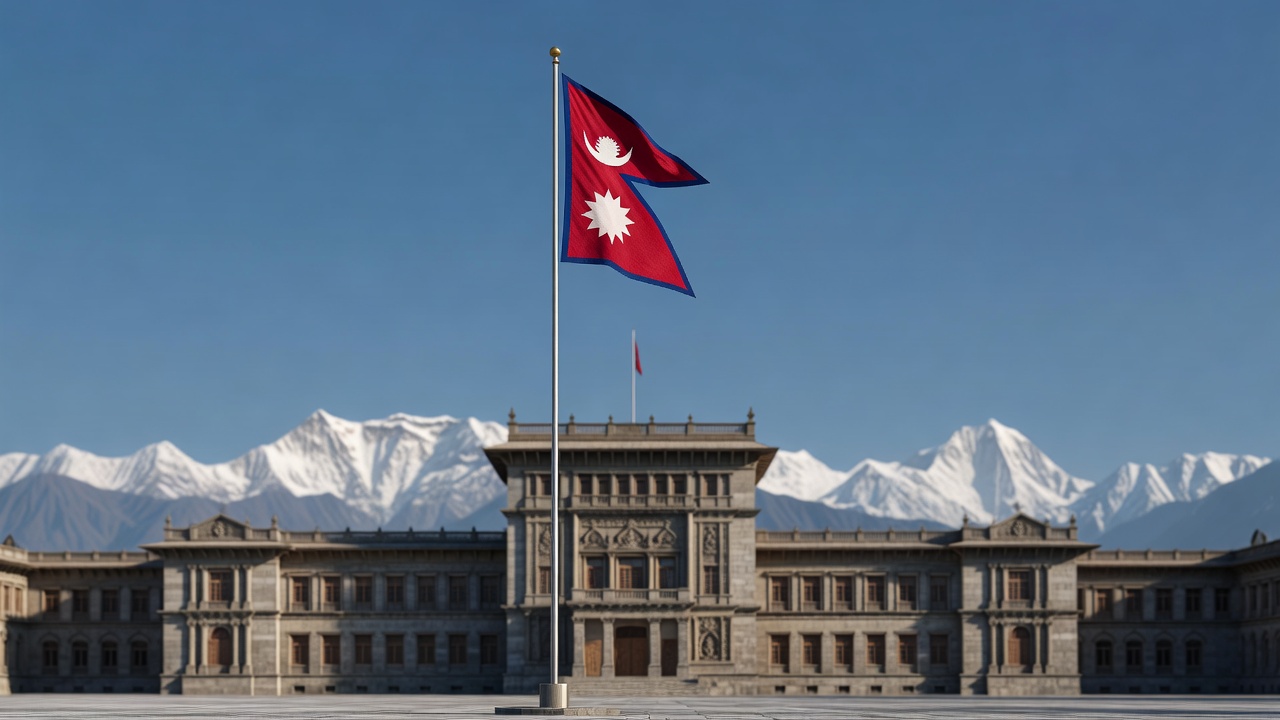
Nepal observed a national day of mourning on September 7 for the victims of devastating flash floods that struck the Himalayan border region with China exactly 13 days earlier, the Ministry of Home Affairs said in a statement. Government offices across the country and Nepali diplomatic missions abroad flew the national flag at half-mast while candlelight vigils took place in the evening, although authorities scaled back official commemorations because search and rescue operations continued in the flood-hit areas. The home ministry added that no large government programmes had been scheduled for the day in line with Hindu traditions marking the final day of the 13-day mourning period for the dead.
The floods, triggered by an ice-rock avalanche in the high Himalayas, swept through the Bhotekoshi and Trishuli river systems on August 26, devastating towns, villages and infrastructure in Rasuwa, Nuwakot, Dhading and other districts, according to the National Disaster Risk Reduction and Management Authority. A massive wall of mud, rock and water washed away roads, bridges and hydropower projects while burying communities under debris, the authority’s updates showed. Nepal’s disaster agency described the event as the country’s deadliest natural disaster since the 2015 earthquake that killed around 9,000 people, a comparison echoed in assessments by the United Nations Office for the Coordination of Humanitarian Affairs.
The National Disaster Risk Reduction and Management Authority placed the death toll at 1,355 in Nepal with 4,996 people still missing, including 589 foreign nationals from multiple countries. Separate figures from Nepal Police detailed that recovered bodies included 530 men, 328 women and 495 unidentified remains, with 1,044 of the dead already buried. In China’s Tibet region across the border, state media reported at least 31 deaths and more than 500 missing, contributing to a combined regional toll that UN agencies described as exceeding 1,300 confirmed fatalities overall.
Rescue teams from the Nepali Army, Nepal Police and Armed Police Force, supported by specialised units from India, China, South Korea and the United States, have focused efforts on 12 hydropower projects where around 900 workers remain unaccounted for and roughly 500 are believed trapped in tunnels, the disaster authority reported. In recent days searchers pulled four survivors from the rubble, including a Chinese national freed from a tunnel on September 5 and two Nepali hydropower workers rescued the previous day, according to updates shared with Reuters. Joint operations have so far rescued more than 13,000 people, the authority’s figures show, even as 82 security personnel involved in the response remain missing.
The floods displaced at least 32,000 families and completely destroyed around 7,500 houses while severely damaging roads, electricity supplies and water systems across central Nepal, a government assessment obtained by The Hindu indicated. In addition to the immediate human cost, the disaster disrupted livelihoods for thousands and raised public health concerns after E. coli contamination was detected in some drinking water sources in affected zones such as Bidur. The United Nations has warned that climate change is increasing the frequency of glacial lake outburst floods in the Himalayas, citing scientific reports that highlighted fragile mountain environments in the region.
Nepal’s president toured devastated areas on the day of mourning while relatives of missing hydropower workers protested in Kathmandu demanding faster rescue efforts, multiple outlets including AP News reported. The cabinet has approved relief measures, tax concessions and a business recovery plan for flood-affected communities in addition to accepting a $5 million grant from the Asian Development Bank for rescue and relief operations. Authorities continue DNA testing to identify decomposed or partial remains, with police appealing to families for samples to assist the process that had so far confirmed identities for only a small fraction of the recovered bodies.