ع
ع


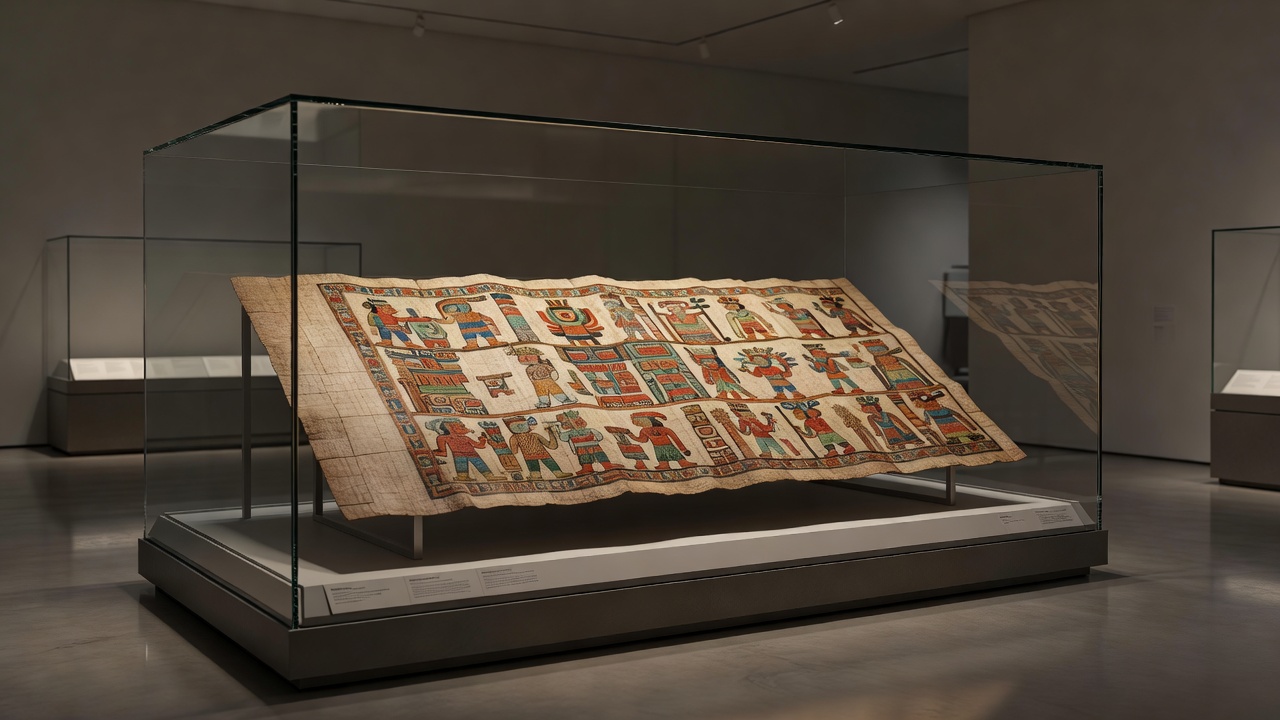
The Codex Azcatitlán, a pictographic manuscript created in the Valley of Mexico that narrates the Mexica migration from Aztlán to the shores of Lake Texcoco and the early colonial period after the Spanish arrival, went on public display at the National Museum of Anthropology in Mexico City on Thursday. Mexican officials secured the temporary loan from France’s Bibliothèque Nationale de France, where the document has resided since 1898 after leaving the country in the 19th century as part of collector Joseph Aubin’s holdings. The exhibition, which offers free entry, forms the centerpiece of activities celebrating two centuries of Franco-Mexican relations and includes the reciprocal display of Mexico’s Codex Boturini in Paris.
Presidents Claudia Sheinbaum and Emmanuel Macron agreed to the codex exchange during the French leader’s visit to Mexico last year, according to The Art Newspaper. Sheinbaum said in October ahead of the trip, “Our greater interest lies in the repatriation of these codices, which are important to Mexico.” The move reflects Mexico’s broader push to recover dispersed cultural heritage, with the foreign ministry reporting that more than 2,000 objects were successfully repatriated last year.
Historian Jorge Cañizares-Esguerra told La Jornada that the codex, once part of Lorenzo Boturini’s collection before Aubin took it to France in 1840 where it passed to Eugène Goupil and then the national library, offers a distinctive Tlatelolco perspective on Aztec origins from the north. The document details not only the migration and founding of Tenochtitlán but also the Spanish conquest and years immediately afterward in a blend of indigenous pictograms and European script. A 2017 study by scholar María Castañeda de la Paz revised the codex’s likely creation to the second half of the 17th century rather than the mid-16th as previously thought.
The National Institute of Anthropology and History described the manuscript as one of the most insightful visual accounts of Aztec civilization and its transformation under colonial rule. Its temporary return has fueled ongoing discussions about permanent restitution of other codices held in European institutions, including the Codex Borbonicus which has been the subject of petitions since the 19th century. Emilia Mendoza, a spokesperson for the Frente de Defensa de la Cultura Ancestral, told The Art Newspaper that these claims serve as a vindication and demonstration of Indigenous peoples’ strength.
This display arrives amid other recent successes in Mexico’s cultural repatriation initiatives, including the 2025 return by the FBI of a 16th-century manuscript page signed by Hernán Cortés that had been stolen from the national archives between the 1980s and 1993. The FBI said the document, which details payment logistics for expeditions in the early colonial era, was recovered through collaboration with Mexican authorities and U.S. partners after appearing in private collections. Such cases highlight the international cooperation required to trace and restore historical materials taken or lost over centuries.
Museum visitors will encounter the codex’s detailed illustrations depicting rulers, events from the fall of the Aztec empire and the establishment of New Spain, providing context for one of Latin America’s pivotal historical transitions. The exhibition runs as part of the “Codex Azcatitlán: Mexico-France, 200 Years of Friendship” program and is expected to draw significant attention from scholars and the public alike. Mexican cultural authorities plan to monitor visitor engagement as they consider future loan and restitution proposals with international partners.