ع



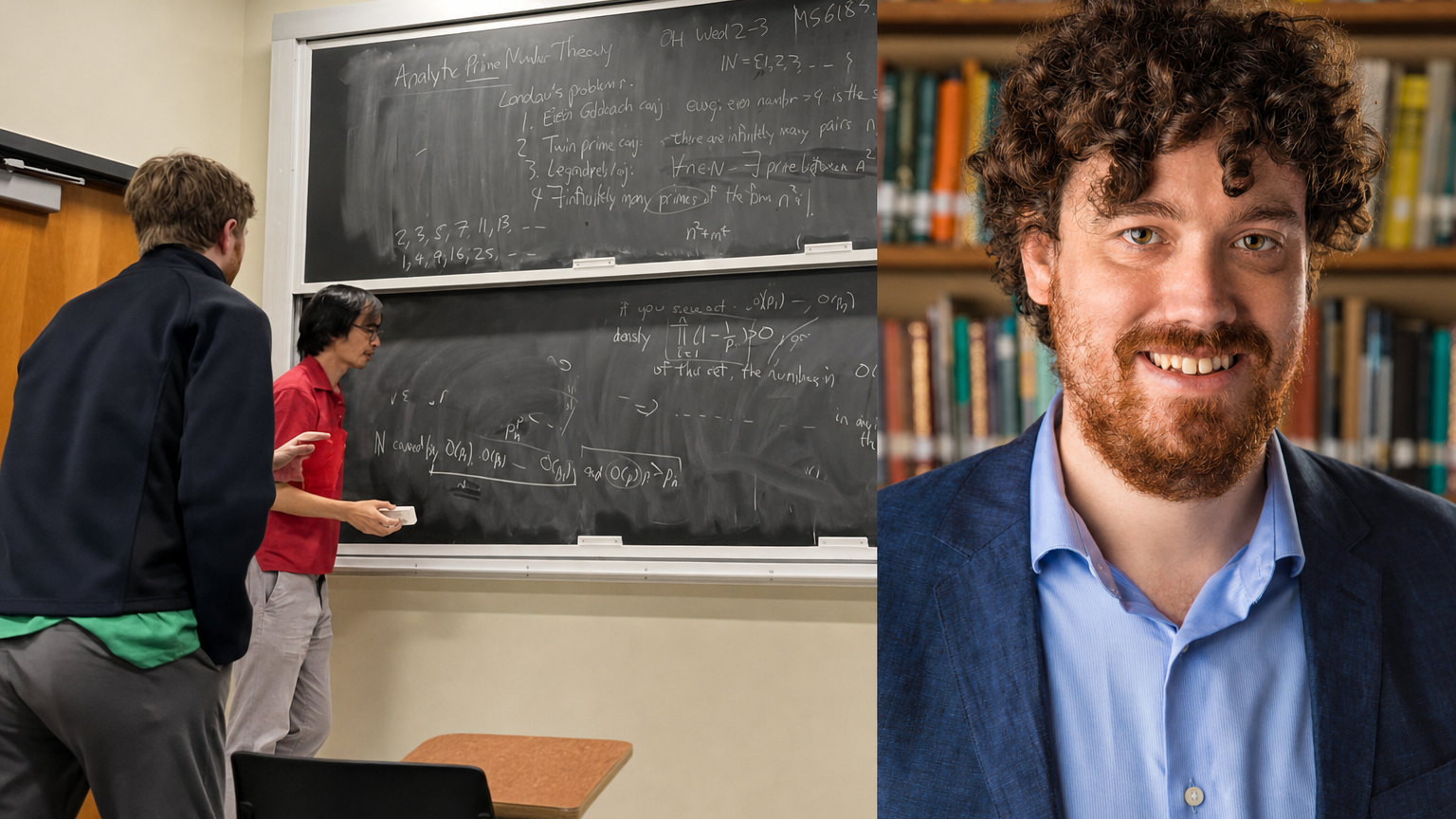
BBC News reported that mathematician Tristan Buckmaster went public with concerns hours before OpenAI announced its artificial intelligence agents had solved a major mathematical problem in 88 hours. Buckmaster, who works at New York University, had been collaborating with Levent Alpöge, a mathematician at rival firm Anthropic, on the same challenge while using OpenAI’s Codex coding tool to store drafts. The timing of the announcement prompted Buckmaster to claim that news of their progress had reached OpenAI, although he did not specify the means. A subsequent review by the body overseeing a related prize indicated the matter had apparently been settled but would require further examination.
A Quanta Magazine assessment published on October 5 found that mathematicians are experiencing grief, anger and a search for new directions in response to rapid AI advances in the field. Scott Aaronson of the University of Texas at Austin wrote on his blog that human mathematicians are forevermore dethroned as the main theorem-proving entities on the planet. Companies including OpenAI and Anthropic have been competing to prove theorems while investing little in clear explanations or context for the results, the report added. OpenAI has kept more than 100 important results secret, which has discouraged some researchers from pursuing potentially redundant questions.
The Atlantic detailed on October 8 how OpenAI released 377 new proofs spanning major conjectures, significant subfield results and minor variants after teasing solutions to more than 100 long-standing open problems. Hugo Duminil-Copin, a Fields Medal recipient, had written prior to the release that AI proofs nuke the mathematical landscape, making it increasingly difficult to inhabit after each blast. Several mathematicians told the outlet that at least some of the papers appear not to prove what they claim, though verification is ongoing and OpenAI has withdrawn three of the papers. The company stated that mistakes are expected to be quite rare.
Scientific American noted on September 14 that 25 winners of the Fields Medal, mathematics highest honor, signed a declaration decrying a severe misalignment between the goals of AI companies and the discipline. The statement followed OpenAI’s claim to have solved the Navier-Stokes equations, one of the seven Millennium Prize Problems. The group launched the Association for Human Mathematics to address harm to open science and the overwriting of the central mathematical enterprise for shareholder value. More than 1,000 mathematicians have since pledged to varying degrees to avoid working with or for AI companies and to limit use of their models in research.
New Scientist reported on October 20 that the Association for Human Mathematics includes both vegetarians who shun AI for writing papers and vegans who avoid it entirely in research. Terence Tao at the University of California, Los Angeles, stated last month that dumping discoveries on the community may harm the field. The pledges emerged after OpenAI released hundreds of papers at once, which critics described as a demonstration of power rather than scholarship. OpenAI has said it would consider advice from an advisory group it formed but its latest actions appear to contradict some recommendations.
WIRED reported on September 19 that Buckmaster believes OpenAI used his work to accelerate its solution to a problem carrying a million-dollar bounty, igniting debate over whether artificial intelligence will render human mathematicians obsolete. The article highlighted how AI kills the idea of tracing contributions, a departure from traditional peer-reviewed science with proper credit. Twenty-five Fields medalists and more than 4,000 signatories to the Leiden Declaration have called for measures to prevent AI from swallowing the field, including protections for early-career researchers. A separate New Scientist article on October 14 described the developments as causing an existential crisis in mathematics comparable to past disruptions in other domains.