ع
ع


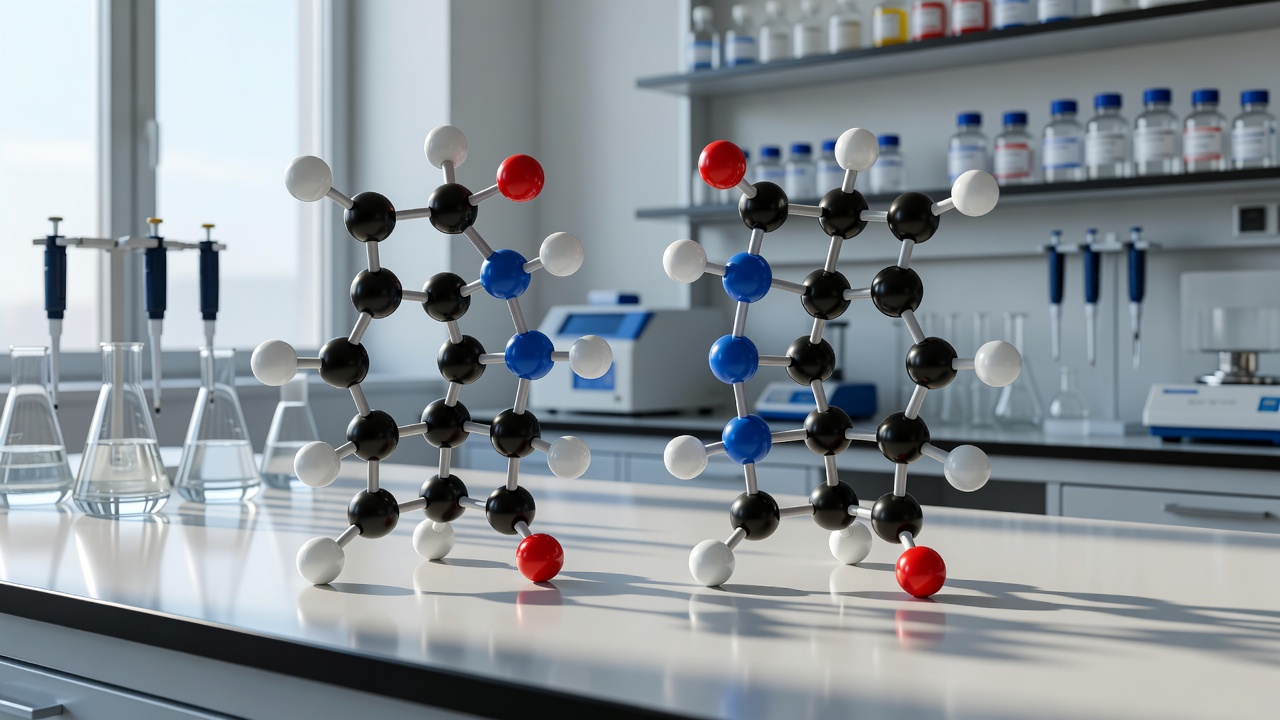
The Royal Swedish Academy of Sciences announced that Henri B. Kagan of Université Paris-Sud and Kenso Soai of Tokyo University of Science will share the prize for the discovery of non-linear effects and autocatalysis in asymmetric organic synthesis. According to the academy’s official release, their work has enabled chemists to drive reactions that produce homochirality, the preference for one mirror-image form of molecules seen throughout biology. Heiner Linke, chair of the Nobel Committee for Chemistry, described the reactions developed by the laureates as spectacular and credited them with solving a chemical mystery more than a century old.
Chiral molecules exist as two variants that are mirror images of each other, much like a person’s left and right hands, yet living organisms rely exclusively on one version for amino acids, proteins and other building blocks. This selectivity, known as homochirality, had long perplexed researchers seeking to understand how such asymmetry could arise spontaneously from non-biological processes. The laureates’ experiments demonstrated practical mechanisms by which small initial imbalances can amplify into near-complete dominance of one enantiomer.
Kagan laid the groundwork in 1986 when he identified non-linear effects in asymmetric catalysis, showing that a slight imbalance in a catalyst could yield far greater selectivity in the product than expected. His findings transformed approaches to synthetic chemistry and proved especially valuable for producing compounds used in pharmaceuticals, flavours, scents and advanced materials. A Nobel Foundation overview noted that Kagan’s contributions opened pathways for more efficient and selective manufacturing processes still employed today.
Soai advanced the field by creating the first autocatalytic reaction in which the chiral product itself accelerates formation of more of the same enantiomer, starting from an achiral or racemic mixture. He outlined the concept in a 1995 paper before achieving full homochiral selectivity in 2003 through what became known as the Soai reaction, an alkylation involving pyrimidine-5-carbaldehyde and diisopropylzinc. The Nobel Committee characterised this as one of the most striking chemical demonstrations ever performed, unmatched outside living systems.
The breakthroughs carry direct consequences for pharmaceutical development, where separating or selectively producing enantiomers can eliminate side effects caused by the undesired mirror image. David Pendlebury of Clarivate’s Institute for Scientific Information told CNN that the prize honours sustained, curiosity-driven research whose full impact often emerges only after decades. Peter Somfai, a member of the Nobel Committee, added that the combined discoveries have fundamentally altered scientific understanding of how molecular chirality forms, amplifies and propagates.
Kagan, born in 1930 in Boulogne-Billancourt, France, earned his doctorate in 1960 from the Collège de France and later served as professor emeritus at Université Paris-Sud. Soai, born in 1950 in Hiroshima, Japan, received his PhD in 1979 from the University of Tokyo and is professor emeritus at Tokyo University of Science. The two will divide 12 million Swedish crowns, approximately 1.2 million dollars, and receive their medals from King Carl XVI Gustaf during a Stockholm ceremony on December 10.