ع



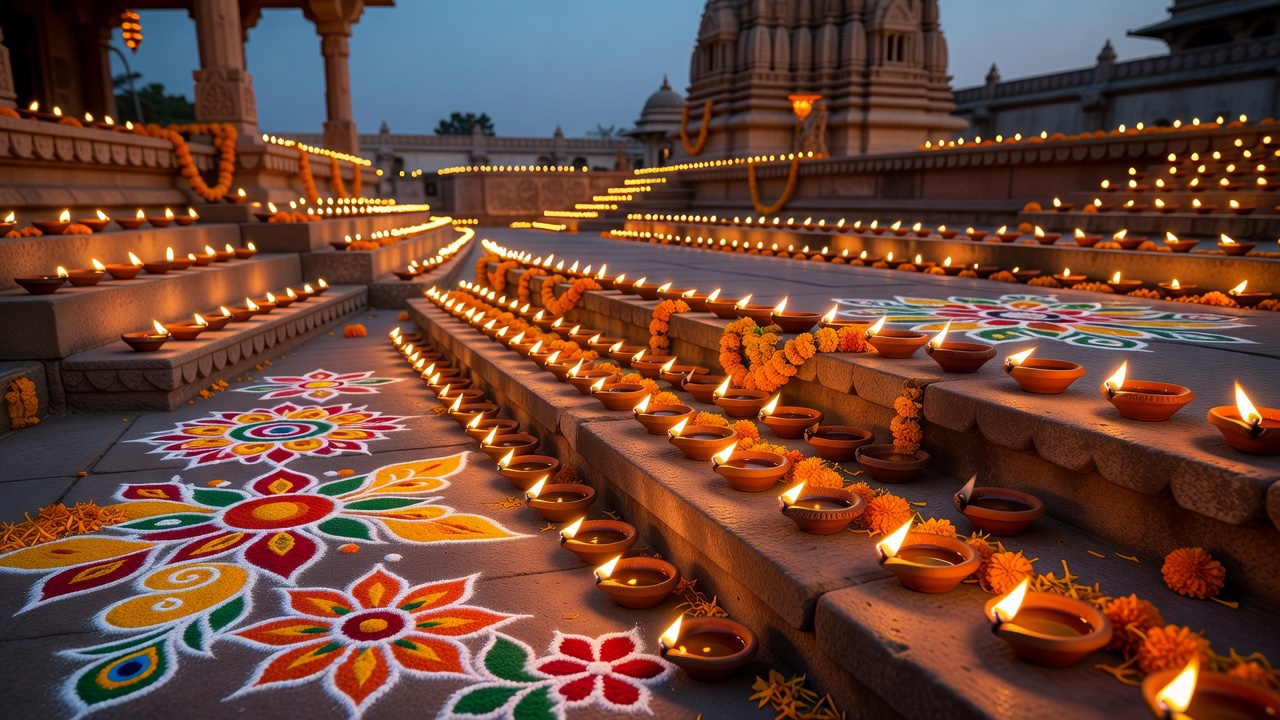
Millions of Indians began marking Diwali the festival of lights on November 6 2026 with the lighting of oil lamps and diyas in homes temples offices and public spaces to symbolise the triumph of light over darkness. BBC News reported that the celebrations extend beyond any single religion and draw participation from varied communities across the country. The first day known as Dhanteras involves purchases of gold silver or utensils considered to bring good fortune while families also light a special lamp to ward off evil.
A record 1.25 lakh crore rupees in retail business was generated on Dhanteras with gold and silver sales alone crossing 66,000 crore rupees according to estimates from the Confederation of All India Traders and the All India Jewellers and Goldsmith Federation. Delhi’s bullion market accounted for more than 10,000 crore rupees of that precious metals trade even as gold prices hovered near 1.44 lakh rupees per 10 grams. The traders’ body projected that overall festive spending from Navratri through Diwali could exceed 7 lakh crore rupees this year representing a 15 to 18 percent rise over the prior season.
Regional traditions add distinct flavours to the five-day festival that runs until Bhai Dooj on November 11. In Uttar Pradesh the state-organised Deepotsav in Ayodhya sees lakhs of lamps lit along the Saryu river ghats to recall Lord Rama’s return from exile while Punjab marks the occasion with Bandi Chhor Divas and illuminations at Amritsar’s Golden Temple. Southern states emphasise Naraka Chaturdashi with pre-dawn oil baths and special prayers a HinduTone compilation of state-wise customs showed.
Environmental authorities and courts have focused on mitigating the air quality impact that typically accompanies the festivities. The Supreme Court permitted only certified green firecrackers for restricted hours on November 7 and 8 in the Delhi-NCR region while noting that unregulated fireworks create severe pollution affecting children the elderly and those with respiratory conditions. Central Pollution Control Board monitoring has repeatedly recorded PM2.5 levels rising between 29 and 60 percent in the days around Diwali compared with pre-festival baselines according to multiple studies compiled by environmental groups.
Markets nationwide assumed a carnival atmosphere in the days leading into the main Lakshmi Puja on November 8 when families perform evening prayers to the goddess of wealth before sharing festive meals. Special one-hour trading sessions on Indian stock exchanges cater to investors who view buying or selling shares on Diwali as auspicious the BBC News dispatch from Mumbai noted. Demand extended beyond jewellery into automobiles electronics and household goods reflecting sustained consumer confidence despite elevated prices.
The festival concludes with Govardhan Puja and Bhai Dooj when siblings exchange tokens of affection and seek blessings for one another’s well-being. Preparations throughout the period include thorough home cleaning drawing of rangoli patterns at entrances and community feasts that reinforce social bonds. Officials in several states have issued safety advisories on firecracker use urging adherence to timing restrictions and green alternatives to limit both noise and particulate emissions.