ع
ع


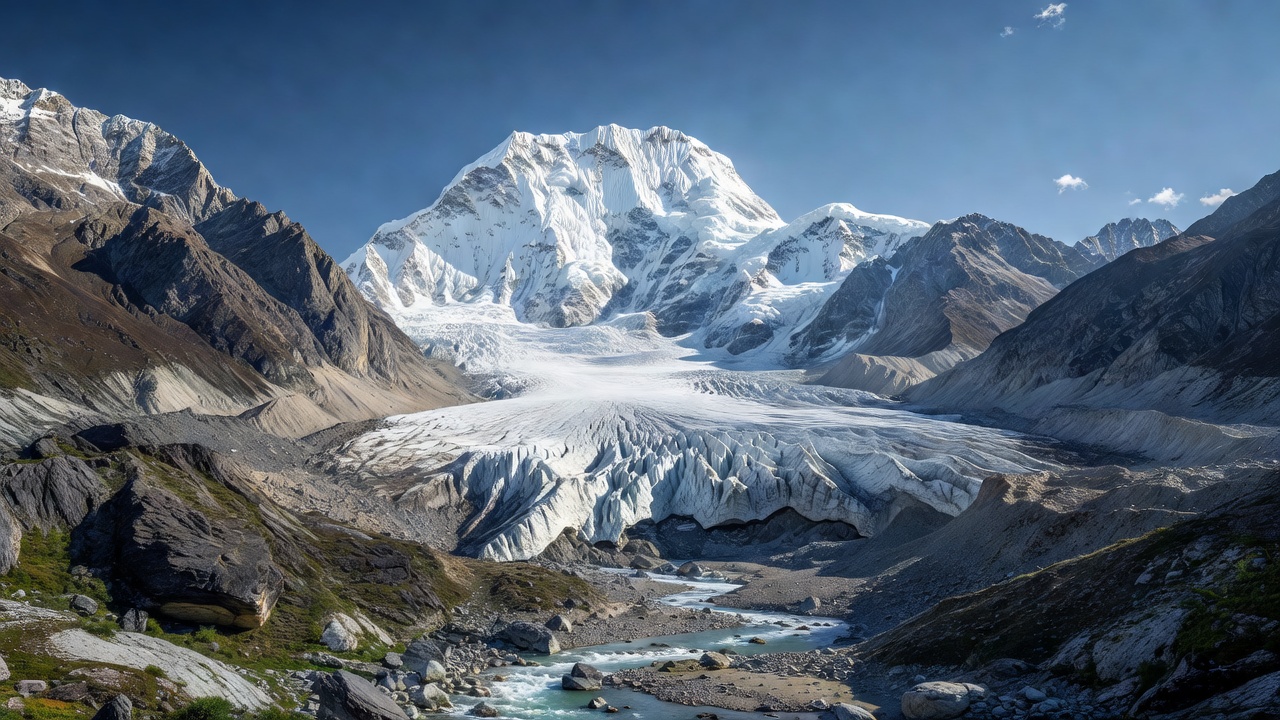
The US Geological Survey determined that what was initially reported as a magnitude 4.4 earthquake was in fact seismic energy generated by a glacial collapse and subsequent debris flow that registered as a 5.2 magnitude event. Scientists examining satellite imagery from Planet Labs identified the lower section of a glacier at roughly 5,200 metres near Nepal’s Langtang Lirung peak that sheared away and plunged about 1,200 metres into the valley below. The resulting ice-rock avalanche swept into the Lhende Khola tributary of the Bhote Koshi river, according to an assessment by the International Centre for Integrated Mountain Development, funnelling water, sediment and boulders downstream at high velocity through steep mountain channels.
Nepal’s National Disaster Risk Reduction and Management Authority reported 162 deaths with 826 people still missing, among them more than 500 foreign tourists from countries including India, the United States, Britain, Australia and Canada. Chinese state media put the toll at three dead and 558 missing in Tibet’s Gyirong County, where the flood struck the border port area and swept through villages. The combined figures have made the disaster one of the region’s deadliest in years, with rescue teams from both countries deploying helicopters, sniffer dogs and hundreds of personnel to search remote valleys where entire settlements were inundated.
An analysis by the International Centre for Integrated Mountain Development found that the avalanche deposited a large volume of ice and rock debris into the river system, generating a flood wave that raised water levels by seven to nine metres within 30 minutes at downstream monitoring points. Several gauging stations were destroyed in the surge, which carried massive boulders capable of destroying bridges, roads and hydropower infrastructure along the Bhote Koshi, Trishuli and Narayani rivers. Simon Cook, a glacier expert at the University of Dundee, told reporters his team had tracked the northwesterly collapse that then flowed westward, consistent with initial video footage showing the rapid funnelled debris flow.
A 2026 assessment from the International Centre for Integrated Mountain Development concluded that glaciers across the Hindu Kush Himalaya have lost ice at double the rate since 2000 compared with the late 20th century, with cumulative mass loss reaching 23.95 metres water equivalent between 1974 and 2023. The report documented 89 percent of observed glacier mass balance years as negative over five decades of monitoring, with the mean annual balance shifting from minus 0.31 to minus 0.66 metres water equivalent after 2000. More than 63,700 glaciers remain in the region, yet only a fraction are studied in detail, leaving gaps in understanding how accelerating melt contributes to cryosphere hazards.
Mohd Farooq Azam, a specialist with the International Centre for Integrated Mountain Development, said the increasing frequency of cryosphere hazards is becoming more visible than ever before while the pace of change is so rapid that current efforts are struggling to keep up. Cook noted that although linking any single event to climate change remains complex, the pattern of similar incidents points to broader destabilisation of high mountain environments. He cited recent glacier collapses in India, Switzerland and Italy as well as a glacial lake outburst in the same Nepal-Tibet region last year that also produced destructive flooding.
The 2021 collapse of a Himalayan glacier chunk in India’s Chamoli valley, which scientists estimated released energy equivalent to 15 atomic bombs, killed about 200 people in a comparable debris flow event. In response to the latest disaster, the International Centre for Integrated Mountain Development has warned of risks from secondary flooding if upstream debris dams fail, prompting evacuation orders in vulnerable downstream areas. Nepali and Chinese authorities continue recovery operations while geologists gather further data to refine understanding of the trigger mechanisms in a region where permafrost thaw and accelerated melt are reshaping slope stability.