ع



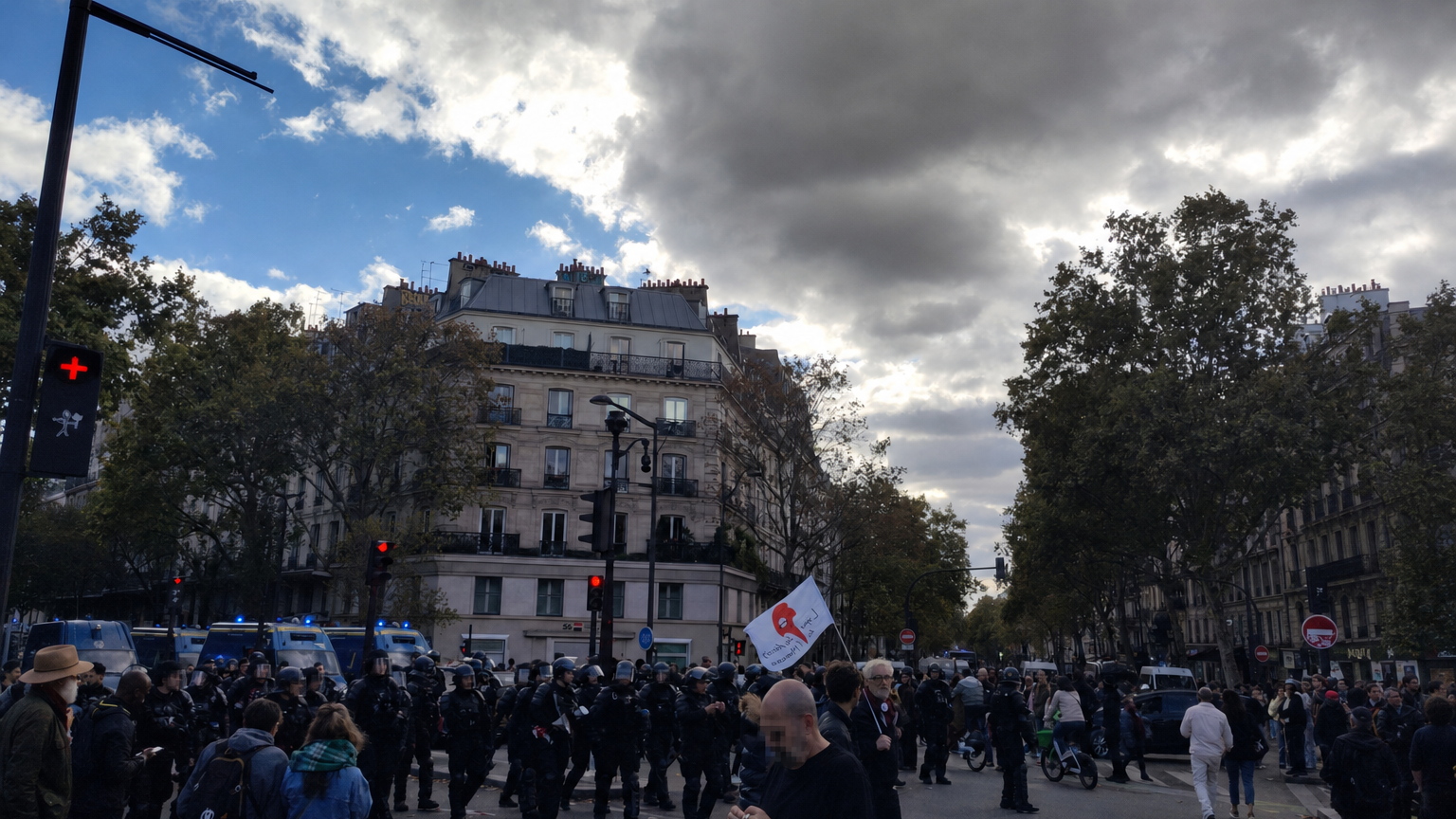
The interior ministry has imposed sweeping restrictions on demonstrations across France, allowing only those organised by recognised trade unions in select locations while announcing blanket bans on gatherings in cities including Lyon, Nice and Montpellier. Hundreds of thousands of protesters are nevertheless expected in Paris and other urban centres as student organisations, trade unions and anti-government groups press ahead with a second round of action. Interior Minister Laurent Nunez stated that elite security units, mounted police, helicopters, drones, armoured vehicles and water cannon would support the operation, which includes 10,000 more officers than were deployed the previous weekend. Officials have warned of social media calls for violence and looting.
According to the interior ministry via Reuters, the October 17 protests attracted an estimated 550,000 participants nationwide, although organising groups claimed turnout reached 800,000. What began as demonstrations over underfunded schools and the cost of living quickly escalated into clashes, looting and arson in Paris, Lyon, Marseille, Bordeaux and other cities. The unrest marked one of the most severe outbreaks of urban violence in France in years, prompting partial curfews in multiple locations that remain in effect. Eurostat figures show French inflation stood at 3.4 percent in September, contributing to broader grievances.
The justice ministry reported that 232 people had been imprisoned for their roles in the riots, with more than 1,100 appearing in court and around 260 cases involving charges of organised gang activity. Prosecutors have been directed to pursue additional sanctions against those convicted of looting or attacking police, including bans from future demonstrations, loss of voting rights and restrictions on social media access. AFP noted that more than 900 police officers have sustained injuries since the protest movement intensified.
An ING analysis of Morningstar DBRS data placed insured losses from the October 17-18 violence at up to 1.2 billion euros, equivalent to around 0.04 percent of French nominal GDP. In preparation for Saturday, the Louvre, Orsay and Picasso museums will close for the day, while a scheduled home match for Paris Saint-Germain has been postponed until Monday and numerous businesses have boarded up storefronts. The government has also activated state-financed furlough schemes to prevent layoffs among affected companies, according to a Reuters summary of official measures. The chamber of commerce network estimated more than 2,000 businesses were directly impacted.
President Emmanuel Macron met student representatives on Friday, yet the groups emerged urging continued protests until the government offers specific proposals to improve learning conditions, an AFP dispatch indicated. The events have unfolded six months before presidential elections, with polling cited by AFP showing far-right leader Marine Le Pen as the strengthened frontrunner. Prime Minister Sebastien Lecornu acknowledged shortcomings in anticipation and police positioning during the initial unrest.
Main unions have called for a nationwide strike on November 5 to oppose budget cuts and seek higher wages, according to France 24 reporting. The Yellow Vest movement has also filed separate plans for marches in Paris, adding layers to the weekend’s scheduled activity. An International Monetary Fund study of past unrest episodes, referenced in ING research, found that significant events can leave GDP 0.2 percent below baseline after six quarters.