ع
ع


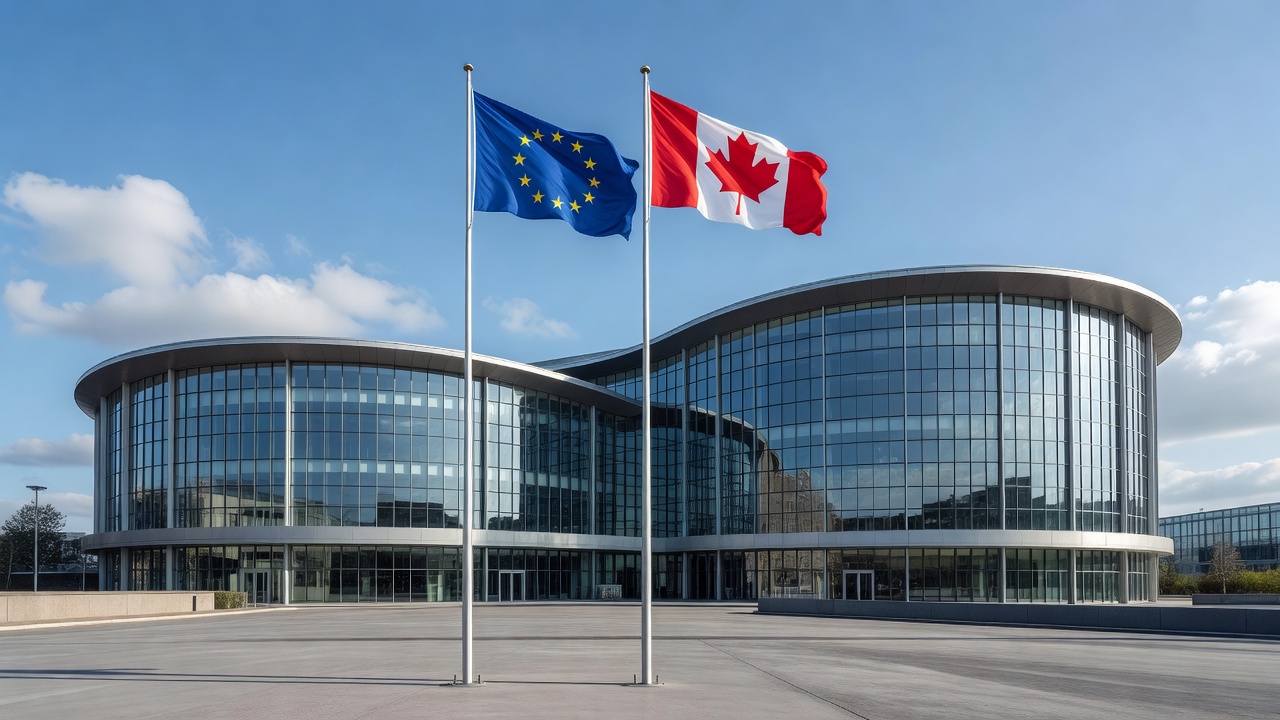
European Commission President Ursula von der Leyen proposed that Canada become the first associate member of the European Union in a speech to lawmakers in Strasbourg on September 16, 2026. The European Commission president told Carney, seated in the front row, that the two sides should work on opening the door to the new status while building a common prosperity and economic security space. Carney’s office welcomed the proposal, according to a statement that highlighted ambitions for stronger ties in critical minerals, defense industrial capacity, artificial intelligence and energy security. The European Commission president described the partnership as not against anyone else but for common strength.
The proposal would expand on the Comprehensive Economic and Trade Agreement that has governed EU-Canada trade since 2017, a Bloomberg report noted. Von der Leyen listed joint work on intelligent manufacturing, a technology alliance, integrated defense production, the Arctic as a flagship project, energy, critical minerals, batteries, artificial intelligence, quantum computing, cybersecurity and economic security. A Reuters assessment found that no legal definition of associate membership exists in European Union treaties, though Article 217 of the Treaty on the Functioning of the European Union allows for association agreements with third countries that involve reciprocal rights and obligations.
Canadian officials have sought to temper expectations around the precise terminology while endorsing deeper cooperation, according to incoming ambassador to the EU Jonathan Wilkinson. Wilkinson told reporters in Strasbourg that the sides are focused on securing concrete results ahead of an EU-Canada summit scheduled for late October in Montreal. The Globe and Mail reported that Carney is pursuing new alliances as US President Donald Trump has issued repeated threats against Canadian sovereignty, including potential tariffs that Trump labeled a response to the EU proposal.
Canada has already taken steps toward closer defense ties by becoming the first non-EU country to join the bloc’s military procurement initiatives last year, an AP News dispatch stated. The New York Times reported that the overture reflects shared concerns in Ottawa and European capitals over a competitive China and an unpredictable Trump administration following the US elections. Prime Minister Mark Carney is set to address the European Parliament on September 17, where he is expected to echo the call for Canada and Europe to stand stronger together in the face of geopolitical shifts.
European Union member states will ultimately decide whether to pursue the associate membership model, according to senior EU officials cited by POLITICO. The status could serve as a template for other like-minded partners such as Australia, New Zealand, Japan and Singapore if the Canada pilot advances, one EU official familiar with preliminary talks indicated. Carney has publicly stated that Canada is not seeking full membership, which would require ceding some sovereignty and is limited to European states under existing treaties, a Euractiv review found.
The European Union and Canada already maintain a strategic partnership agreement alongside their trade deal, providing a foundation for the proposed alliance, according to the Canadian prime minister’s office. A March 2025 poll cited by Euractiv showed nearly half of Canadians favoring closer EU ties, including potential pathways short of full accession. Discussions on expanded people-to-people links, such as participation in the Erasmus+ program and mutual recognition of qualifications, have been underway for months, multiple reports indicated.