ع



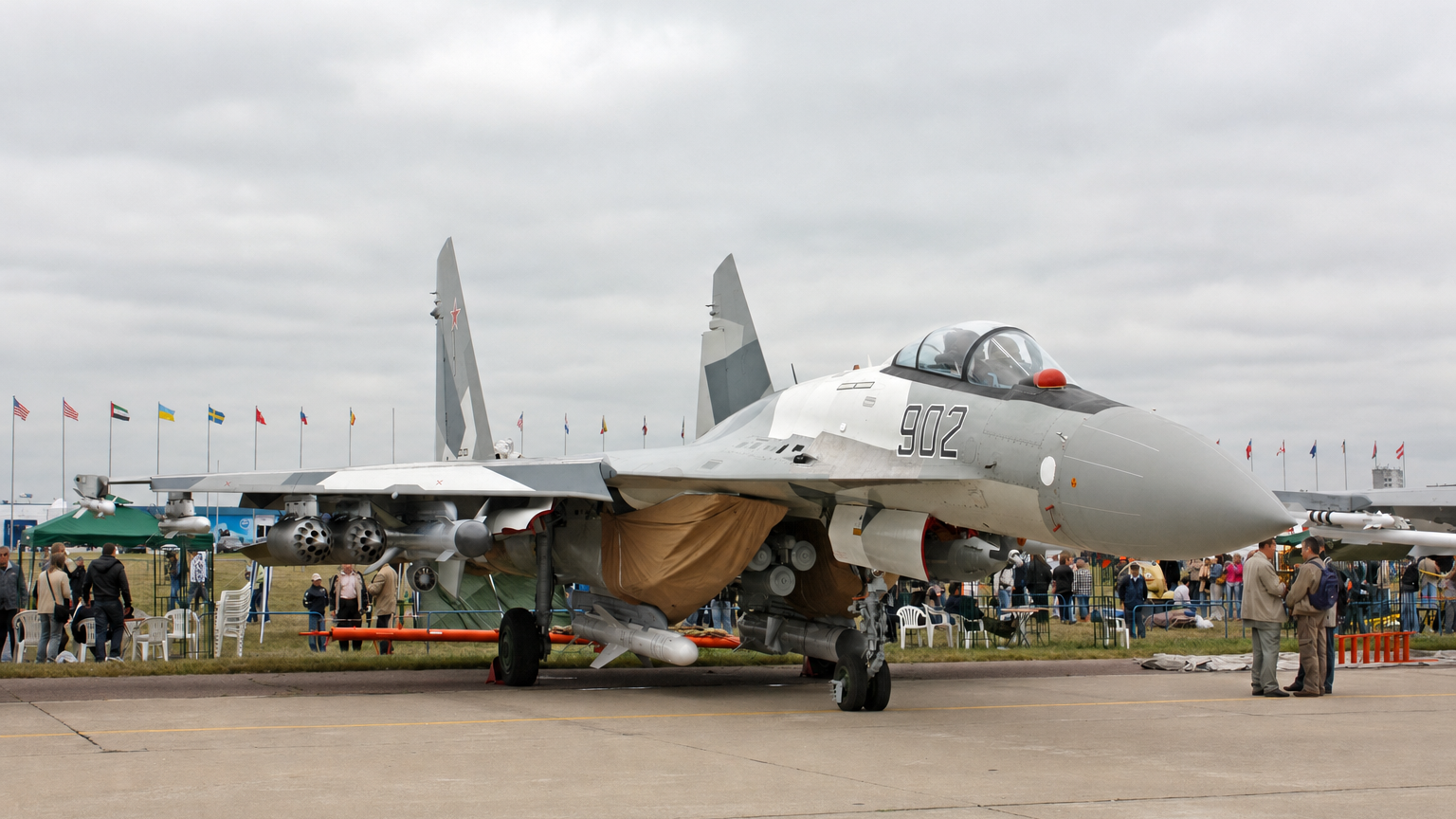
Prime Minister Abiy Ahmed announced the acquisition of 12 Su-35 fighter jets while attending the Russia-Africa summit in Moscow where he described the delivery as a milestone for national security that would enable Ethiopia to pre-emptively deter aggression. Abiy who posted the details on X thanked Russian President Vladimir Putin for ensuring the aircraft arrived a year ahead of the original schedule under an agreement signed several years earlier. He added that four S-400 air defence batteries would follow although no delivery date was specified and gave no information on the contract value or basing of the new equipment. Russian state-owned arms exporter Rosoboronexport confirmed to Reuters that the first batch of two Su-35 jets had reached the Ethiopian air force on the day of the announcement.
Abiy who has cultivated closer ties with Moscow portrayed the Su-35 as vital fourth-generation technology equipped for both air-to-air and air-to-ground missions with the ability to detect and neutralise incoming cruise missiles at ranges of up to 200 kilometres. The prime minister stated that failure to build such capabilities would make survival as a country in the region difficult because nations with sufficient preparation are not easily defied. He further noted that Ethiopia had become the first in sub-Saharan Africa to operate this level of advanced combat aircraft according to his remarks carried by Bloomberg and Al Jazeera.
The announcement coincides with a sharp escalation in northern Ethiopia where a rebel alliance launched an offensive last month in Tigray prompting government forces to advance into the regional capital Mekelle on October 4 after Tigray People’s Liberation Front fighters withdrew according to Al Jazeera reporting. Reuters noted that the renewed clashes have severed relations with neighbouring Eritrea which Addis Ababa accuses of supporting the insurgents although Asmara denies any involvement. The fighting has revived fears of a return to large-scale conflict in an area that borders Eritrea and remains volatile four years after a peace deal was signed.
Ethiopia’s air power proved decisive in the 2020-2022 Tigray war when the deployment of drones acquired from Turkey and China helped shift the battlefield balance a pattern highlighted in BBC coverage of the earlier fighting that killed hundreds of thousands of people. The latest Russian deliveries build on that experience by adding manned fighter capability to an air force that had already begun modernisation with the induction of Su-30 jets in January 2024 according to DefenceWeb which traced those aircraft to refurbished units originally manufactured for India. Abiy cited global air force trends and the security threats facing Ethiopia as the reasons for pursuing both the Su-35 and the S-400 systems.
Military cooperation between Addis Ababa and Moscow has expanded since the two governments signed a defence agreement in 2021 that covers training technology transfer and equipment support the BBC reported. The current deal reflects that partnership and comes as Russia seeks to deepen security and economic relations with African states at the Moscow summit an objective noted in coverage by Al Jazeera and Reuters. Ethiopia’s air force which previously operated Soviet-era Su-27 and MiG-23 aircraft will now incorporate the more advanced Su-35 as part of a sustained effort to strengthen its overall defence posture amid multiple regional challenges.