ع
ع


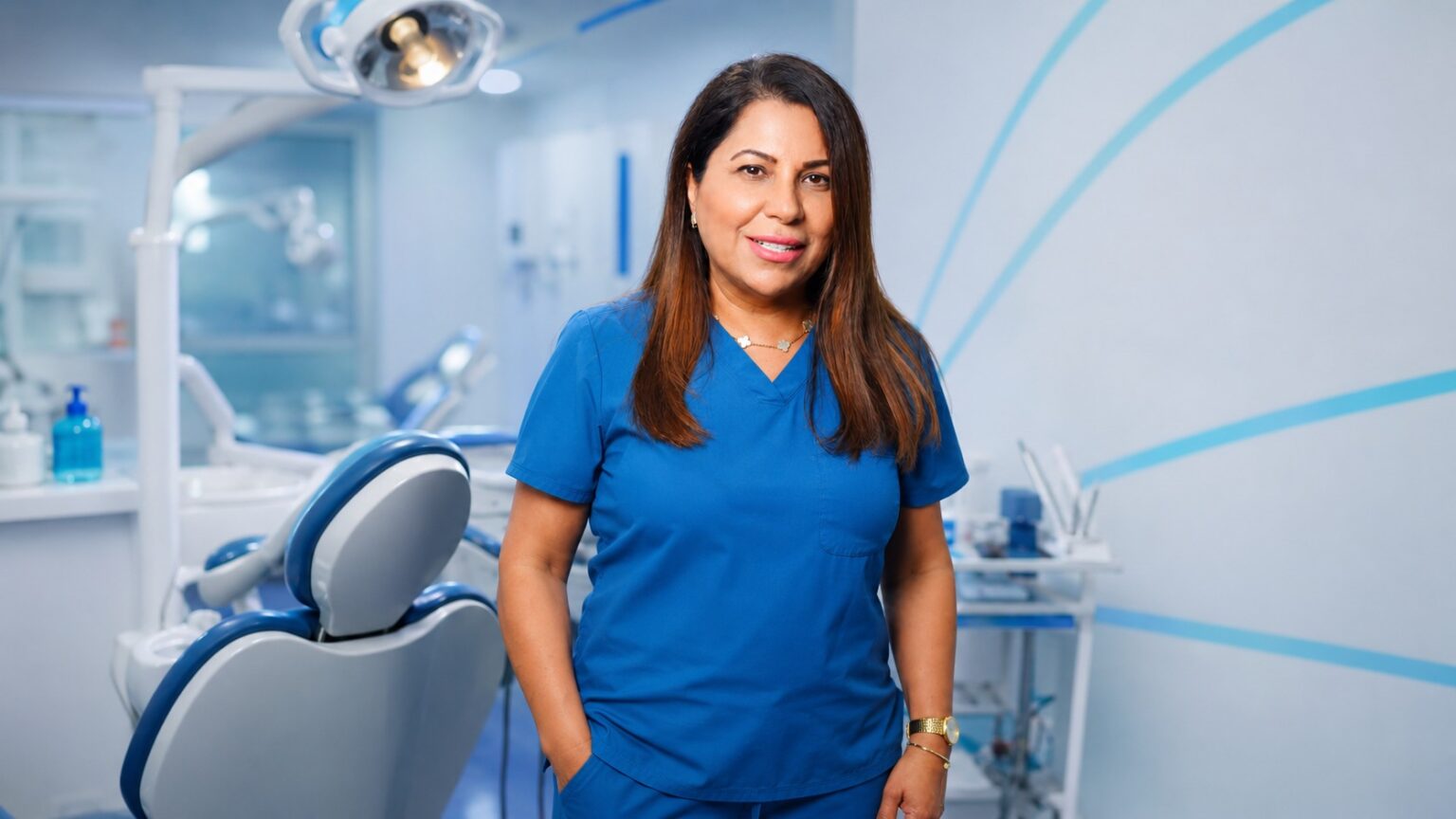
Almost a billion adults worldwide have obstructive sleep apnoea, roughly a quarter of Bahrain’s residents are obese, and the laser that quiets the snoring now sits in a dental surgery rather than a sleep clinic.
Dr Lamya Mahmood does not open with anatomy. In a video published by her centre, she opens with the argument that actually gets a patient through the door. “Your snoring reaches the living room, and your wife cannot sleep in the same room as you,” she says, before describing what the clinic can do about it.
That is a marketing line. It is also an accurate description of how sleep-disordered breathing usually presents, which is to say secondhand. The person who books the appointment is rarely the person who snores.
The Size of the Untreated Market
The underlying numbers are unusually large for a condition most people treat as a domestic complaint. A multinational analysis published in The Lancet Respiratory Medicine in 2019 estimated that 936 million adults aged 30 to 69 have mild to severe obstructive sleep apnoea worldwide, and 425 million have moderate to severe disease. The figure was close to ten times the World Health Organization’s 2007 estimate of more than 100 million, and the authors’ conclusion was blunt: with almost a billion people affected, and prevalence above 50 per cent in some countries, better diagnosis and treatment strategies are needed.
Risk concentrates with weight, which places the Gulf near the front of the queue. Bahrain’s National Health Survey found around 26 per cent of residents obese and 40 per cent overweight, and in 2022 Bahrain became the first Gulf state named by the WHO, alongside 25 other countries, in a push to accelerate progress on reducing obesity.
What Is Actually Being Sold
The treatment on offer is not a machine most people associate with a dentist. “We have three types of laser with which we can treat the snoring problem,” Dr Lamya says. “We reach the area of the uvula, which is responsible for snoring, and we shrink that area.” On the course of treatment she is specific: “We treat snoring without pain, and it takes roughly two to three sessions.”
Her centre publishes the hardware behind that, including an Elexxion Snore-3 system it describes as a non-invasive, pain-free laser treatment delivered in sessions of about 20 minutes, alongside four other laser platforms. Dr Lamya’s operates three branches, in Muharraq, Riffa and Janabiya, and its founder holds a master’s degree in laser dentistry from Aachen University and the European Master Degree in Oral Laser Application.
Dentistry has structural reasons to own this category. The airway in question is anatomy a dentist already examines, the laser is already in the room for soft-tissue work, and patients see a dentist far more often than they see a respiratory physician. There is also a payer argument: sleep studies and pressure therapy sit inside the medical system, while snoring reduction is elective and paid directly by the household.
The Evidence, and Where It Thins
The technique is better supported than its infomercial reputation suggests. A systematic review and meta-analysis covering 56 studies published between 2015 and 2025 found that non-ablative erbium laser treatment, particularly in the non-ablative modes used commercially, significantly reduced snoring intensity and improved subjective sleep quality. A randomised controlled trial of 40 primary snorers with an apnoea-hypopnea index below 15 compared three sessions against sham treatment and found meaningful improvement in snoring scores in the treated group and none in the sham arm.
The honest qualification comes from the same review. Its authors graded the evidence as moderate quality for immediate effects and safety, but low to very low quality for long-term outcomes, and confined the benefit to carefully selected patients with primary snoring or mild to moderate apnoea. The older, ablative surgical version of the same idea carries a harder verdict: the American Academy of Sleep Medicine’s practice parameters state that laser-assisted uvulopalatoplasty is not recommended for sleep-related breathing disorders, while noting it appears comparable to conventional surgery for snoring alone. The clinical risk here is not the laser. It is the sequencing. Snoring is the only alarm most households ever get, and a treatment that removes the noise without establishing whether apnoea is present can leave a patient quieter and no safer.
Which is why selection, not equipment, is the product. A defined two-to-three-session protocol, screening before treatment and referral where the history warrants it are what separate an airway service from a noise-cancelling one.
The Gulf has the risk profile, the disposable income and the clinic density to build a large market here. What it does not yet have at scale is the diagnostic step in front of the procedure. The practices that put it there will be the ones still selling this in ten years.