ع



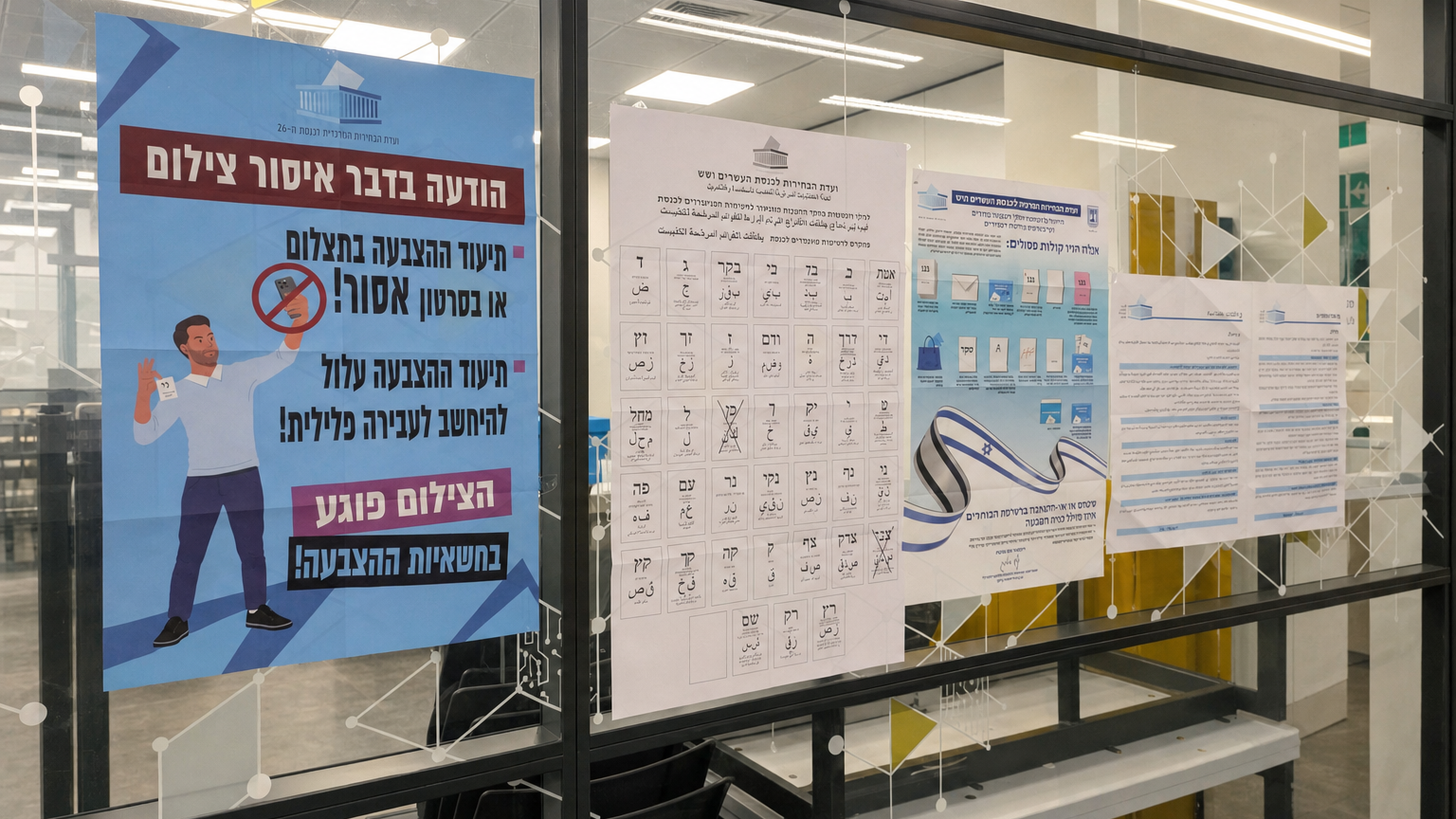
Reuters reported on October 28 that with nearly 86 percent of ballots counted, Netanyahu’s bloc of right-wing, far-right and ultra-Orthodox parties stood well ahead of the opposition group led by former military chief Gadi Eisenkot, yet still fell short of a parliamentary majority in the 120-seat Knesset. The Central Elections Committee placed overall turnout at 77.7 percent, the highest level in more than two decades and roughly seven percentage points above the 2022 figure, driven in part by strong participation among Arab citizens who make up more than one-fifth of the population. Arab parties captured an unprecedented 19 seats according to the tally, but Eisenkot has ruled out relying on their support to form a government, complicating efforts to unseat the long-serving prime minister who could remain in a caretaker capacity during coalition talks.
The Israel Policy Forum detailed how Israel’s proportional representation system, which uses a single nationwide district and a 3.25 percent electoral threshold, routinely produces fragmented parliaments that require multiparty coalitions. Under this framework parties falling below the threshold have their votes discarded, which slightly increases the relative share of qualifying lists before the Bader-Ofer allocation method distributes remaining seats in successive rounds that favor larger parties. The forum’s breakdown of the 2022 results showed three notable smaller parties and 27 marginal ones excluded in that manner, a pattern that repeated itself in the latest vote and prevented either major bloc from reaching a decisive total.
Ynetnews outlined the mechanics that prevent the largest party from automatically forming a government, noting that 61 seats constitute the minimum for a majority and that no single list has ever achieved this outright in modern Israeli elections. Coalition negotiations therefore grant smaller parties outsized leverage, with a faction holding as few as five or six seats sometimes proving decisive in reaching or blocking the threshold. This dynamic has produced frequent early elections, including five general votes between April 2019 and November 2022 driven by repeated coalition breakdowns, according to the publication’s assessment.
The New York Times traced the persistence of such instability to the proportional system itself, which reflects the country’s diverse social, religious and ideological cleavages but complicates stable governance. An eight-party coalition under Naftali Bennett collapsed in 2022 after internal rebellions and external pressure, the newspaper recalled, mirroring the challenges now facing both Netanyahu and Eisenkot as they seek compatible partners. Analysts cited by the Times warned that the latest deadlock may not yield a more definitive outcome than previous rounds, prolonging uncertainty in a nation still grappling with the aftermath of the October 7, 2023 Hamas attacks.
A Jerusalem Post review of recent ballots highlighted how the 3.25 percent threshold, raised from an even lower bar in 2014, has sometimes distorted outcomes by wasting hundreds of thousands of valid votes while amplifying the influence of parties that barely clear the mark. In one past cycle the combined vote for Netanyahu’s bloc and its opponents was nearly even, yet the seat distribution produced a clear parliamentary advantage because several lists fell just short of qualifying. The newspaper noted that such discrepancies underscore why coalition arithmetic often diverges from raw voter sentiment, a feature that again shapes the current negotiations.
Reuters added that far-right religious parties within Netanyahu’s camp were projected to secure a combined 13 seats, maintaining their relevance even as the prime minister’s overall support narrowed compared with pre-election expectations. Eisenkot’s opposition bloc underperformed some forecasts, leaving Arab parties potentially holding the balance of power that neither side appears eager to embrace fully. With final tallies still pending, both camps continued assessing options for assembling the necessary parliamentary support in the days ahead.