ع
ع


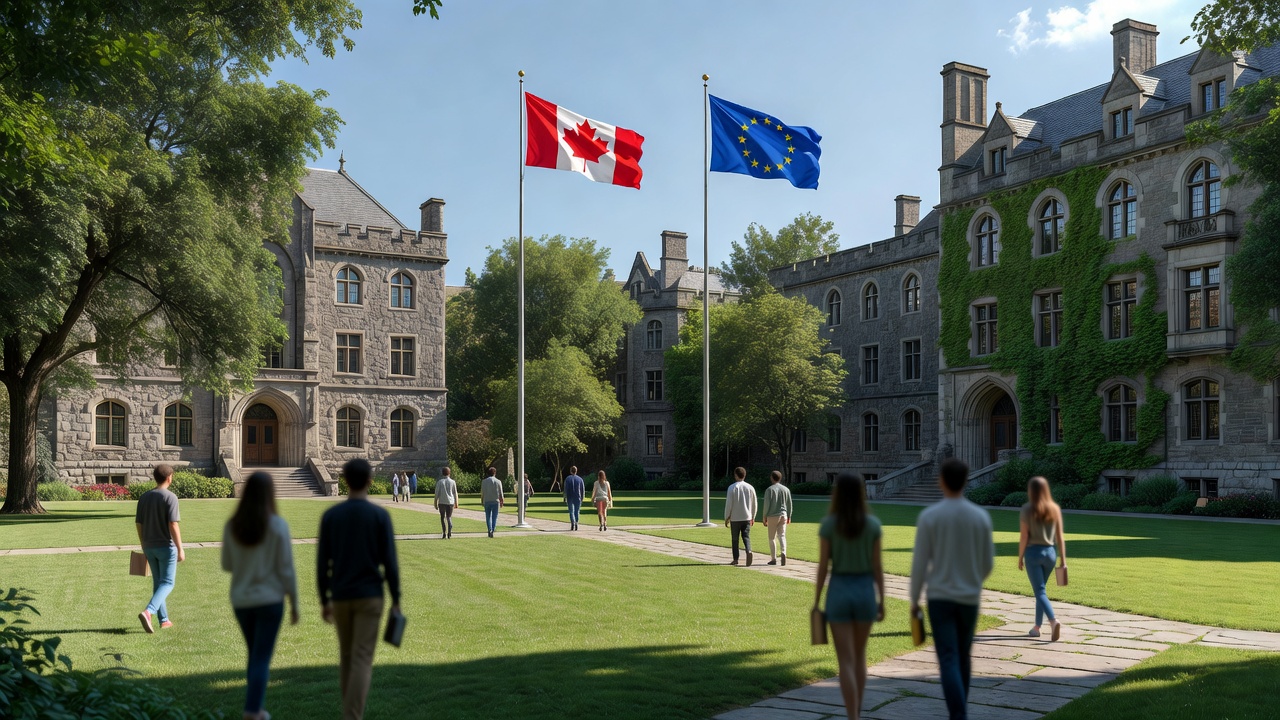
Prime Minister Mark Carney outlined an ambitious vision for closer Canada-EU relations in an address to the European Parliament, according to a transcript released by the Prime Minister’s Office. Carney welcomed European Commission President Ursula von der Leyen’s suggestion that Canada could become the EU’s first associate member, a status that does not currently exist, while stressing that Canada is neither seeking nor in a position to pursue full membership. The speech, delivered one day after von der Leyen’s proposal, framed the potential alliance as a way to safeguard sovereignty and resilience against geopolitical pressures, including trade tensions with the United States. Carney stated that an overwhelming majority of Canadians back much closer ties with Europe based on polling data his office cited.
Carney called for Canada to join the Erasmus+ program for education, training, youth and sport as well as the Horizon research initiative, a move that would expand opportunities for students and researchers on both sides of the Atlantic. “We should deepen our people-to-people ties, allowing our youth to live, work and study where they want on either side of the Atlantic,” Carney said in the address. The proposal builds on existing bilateral youth mobility agreements Canada holds with 22 of the EU’s 27 member states but aims to create a broader framework, according to reports from CBC News and The Irish Times. Negotiations on the scope of this relationship are expected to accelerate in the coming weeks ahead of a planned Canada-EU summit.
The initiative arrives as emigration from Canada has reached unprecedented levels, with Statistics Canada data showing 120,640 citizens and permanent residents left the country in 2025, the highest annual total since records began in 1952. Ontario accounted for nearly half of those departures at 56,266, while British Columbia posted the highest per-capita rate at 442 emigrants per 100,000 residents, a Statistics Canada assessment found. Many of those leaving are prime working-age adults between 25 and 49, a cohort that represented 53.9 percent of total emigration last year and often includes highly educated professionals in science and finance fields. The trend has accelerated over four consecutive years, compounding affordability and economic pressures that have driven outflows.
Canada already maintains reciprocal working holiday and mobility schemes with numerous European nations that allow participants aged 18 to 35 to live and work abroad for up to two years, according to Immigration, Refugees and Citizenship Canada figures. Demand for such visas from Irish applicants, for instance, has fallen from peaks above 10,000 annually between 2015 and 2023 to under 4,000 last year, an Irish Times review of the programs showed. Carney’s pitch for expanded access through an EU-wide arrangement could address growing Canadian interest in European destinations, though officials have described full visa-free living and working rights as a longer-term discussion rather than an immediate outcome. Conservative Leader Pierre Poilievre has cautioned against any deal that would impose EU-style open-border policies, a position noted in coverage by The Receipts.
The proposed alliance extends beyond mobility to encompass seamless digital trade in non-agricultural goods and services, deeper integration in critical minerals, defence manufacturing, artificial intelligence, energy security and payments systems, Carney detailed in his speech. A New York Times report on the address highlighted how the plan responds to a “ferocious storm” of global challenges, including U.S. tariffs and efforts to leverage economic ties for political gain. European companies in sectors such as machinery, pharmaceuticals and aerospace could see benefits from enhanced cooperation, with EU goods exports to Canada already reaching €48.9 billion in 2025, according to Council of the EU statistics. Carney emphasized that the partnership would not aim to create a rival bloc but instead serve as “a beacon for other democracies.”
Discussions around the associate membership concept remain at an early stage, with both sides acknowledging that substantial details on implementation, financial contributions and regulatory alignment have yet to be defined, a Guardian analysis found. Carney committed to parliamentary debates and a final vote in Canada’s House of Commons on any resulting agreement, underscoring that the process will be transparent and driven by shared values. The European Parliament gave the address a standing ovation, reflecting broad interest in strengthening transatlantic links at a time when Canada seeks to diversify partnerships beyond its southern neighbour.