ع



Algeria’s upper house of parliament the Council of the Nation voted unanimously during a closed emergency session on Sunday to authorise the deployment of People’s National Army units to neighbouring Niger while the lower house the People’s National Assembly gave its approval by absolute majority later the same day. The votes satisfied the constitutional requirement introduced in a 2020 amendment for two-thirds majorities in both chambers before overseas troop deployments can proceed. A parliamentary statement described the decision as backing a presidential notification with 148 senators in the 174-seat upper house supporting the measure according to an AFP account relayed by Arab News.
The mission will see Algerian troops secure economic and strategic assets particularly energy facilities in a region where Algeria’s state-owned Sonatrach maintains exploration and production interests including the 23,737-square-kilometre Kafra oil block. Senator Belkacem Boulghiti told reporters after the vote that the soldiers would not wage war but instead protect infrastructure. “We are not sending our soldiers to wage war in Niger but for a mission to secure economic infrastructure” he said adding that the step represented an adaptation of military doctrine to meet evolving Sahel challenges.
Units are expected to operate from Madama in Niger’s northern Agadez region near the Libyan border at the site of a former French base associated with Operation Barkhane Reuters reported citing a Nigerien security source. No troops had been officially despatched as of Sunday though Niger’s presidential chief of staff General Bacharou Ibro Amadou had visited the Kawar area and held talks with local commanders and traditional leaders since October 19 to prepare the facility. The Independent noted that authorities have yet to disclose the exact number of personnel involved or a firm timeline for their arrival.
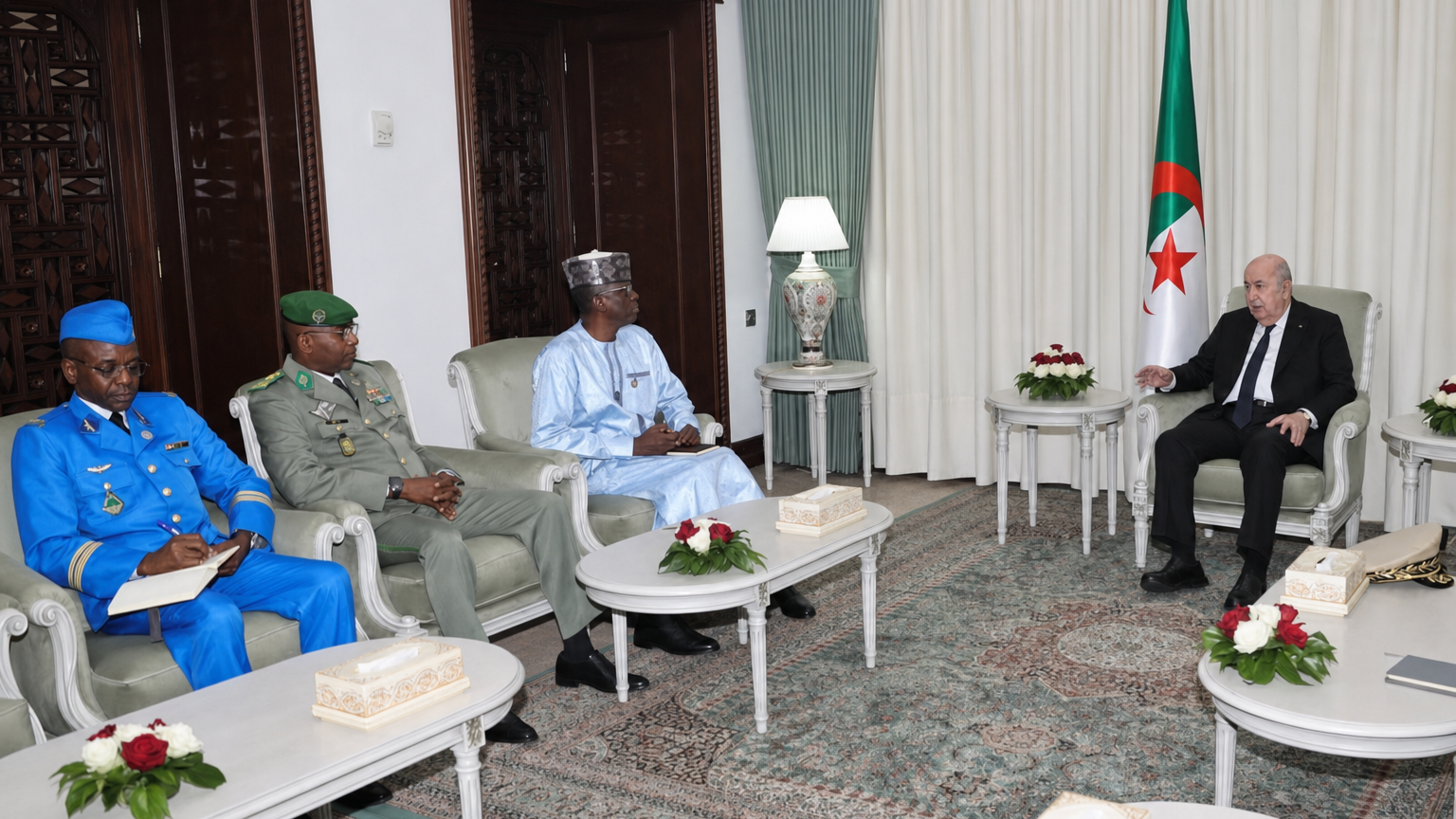
The parliamentary action follows a defence cooperation protocol signed last week during a visit to Algiers by Niger’s Defence Minister General Salifou Modi who met President Abdelmadjid Tebboune and army chief General Said Chanegriha Al Jazeera reported. That agreement built upon Algeria’s dispatch of four Su-30 fighter jets an Il-78 refuelling aircraft and support personnel to Niamey in late August at Niger’s request to help counter a mutiny that targeted military bases and the presidency. President Tebboune later confirmed the aircraft deployment was intended to thwart an attempt to destabilise the country after Niger’s prime minister had been in Algiers immediately prior to the unrest.
Ties between Algiers and Niamey have warmed considerably since a period of tension triggered by Algeria’s initial opposition to the 2023 military coup that installed Niger’s current junta and a subsequent diplomatic row over the downing of a Malian drone near the shared border. Algeria which maintains a 950-kilometre frontier with Niger regards stability across the Sahel as essential to its national security given persistent activity by groups affiliated with al-Qaeda and Islamic State in the region according to assessments cited by the International Crisis Group. The latest move also aligns with joint work on the Trans-Saharan Gas Pipeline project designed to carry Nigerian gas through Niger to European markets via Algerian export terminals.
Analysts have framed the deployment as a pragmatic evolution in Algerian policy that had long avoided direct military engagement beyond its borders since the 1973 conflict. Earlier this year Algeria provided Niger with four helicopters and other equipment as part of growing security assistance Middle East Eye reported. The decision underscores Algiers’ interest in establishing greater strategic depth in the Sahara to counter threats that could spill across its southern frontier and disrupt energy investments.