ع



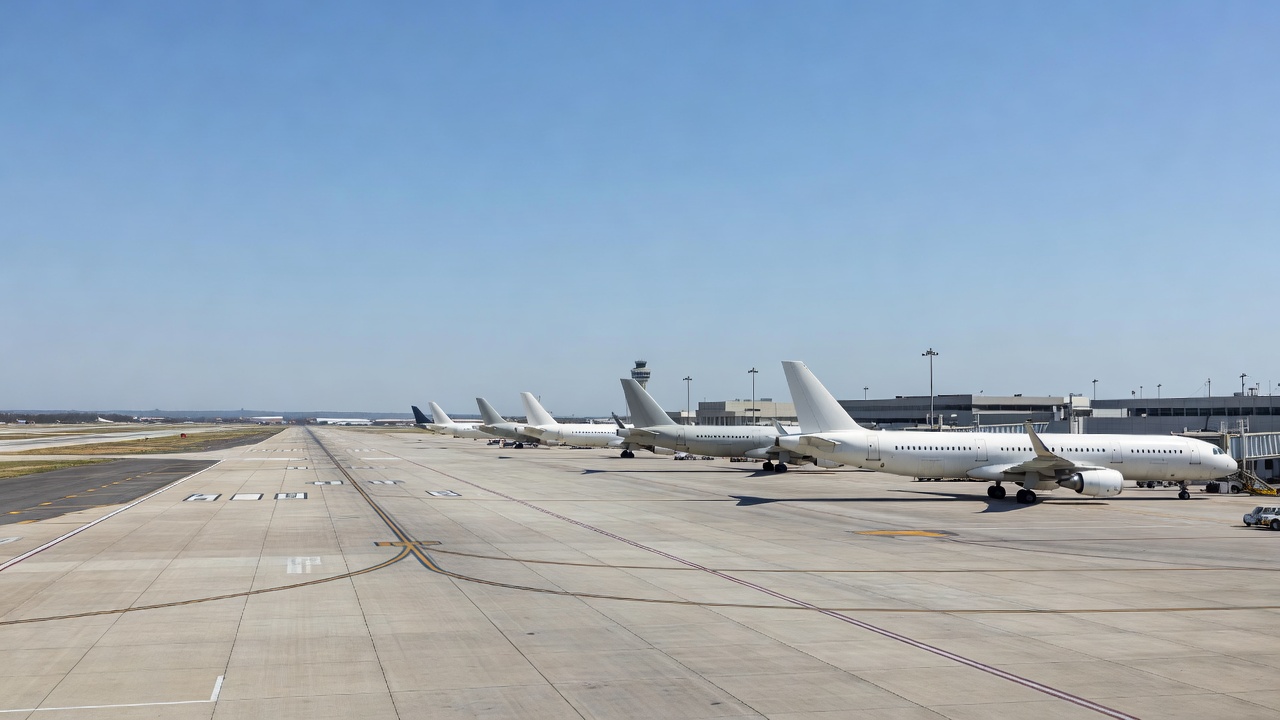
The Federal Aviation Administration ordered all departing flights across the United States to remain grounded starting around 3:54 p.m. ET on November 13 citing a communications outage that impacted air traffic control centers nationwide. Transportation Secretary Sean Duffy announced that the airspace had reopened by 8:15 p.m. ET although he warned that full recovery would take time and travelers should check with their airlines for updated schedules. While the measure lasted more than four hours inbound international flights were handled individually and planes already in the air continued safely to their destinations according to official briefings.
Officials moved quickly to reassure the public that the outage stemmed from overloaded switches and routers in an outdated air traffic control system rather than any nefarious activity. Homeland Security Secretary Markwayne Mullin explicitly ruled out a cyberattack or terror threat telling reporters there was no reason for alarm and that the incident did not compare to the September 11 attacks. The White House similarly stated there were no indications of malicious intent as technicians worked to restore consistent data flows across the network.
Flight tracking service FlightAware recorded more than 10000 delays and over 4000 cancellations on the day while other monitors placed the figures at roughly 8500 delays and nearly 8000 cancellations as the backlog mounted. At the peak of the stoppage only about 336 flights were airborne toward US airports compared to a typical volume exceeding 3600 according to Flightradar24 data. Aviation experts estimated that between 300000 and 400000 passengers found themselves stranded with some projections reaching as high as 1.5 million when accounting for knock-on effects over the weekend.
Passengers described scenes of confusion and frustration at major hubs as flights were abruptly halted with some planes returning to terminals after pushback. One traveler captured the resigned mood while speaking to reporters saying “We’ll get home one day” as people scrambled to rebook or find overnight accommodations. In Indianapolis a passenger named Deveren Werne recounted how his American Airlines flight to Chicago was stopped just before takeoff leading to a mix of emotions among those aboard who then learned of similar situations at other airports.
Airports from San Francisco to Chicago faced overcrowding with limited gate availability forcing some aircraft to wait on taxiways and complicating efforts to unwind the disruption. With the busy Thanksgiving travel period approaching in less than two weeks carriers such as Delta and United issued waivers for affected flights allowing changes without fees though the systemwide strain is expected to linger for days. Duffy acknowledged that tens of thousands of people were left without clear plans for the night highlighting the human toll of the infrastructure failure.
This event marks the longest nationwide ground stop since the September 11 2001 attacks and the first since a 90-minute outage in January 2023 that was traced to a corrupted file in the Notice to Air Missions database. The recurrence has renewed questions about the resilience of aging air traffic control technology which Secretary Duffy described as disconnected from newer systems like the SMART platform that remained unaffected. Industry observers noted that while safety was never compromised the episode exposed vulnerabilities that could have broader implications for travel reliability during peak seasons.