ع



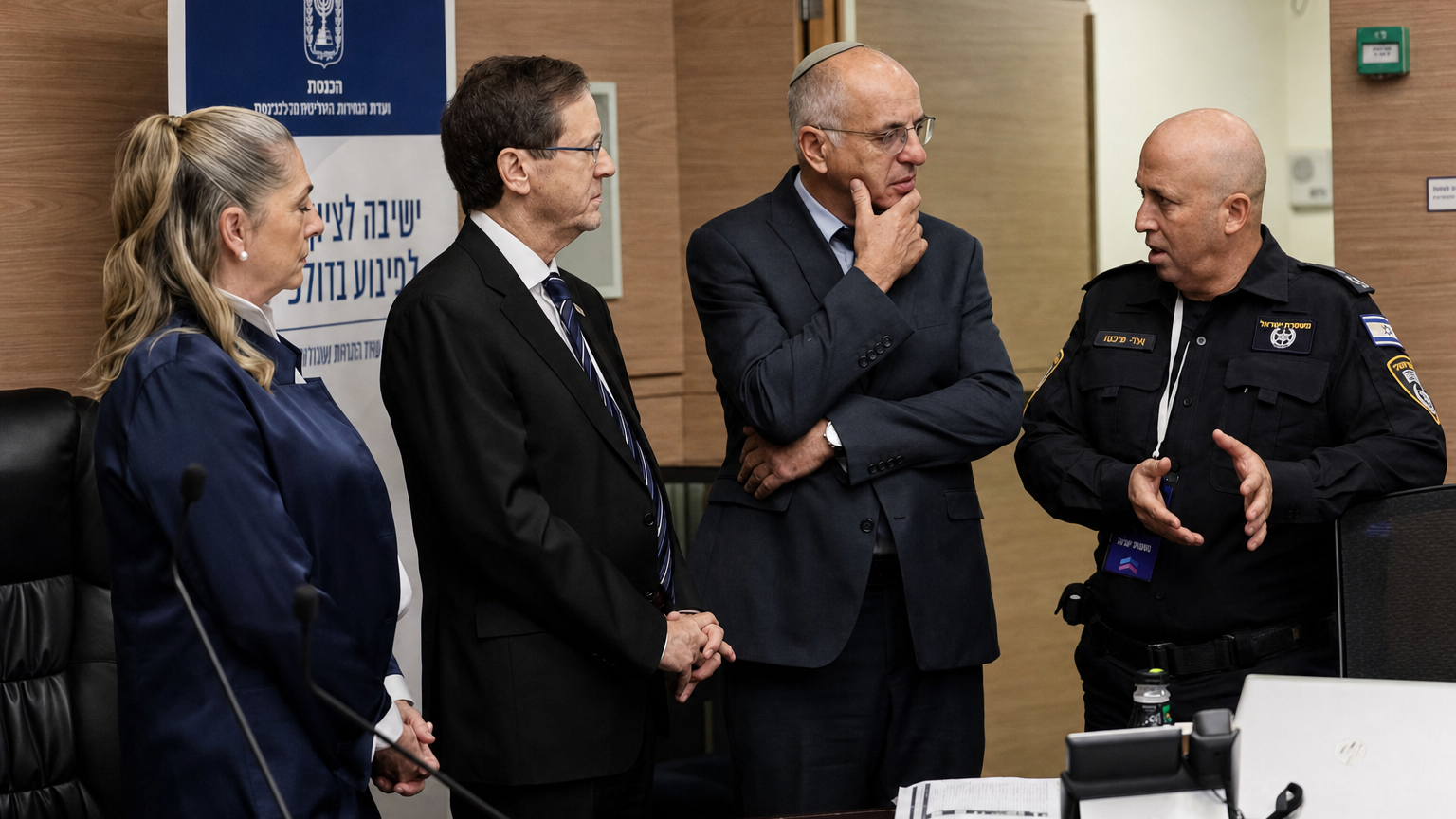
Partial results with more than 80 percent of ballots counted from the October 27, 2026 general election placed Prime Minister Benjamin Netanyahu’s bloc at approximately 54 seats while Gadi Eisenkot’s opposition alliance stood at around 48 and Arab parties surged to between 17 and 19 seats, according to figures cited by BBC News. Neither side reached the 61 seats required for a majority in the 120-member Knesset, setting the stage for weeks of negotiations as President Isaac Herzog prepares to consult party leaders next week before assigning a mandate to form a government. A poll published on October 16 found that 55 percent of Israelis would prefer a national unity government to another election if the vote failed to produce a clear majority, the Aaj English TV report indicated. Voter turnout reached levels not seen in decades, the Guardian reported, adding to the complexity of coalition building in a deeply divided political landscape.
BBC News outlined a possible national unity government led by Netanyahu in which he would persuade Eisenkot to join despite the latter’s campaign promise to oust him from power. Eisenkot told supporters on election night that Israelis are fed up with Netanyahu’s “culture of lies”, “division and incitement”, the outlet reported. Jewish Telegraphic Agency analysis noted that such an arrangement could require Netanyahu to drop far-right partners such as Itamar Ben-Gvir and Bezalel Smotrich to make it palatable to centrist voters. Ynetnews added that a unity deal would face major obstacles given explicit campaign pledges against it but could stabilise the country amid regional security tensions.
A second scenario involves Eisenkot forming a coalition or minority government with support from Arab parties, which would mark a seismic shift in Israeli politics, according to the BBC News article. Only one independent Arab party had formally joined a coalition before, in 2021, and that arrangement proved short-lived, the report stated. Multiple outlets including the Jewish Telegraphic Agency and Politico emphasised that Eisenkot and most parties in his bloc had ruled out partnering with Arab lists during the campaign, making this path unlikely though the Arab parties’ strong performance positions them as potential kingmakers. The Guardian noted that Arab Israeli lawmakers, whose community accounts for around 20 percent of the population, could provide ad hoc support on key votes without a full coalition agreement.
Netanyahu could seek to form a government by securing defectors from the opposition bloc or persuading individual parties to cross over, a possibility highlighted in reports from Ynetnews and Al-Monitor. Projections suggest he remains short of the 61-seat threshold even with such moves, yet political sources told Al-Monitor that some ideologically conservative opposition figures might align with him despite past falling-outs. This approach would allow Netanyahu to remain in office as a caretaker if initial attempts fail, the RBC-Ukraine analysis found. President Herzog holds discretion in choosing whom to task with government formation, potentially influencing the outcome, according to Politico.
Should all attempts fail, Israel would head to another round of elections as early as spring 2027, an outcome described as the most probable by several analysts including those cited by Franceinfo and the Financial Times. The country experienced four elections between 2019 and 2021 due to similar coalition impasses, historical precedent that Haaretz referenced in its post-election coverage. A minority government relying on outside support without a formal majority remains theoretically possible but would be fragile and prone to collapse, the Kyiv Post assessment indicated. US President Donald Trump could play a role in brokering a unity deal between the rivals, political sources suggested to Al-Monitor, given Washington’s interest in regional stability.
The Central Elections Committee is expected to finalise results by early next week, after which the formal consultation process with President Herzog begins, according to timelines provided by the Middle East Policy Council. This deadlock occurs against a backdrop of ongoing security challenges, with experts warning that prolonged uncertainty could affect Israel’s international standing and domestic policy implementation. Analysts across outlets including the Atlantic Council expressed cautious hope that the system might force compromise despite entrenched positions.