ع



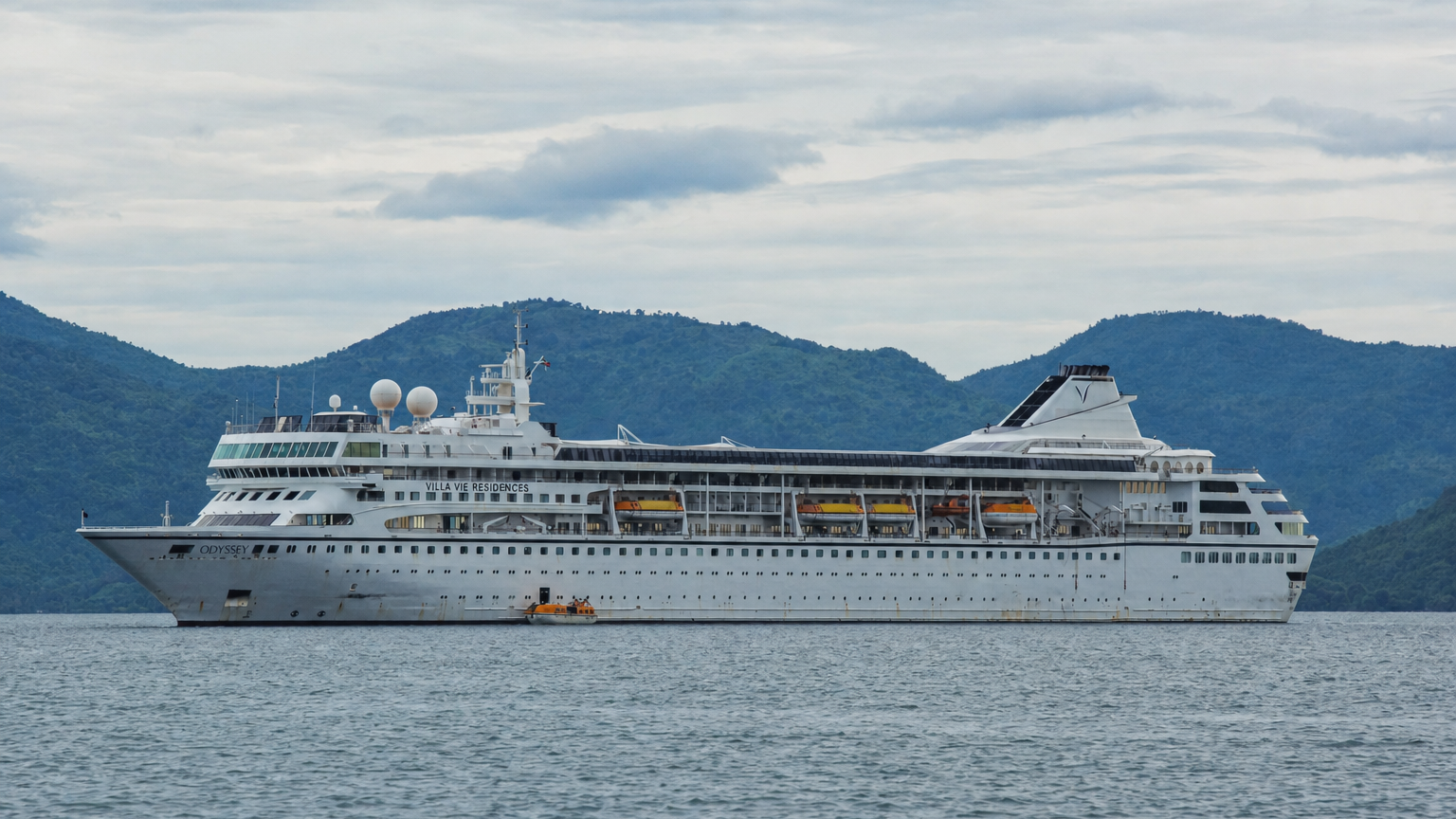
Villa Vie Residences suspended operations of its residential cruise ship in the Cambodian port of Sihanoukville on October 27 2026 after fuel costs rendered continued sailing unsustainable according to statements from the Florida-based operator. Around 200 passengers many of whom treated the vessel as their permanent home received instructions to disembark by 2 p.m. local time with their personal belongings as the nearly 200-metre ship entered a temporary lay-up. The company said it would assist with temporary living arrangements and cover local transportation and lodging but would not fund international travel out of the country a position that left many residents scrambling for flights and accommodation.
The Odyssey had been more than 750 days into a planned 3.5-year continuous circumnavigation that began from Belfast in October 2024 after months of repairs delayed its original departure and cost the operator millions according to reporting by BBC News. Marketed as an endless world cruise the ship permitted passengers to buy or lease cabins for long-term living with ownership prices ranging from $130,000 to $440,000 and monthly fees between $2,000 and $10,000 many residents had sold land-based homes to embrace the lifestyle. The itinerary had already taken the vessel to ports from Tonga to Australia with an updated schedule pointing toward India by the end of 2026 before the abrupt stop in a location known for its shift from quiet beach town to a centre associated with online scam operations.
According to a company statement monthly fuel costs per cabin in Asian waters surged from a historical average of roughly $1,800 to between $6,000 and $8,000 pushing overall operating expenses up about 50 percent to $3 million per month. Founder Mikael Petterson told Bloomberg that the increases followed the outbreak of conflict between US-Israel forces and Iran earlier in 2026 which disrupted supplies and lifted marine gas oil prices in Singapore to $1,339 per metric ton from around $700 beforehand. The operator had already slowed its itinerary and extended time in port to conserve fuel yet Petterson said those steps had not offset the extraordinary rise that made the residential model extremely challenging.
Passengers balked at an initial request to contribute extra toward fuel expenses to leave Cambodia and the company has since proposed an additional $500 monthly payment plus a fuel surcharge while prices remain high. “When the war broke out nobody expected that war to carry on” Petterson said in the interview adding that market analytics suggest no relief until after the current US administration leaves office. A spokesperson for Villa Vie Residences stated “Since the conflict began in late February we have taken significant steps to reduce fuel consumption including slowing the itinerary and spending more time in port” but confirmed the firm is now pursuing restructuring and recapitalisation options over the next 60 days with no guaranteed outcome.
Cruise Lines International Association figures show heavy fuel oil accounted for 60.6 percent of reported cruise ship fuel use in 2024 down from 74.2 percent in 2019 while non-heavy fuel oil alternatives rose to 39.4 percent reflecting broader industry shifts toward efficiency and multi-fuel engines. In contrast Carnival Corporation reported a 36.4 percent increase in fuel costs to $615 million for its third quarter of fiscal 2026 yet achieved record revenues illustrating how larger fleets absorb volatility better than niche residential operators. Average fuel consumption per reporting cruise ship in Europe fell 18.5 percent between 2018 and 2025 according to the association’s environmental tracking.
The sudden transition has created immediate practical difficulties for mostly North American residents who must now secure flights arrange storage or shipment of belongings accumulated over two years at sea and find interim housing either in Cambodia or back home. While the operator works on disembarkation plans some passengers have expressed disappointment that a voyage promoted as a lifelong seafaring experience has ended without warning in an unfamiliar Southeast Asian port. Reports from outlets including The Sydney Morning Herald and The Japan Times indicate the company continues to seek financing that could allow a swift resumption if fuel markets stabilise.
Villa Vie Residences described the suspension as a necessary response to conditions no one anticipated when the voyage launched and said it remains committed to exploring every alternative to revive the concept that drew hundreds to invest in permanent berths aboard the vessel. The episode highlights vulnerabilities in smaller segments of the cruise sector where fixed monthly pricing collides with unpredictable global energy prices driven by geopolitical events. Industry observers note that while major lines have invested in fuel flexibility and shore power connections the residential model depends on constant movement making it especially exposed to sustained spikes in bunker costs.