ع



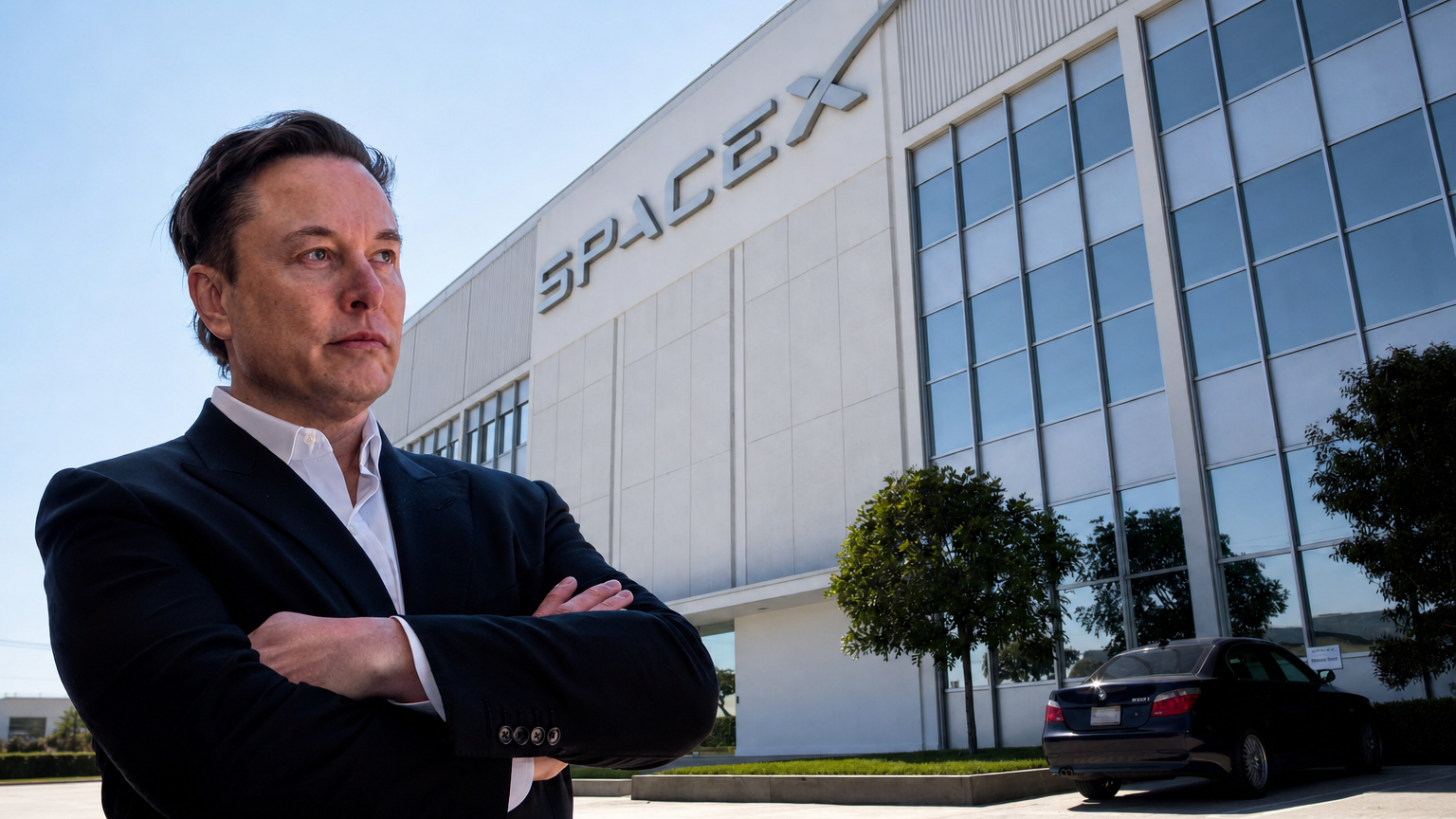
Elon Musk told investors on a SpaceX conference call that combining Tesla and SpaceX holds considerable merit as the firms near the superintelligence singularity. Special committees of independent directors at both companies are exploring a potential transaction at the request of shareholders, Musk said. Any deal would require approval from those shareholders following negotiations by the committees.
A Reuters analysis found that a merger could simplify decision-making across Musk’s interdependent projects, allowing more flexible deployment of capital, talent and infrastructure. Musk has argued he needs greater influence at Tesla to advance its artificial intelligence and robotics initiatives, where he holds nearly a fifth of the company compared with voting control at SpaceX. Musk stated there is much to be gained from cooperation on superintelligence software, chip design at the proposed Terafab facility, robotics, mass-to-orbit capabilities with the Starmind constellation of orbital data centers and connectivity.
Morningstar analysts identified a solid business case for the combination given both companies’ heavy investments in artificial intelligence and building an AI supply chain. Tesla already supplies batteries, solar panels and potentially other components to SpaceX while the firms collaborate on semiconductors for AI computing through a joint venture with Intel. The two are also positioned to partner on orbital data centers, a major SpaceX project.
According to Ars Technica, the merger would enhance Musk’s control since he holds more than 82 percent of voting power in SpaceX versus about 20 percent at Tesla, potentially consolidating his influence in the combined entity. Both enterprises are shifting from core businesses toward artificial intelligence, with SpaceX anticipating future revenues from orbital data centers powering AI on Earth. SpaceX could supply connectivity via Starlink for Tesla’s robotaxis and other hardware.
A New York Times report detailed existing ties including Tesla’s investment in xAI, which later merged with SpaceX, and hundreds of millions of dollars in battery and vehicle sales between the companies. Supporters argue the combined firm could allocate resources more efficiently across interdependent AI, energy, robotics and space operations. The New York Times noted that SpaceX has reduced launch costs, enabling solar-powered orbiting data centers that could give an edge in artificial intelligence.
Reuters highlighted potential downsides including exposure to a wider array of technical, regulatory and execution risks with little overlap between automotive-energy and space sectors. Geopolitical factors pose challenges as SpaceX serves as a major contractor to the US military and NASA while Tesla relies heavily on its Shanghai factory for production and sales. Morningstar cautioned that the companies maintain distinct long-term goals, with Tesla focusing on autonomous driving software and humanoid robots separate from SpaceX’s space ambitions.
The discussion follows SpaceX’s initial public offering earlier in 2026, which has fueled speculation about a combination according to multiple analysts. Wedbush Securities analyst Dan Ives has projected an 80 percent probability for a merger by 2027, citing operational overlaps in AI infrastructure. Previous steps such as the merger of xAI into SpaceX and joint projects like the Terafab have tightened links between the entities.