ع
ع


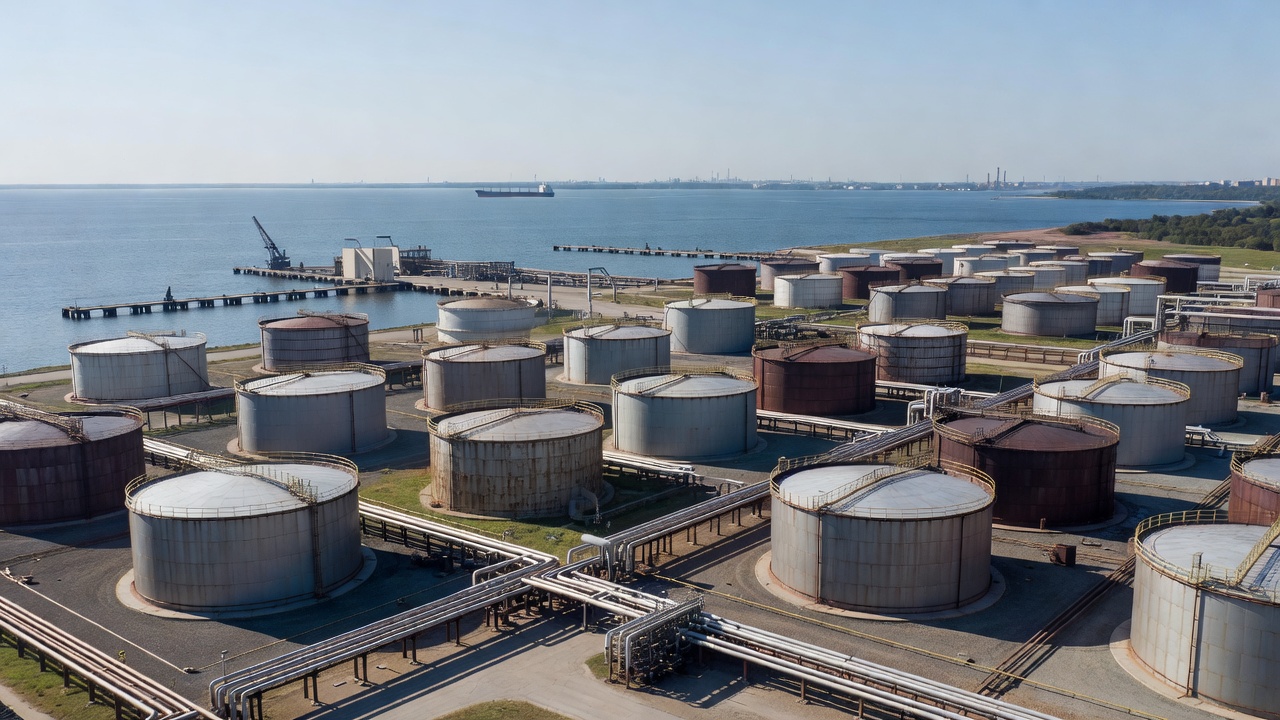
Russian local authorities reported one person killed and at least five others injured when Ukrainian drones targeted multiple sites in St Petersburg and the Leningrad region overnight. St Petersburg Governor Alexander Beglov stated that fires broke out at the Petersburg Oil Terminal, the Ruchyi oil depot and several industrial warehouses, with some residential buildings also sustaining damage. According to Reuters, the strikes disrupted operations at an Ozon logistics hub and a VK data centre, although both companies indicated that core services remained available to users. The assault has been described by officials as oil facilities hit in deadly overnight attack on St Petersburg, marking a significant escalation in long-range Ukrainian operations.[[1]](https://www.reuters.com/world/europe/one-killed-15-injured-ukrainian-drone-attack-st-petersburg-leningrad-region-2026-10-18/)
The Petersburg Oil Terminal serves as one of Russia’s largest facilities for receiving, storing and exporting petroleum products on the Baltic coast, with an annual throughput of 12.5 million tons and 32 tanks providing 442,000 cubic metres of storage capacity. Ukrainian drone manufacturer Fire Point announced that its FP-1 long-range drones conducted the strike on the terminal, with footage showing flames and smoke rising from the site into the morning hours. Open-source analysts confirmed additional impacts at the Ruchyi depot, a key fuel storage and distribution point owned by a Rosneft subsidiary with capacity for 114,000 cubic metres of petroleum products. Emergency responders worked to contain the blazes while airport authorities temporarily restricted flights at the city’s main air hub for safety reasons.[[5]](https://united24media.com/war-in-ukraine/ukraine-strikes-deep-into-st-petersburg-setting-major-russian-oil-export-terminal-on-fire-23552)
This attack fits into a broader Ukrainian campaign that a Baker Institute study has tracked as encompassing at least 272 discrete strikes on Russian energy infrastructure since the start of the conflict. S&P Global Energy data has shown that Ukrainian actions contributed to periods where half of Russia’s total refining capacity was knocked offline during 2026, leading to domestic fuel shortages and export curbs in several regions. The Financial Times analysis placed the number of successful strikes on Russian refineries at a monthly record of 16 during May 2026, reflecting an 11-fold increase over the same period the previous year.[[3]](https://www.bakerinstitute.org/research/quantifying-ukraines-strikes-russian-energy-infrastructure)
Russia’s Defence Ministry announced that air defence systems downed 1,015 Ukrainian drones across 15 regions, Crimea and the Black Sea in the single largest overnight interception tally of the war. Leningrad region Governor Alexander Drozdenko reported that 145 drones were intercepted in his jurisdiction alone, resulting in power outages for approximately 20,000 residents after an electrical substation took a hit. Kremlin spokesman Dmitry Peskov told state media that Moscow would maintain systematic large-scale strikes in reply, stating that the Kyiv regime’s resistance could not alter the overall course of events.
St Petersburg authorities imposed temporary road closures in affected districts while municipal alert systems drew criticism for delayed activation according to independent Russian outlets. Videos verified by monitoring channels depicted drones in the sky and subsequent explosions lighting up the night over the city of 5.6 million residents. The strikes occurred amid ongoing diplomatic friction, including public criticism from U.S. President Donald Trump regarding the effect of such actions on global diesel prices.[[6]](https://www.independent.co.uk/news/world/americas/russia-donald-trump-kyiv-st-petersburg-washington-b3068727.html)
Ukrainian President Volodymyr Zelenskyy separately noted that Russian overnight attacks on Ukrainian energy facilities had killed two civilians, highlighting the continued back-and-forth targeting of infrastructure on both sides. A New York Times dispatch indicated that Kyiv had briefly paused its energy strikes as a goodwill measure but resumed after perceiving no corresponding restraint from Moscow. Industry assessments suggest that repeated hits on export terminals like the one in St Petersburg could further strain Russia’s petroleum logistics if sustained over time.