ع
ع


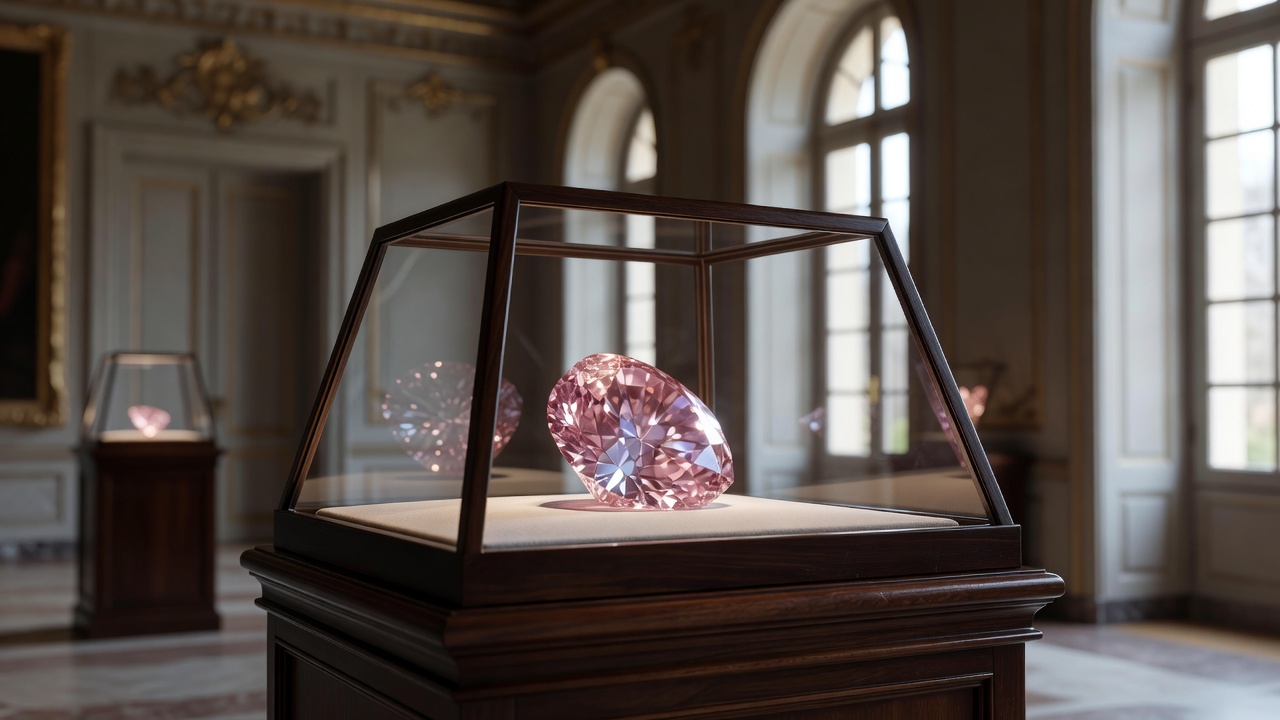
The Condé Museum at Château de Chantilly opened an exhibition on October 17, 2026, featuring the Grand Condé pink diamond as its centerpiece alongside the results of an unprecedented gemological and historical study. Museum director Mathieu Deldicque told CNN that the display marks the first time the stone has appeared in a major public exhibition in 100 years. The show, developed in partnership with L’ÉCOLE School of Jewellery Arts and with support from Van Cleef & Arpels, runs through January 3, 2027, in the Gem Cabinet and Gallery of Psyche. It includes previously unpublished archival documents, police records and interpretive displays that trace the gem’s path through French royal collections.
The 9.01-carat pear-shaped diamond has been documented in the collections of the Princes of Condé since at least 1740, when it appeared in an inventory drawn up after the death of Louis Henri de Bourbon. It later passed to Queen Marie-Amélie before entering the holdings of Henri of Orléans, Duke of Aumale, who bequeathed the entire Musée Condé to the Institut de France. A report from the museum noted that few royal jewels survived the French Revolution, making the Grand Condé one of the outstanding survivors in the treasury. Its exact geological origins remain unclear despite the new analyses.
Two amateur thieves, Léon Kauffer and Émile Souter, both demobilized French aviators in their early 20s, carried out the burglary at the château on the night of October 11 to 12, 1926. According to a CNN account of the events, the pair used ladders to cross the moat, broke into the Gem Cabinet and made off with more than 75 pieces of jewelry valued at roughly $3 million at the time. Most of the other stolen items were dismantled and sold, but the famous pink diamond proved impossible to fence because every policeman in Europe was looking for it, Deldicque said. The scale of the theft initially led investigators to suspect professional acrobats or inside help.
The thieves hid the Grand Condé inside a hollowed-out apple while staying at a modest Paris hotel near the Gare de l’Est, a detail widely reported by newspapers of the era. In December 1926 a chambermaid named Suzanne Schiltz bit into the apple she found in their luggage and struck the hard stone, an incident that led directly to their arrests, according to multiple historical reconstructions published ahead of the exhibition. Deldicque confirmed to reporters that the apple story, though it sounds far-fetched, was extensively covered at the time. The diamond was returned to the museum shortly afterward and has remained there under tight security ever since.
Extensive testing by a team including Emmanuel Fritsch, professor emeritus at the University of Nantes, and specialists from the French Gemmological Laboratory produced a unique scientific profile of the stone’s color-causing structural defects. The museum said the resulting “identity card” will make the diamond identifiable to authorities even if it is ever stolen and recut. Archival research also clarified its passage through royal hands and the circumstances of the 1926 investigation. These findings form a central part of the exhibition narrative that moves from princely splendor to laboratory analysis.
Naturally occurring pink diamonds account for less than 0.01 percent of all diamonds mined annually and rarely exceed one carat, according to Gemological Institute of America data reviewed between 2008 and 2016. Sotheby’s auction records show the record price for a pink diamond stands at $71.2 million, paid in 2017 for the 59.60-carat CTF Pink Star. Other notable sales include the Williamson Pink Star at $57.7 million in 2022 and the Graff Pink at $46 million in 2010. The Grand Condé’s combination of size, historic provenance and vivid color places it among the most exceptional examples despite never having appeared at auction.
The exhibition opens against a backdrop of renewed concern over cultural institution security following a daylight jewelry theft at the Louvre in October 2025 and a separate $4 million smash-and-grab in Vienna. Deldicque declined to disclose the insurance value but emphasized that the new scientific documentation adds a further layer of protection. The museum’s tally of the 1926 theft listed the pink diamond as the sole major piece recovered intact, while the remainder of the haul was largely lost to melting or disposal in the Seine.