ع
ع


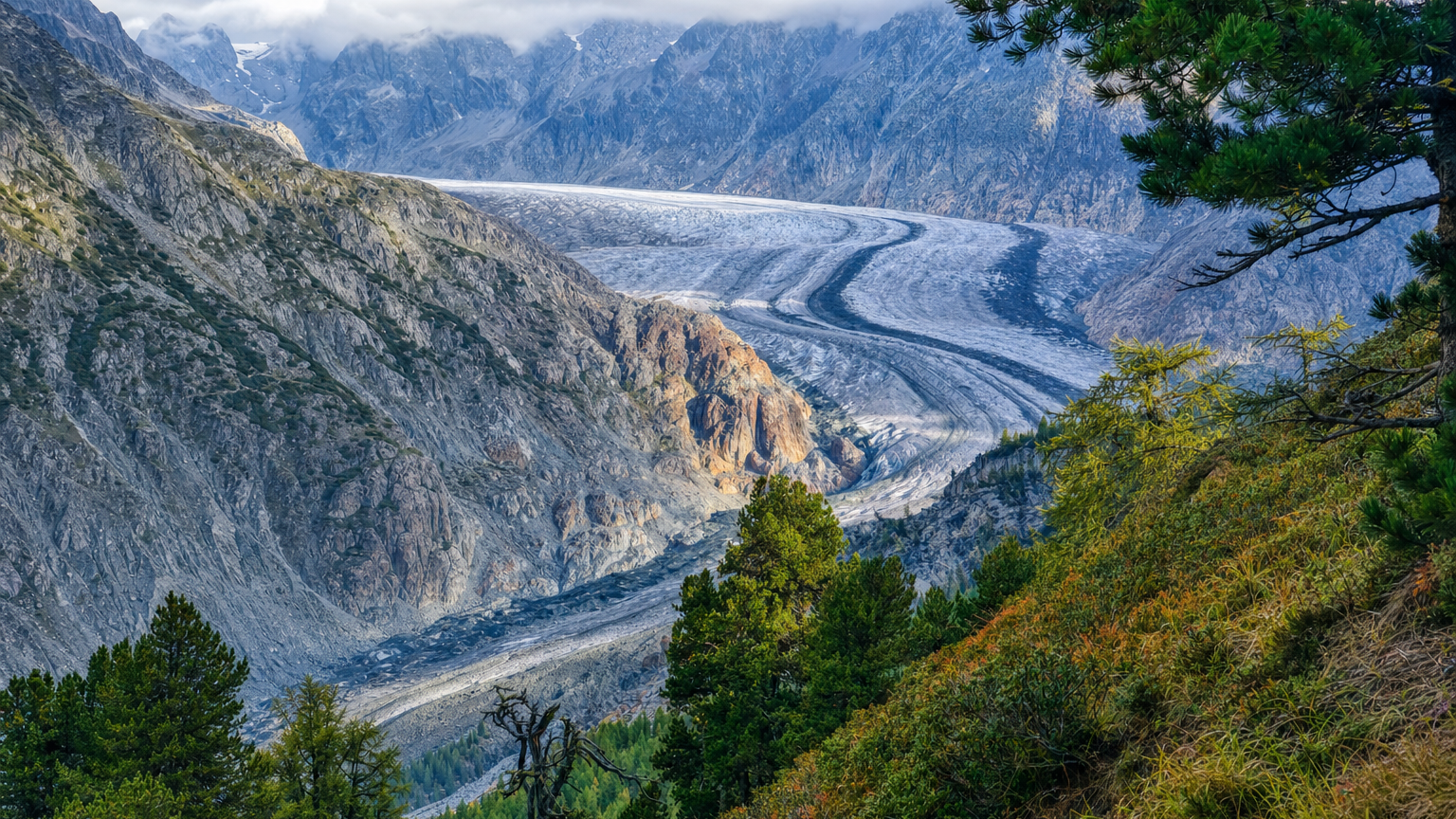
Glacier Monitoring Switzerland reported that the hydrological year ending in September 2026 produced an average mass balance of negative 2.9 meters water equivalent, translating to a 5.5 percent loss of national ice volume after a winter with limited snow followed by heat waves that depleted reserves. Matthias Huss, director of the network known as GLAMOS, described the outcome as really just disastrous while noting that annual losses exceeding 2 percent were once viewed as extreme by Alpine glaciologists. Even at 3,500 meters elevation some measurement points showed no snow cover at the end of summer, with up to 4 meters of ice lost in locations that should have retained several meters of accumulation, according to the GLAMOS assessment released through ETH Zurich.
The Swiss Academy of Sciences figures show that the country’s nearly 1,400 glaciers, the most of any European nation, have lost one quarter of their ice since 2015 while more than 150 smaller glaciers have disappeared entirely since 2016. This decade of accelerated retreat has already triggered landscape changes that include unstable slopes and increased rockfall risks, a development Swiss authorities monitored closely after the 2025 glacier collapse that impacted the village of Blatten in Valais canton, Reuters reported. The latest data places 2026 as the fourth-largest single-year decline on record after losses of 5.9 percent in 2022, 4.4 percent in 2023 and an earlier extreme in 2003.
An estimated 2.2 trillion litres of meltwater were released from Swiss glaciers between July and September 2026, temporarily easing seasonal shortages but further eroding the frozen buffer that sustains river flows in drier periods, the BBC reported citing the GLAMOS findings. The World Meteorological Organization documented that widespread glacier retreat continued globally for a fourth consecutive year through 2025, contributing to river flows that ranked among the driest in decades across more than one third of monitored basins. Terrestrial water storage in ice, snow and groundwater has trended downward for a decade, prompting WMO Secretary-General Celeste Saulo to warn of serious future implications for planetary water buffers during dry years.
Hydropower generation, which relies on glacial melt to maintain lake and river levels that supply most of Switzerland’s electricity, faces long-term constraints from the diminishing ice reserves, an assessment published by ETH Zurich concluded. Agriculture and tourism sectors in the Alps are similarly vulnerable as reduced summer flows could limit irrigation capacity and alter landscapes that attract visitors, according to the Swiss Commission for Cryosphere Observation. Projections indicate that more than 80 percent of current Alpine glacier mass could vanish by 2100 if greenhouse gas emissions are not curtailed sharply, a scenario outlined in a Reuters analysis of the GLAMOS trends.
Matthias Huss told Reuters that high-elevation glaciers above 3,000 meters might persist for 40 to 50 years under current conditions while lower sites could disappear within five years, though up to 200 such high glaciers could be saved if global carbon dioxide emissions reached zero over the next three decades. The UNESCO report on the world’s glaciers, released in March 2025, recorded the largest three-year mass loss since 1975 with 450 gigatons melted in 2024 alone, a volume that Michael Zemp of the World Glacier Monitoring Service compared to an ice block the size of Germany 25 meters thick. Mountain glaciers have become one of the leading contributors to sea level rise while threatening water sources that billions depend upon for energy, farming and daily needs, the UNESCO assessment found.
Ice flow velocities across eight monitored Swiss glaciers slowed by 46 percent relative to the 2010-2020 average as persistent thinning reduced overall mass, GLAMOS measurements indicated. The network’s updated inventory based on aerial imagery revealed area losses ranging from 1.5 to 5.1 percent per year across regions, compounding the volume reductions that have removed more than 30 cubic kilometers of ice since 2000. Switzerland retained an estimated 42.6 cubic kilometers of glacier ice at the end of 2026, according to the latest GLAMOS extrapolation.