

 ع
ع


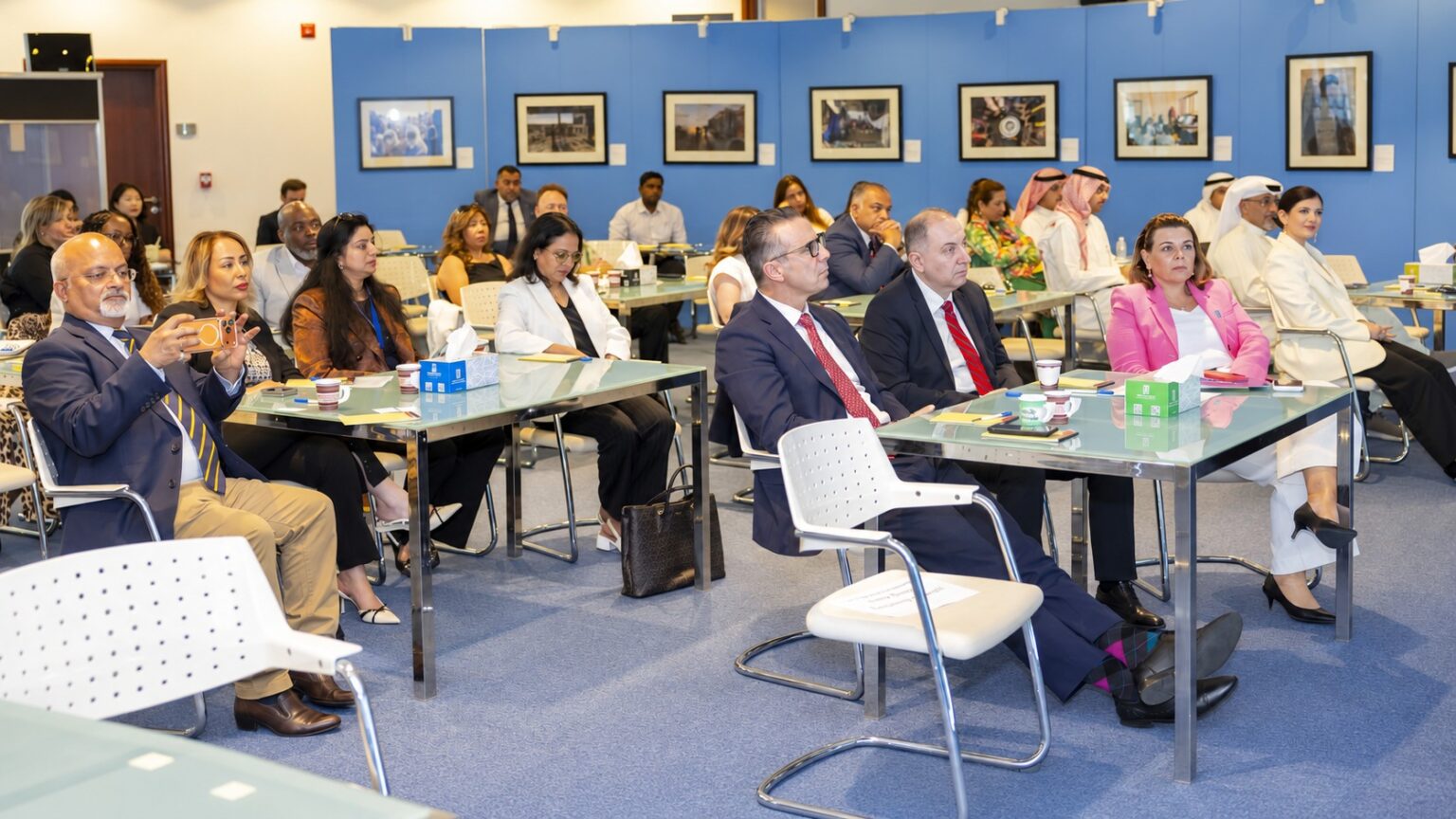
An October workshop on sales arrives as Kuwait’s business institutions examine how procurement, financing and supplier expectations are changing.
Kuwait’s small-business support programme Kuwait4SMEs will turn to the purchasing decision on 15 October, with a workshop examining how buyers assess an offer and what makes a sales conversation useful to them. The session comes as separate initiatives involving AmCham Kuwait, the United Nations Development Programme and Kuwait Finance House put supplier expectations under closer examination.
The workshop, Selling with Buyers’ Perspective, is scheduled from 10am to 11.30am at DHL Express Building C in Ardhiya. AmCham Kuwait, DHL Express and the National Fund for SME Development are listed as organisers. Its stated subjects include understanding customer needs, explaining value and recognising the factors behind purchasing decisions.
That focus connects a familiar challenge for entrepreneurs with a wider business discussion. An enterprise may understand its own product thoroughly while having less visibility over how a prospective customer compares suppliers. Recent programmes in Kuwait illustrate several parts of that decision, from communication and financing to the long-term value of a purchase.
A programme built around operating a business
The inaugural Kuwait4SMEs event in February 2025 brought entrepreneurs, executives and support organisations together at the Burj Al-Shaya Auditorium. The programme covered finance, logistics and innovation, with contributions from the National Fund and DHL Express.
A panel on local growth and international expansion brought together expertise in logistics, marketing and financial information. Participants included DHL Express commercial director Omar Habbadi and CINET chief financial officer Aram Tchaparian. The published account identified supply-chain efficiency, financial planning and cash-flow management among the subjects discussed.
Those topics establish the series’ practical setting. Winning business sits alongside the ability to finance an order, organise delivery and manage operations as a company grows. The October session concentrates on the point where a customer evaluates the proposition, adding a sales perspective to that earlier discussion of business capability.
Communication became a separate subject
The series also addressed the interpersonal side of entrepreneurship. A November 2025 workshop on soft skills, led by Dr. Arezou Harraf, explored communication, decision-making, adaptability and leadership. AmCham’s account described interactive exercises intended to connect these skills with situations entrepreneurs encounter.
The National Fund, DHL Express and Learn & Evolve were named as partners. The programme treated technical expertise and the ability to work with other people as complementary parts of running an enterprise.
The forthcoming buyer-perspective workshop gives that communication theme a more specific commercial application. Its outline centres on how customers assess opportunities and how a business explains what it offers. These are stated learning topics; the published programme does not promise contracts, introduce a procurement tender or identify a buying delegation.
The progression is useful context for the October agenda. The series has already considered how enterprises operate and how entrepreneurs communicate. Looking at a sale from the customer’s position brings those two strands together around a particular business decision.
Procurement places value in a wider context
AmCham’s separate June 2026 session with UNDP examined sustainable public procurement. It introduced businesses to international developments in purchasing and explored their relevance to suppliers in Kuwait.
UNDP’s account described competitiveness in terms that extend beyond a technical offer. Quality, innovation, responsible business practices and long-term value were part of the discussion. Participants also shared their experience of sustainability practices and the difficulties they encounter in responding to changing expectations.
For a smaller supplier, that is a different lens through which to understand a buyer. The discussion concerns how a purchase performs over time and what a supplier can demonstrate about its business. The session was an exchange about emerging expectations, rather than an announcement of a new rule applying to all Kuwaiti contracts.
A parallel UNDP dialogue with the General Secretariat of the Supreme Council for Planning and Development addressed the public purchaser’s perspective. Senior government officials considered international approaches to value for money, innovation, support for local businesses and the quality of public services.
The distinction between an initial price and the cost of a purchase across its life was central to that discussion. It connects the buyer’s assessment with how public spending can produce lasting value. Together, the two June sessions placed purchasers and suppliers within the same wider conversation, while addressing their different responsibilities.
Finance and supplier relationships meet
Another concrete example came in July, when UNDP and Kuwait Finance House reported a joint initiative spanning SME finance, procurement and third-party risk management. Teams examined how sustainability considerations could be reflected in client engagement, sourcing and the assessment of external partners.
The initiative brought departments with different functions into a shared examination of business processes. Procurement teams considered supplier relationships, while SME-finance teams focused on client engagement and financing practices. Third-party risk teams examined the assessment of external organisations.
This provides a local example of why understanding an institutional customer can involve more than understanding the end user of a product. A supplier relationship may touch several functions within the same organisation. The KFH initiative illustrates that organisational setting without establishing a standard that every buyer follows.
Against this backdrop, the 15 October workshop offers a focused addition to Kuwait4SMEs’ programme. Attendance is complimentary, registration is required and places are limited, according to the organisers. Its subject is the sales conversation itself, at a time when other Kuwaiti business initiatives are giving greater attention to the decisions and expectations on the buyer’s side of the table.