ع
ع


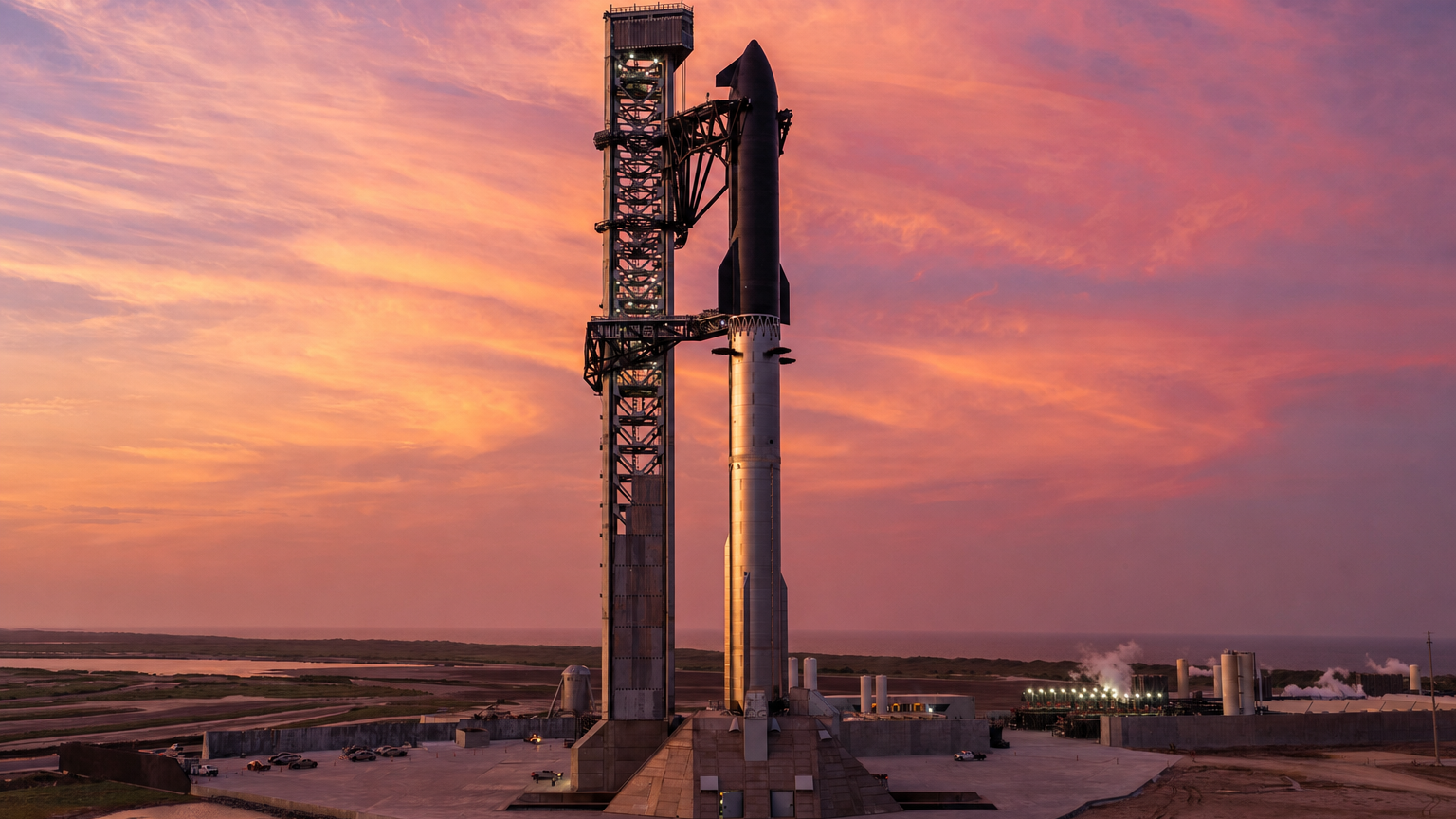
SpaceX reported that the July 24 2026 launch from Starbase in Texas marked the second flight of the Version 3 Starship and Super Heavy vehicles with all 33 Raptor engines on the booster performing through ascent before the upper stage separated cleanly. The company detailed how the Starship upper stage then completed a full-duration burn on its six engines reached the planned suborbital trajectory and deployed all 20 Starlink V3 satellites which established radio frequency and laser communications with the constellation. According to a SpaceX mission update the satellites were placed on a preplanned path and later demised upon reentry while the upper stage performed an in-space Raptor engine relight before executing a controlled descent and soft splashdown that left it intact and afloat for post-flight inspection.
A compilation maintained by Wikipedia drawing on SpaceX statements and regulatory filings places the overall Starship flight test record at eight successes and five failures through the July 2026 mission with the success rate climbing in the program’s later stages. NASASpaceFlight.com analysis of the test series noted that early flights in 2023 and 2024 frequently ended in vehicle loss or pad damage from engine interactions with the launch infrastructure while later missions progressively demonstrated heat shield performance and controlled reentry maneuvers. The same reporting highlighted that Flight 13 represented the first time a Starship upper stage remained operational enough after splashdown to transmit imagery of its heat shield and engines.
SpaceX’s account of prior testing showed that the first integrated flight in April 2023 produced excessive ground forces that destroyed the concrete launch pad and scattered debris while subsequent iterations introduced water deluge systems and improved engine reliability to mitigate those effects. By the 2025 campaign the company had achieved multiple controlled booster and ship splashdowns in both the Gulf of Mexico and Indian Ocean with Flight 11 in October 2025 completing all primary objectives including a precise landing burn on the upper stage. KeepTrack.space launch statistics indicate that 2025 saw five Starship flights with three successes before the 2026 cadence introduced the Version 3 hardware on Flights 12 and 13.
A BBC video overview illustrated the trajectory from those initial explosive attempts through incremental gains that included the first booster catch at the launch tower in 2025 and the introduction of operational payloads on later missions. SpaceX noted that Flight 13 also overcame an initial launch abort on July 16 when four booster engines failed to reach required turbopump speeds prompting engine replacements before the successful liftoff a week later. The company’s webcast commentary described the upper stage’s performance as flawless while acknowledging that only 10 of 13 planned engines ignited on the booster for its landing burn resulting in higher-than-intended impact velocity.
Industry observers at Space.com reported that the intact upper stage recovery after traveling more than 16,000 kilometres provided valuable data on thermal protection systems that had been refined across the test campaign. According to the same coverage the mission advanced SpaceX’s goal of demonstrating rapid reusability by exercising satellite deployment hardware and in-orbit engine restart capabilities that will be required for future orbital operations. Florida Today reporting added that the flight paves the way for expanded Starship activity potentially including launches from Florida facilities before the end of 2026.
SpacePolicyOnline.com documented that the July 24 outcome followed a pattern of steady engineering refinement with the Version 3 booster representing a clean-sheet design that still faces challenges in the complex choreography of boostback and landing burns. The outlet noted that despite the booster’s hard splashdown the mission met its core test objectives and supplied telemetry that will inform the upcoming Flight 14 scheduled for late September 2026. Public data from multiple tracking sources confirm that cumulative improvements have shifted the program from basic flight survival toward operational demonstrations such as the Starlink V3 deployment seen on the 13th test.