ع
ع


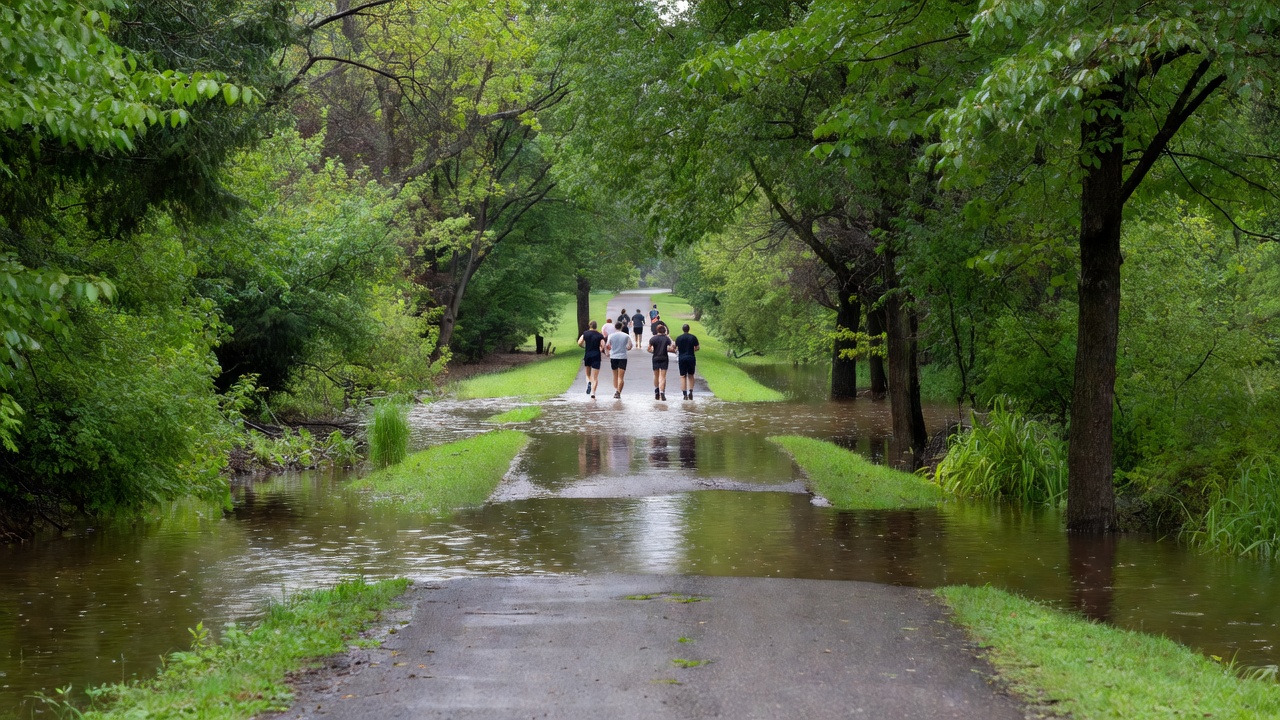
The Racefaster Half Marathon in Paramus saw approximately 250 runners complete the 13.1-mile course on September 13 despite torrential downpours that triggered flash flooding along the Saddle River trail, according to compiled race results. Participants encountered multiple sections where water reached up to their waists, with some athletes gripping railings to avoid being swept away by the current, videos and accounts shared with NBC New York and the New York Post showed. The scenes quickly spread on social media, drawing astonishment from the running community over conditions that turned a standard race into an unexpected survival challenge.
Organizers postponed the start by two hours from the original 8 a.m. time amid morning rains but elected to proceed as scheduled at 10 a.m. even after flash flood warnings had been issued for Bergen County, runner Garrett Nathan told NBC New York. Nathan recounted checking repeatedly for cancellation notices from race directors while receiving repeated alerts on his phone urging caution in the area. The choice to continue has prompted questions from participants about whether safety protocols adequately accounted for the rapidly deteriorating weather.
Former “The Bachelorette” contestant Zac Clark captured one of the widely circulated videos during the event, stating “Bro, this is nuts” as he panned across the flooded underpass where other runners clung to guardrails for stability, in footage distributed via Storyful to outlets including the New York Post. Clark, who finished third in his age group with a time of 1:40:42, highlighted both the danger and the determination required to complete the course under such circumstances. Additional clips posted to Instagram and X depicted runners fording what they described as river-like crossings at least five or six times during the race.
The National Weather Service data indicated that parts of Paramus received between 4.52 and 4.94 inches of rain on September 13, an amount sufficient to overwhelm local drainage and produce widespread flash flooding beyond the race route itself, according to regional meteorological reports. This volume of precipitation in a brief window created swift-moving water along the trail, turning low-lying sections into hazards that extended to nearby roads where vehicles were also stalled or submerged in the broader Northeast storm system. Comparable intense rainfall events have strained New Jersey’s infrastructure in prior years, with similar flooding incidents documented during past summer and early fall storms.
No serious injuries occurred among the competitors, and all registered finishers crossed the line, with the winner recording a chip time of 1:22:45 and the final participant completing the course in 3:40:52, race timing statistics showed. Emergency responders in the region assisted with related flooding issues, including submerged cars near the New Haven train station in Connecticut on the same day, local news coverage from WFSB reported. The episode has fueled discussions within endurance sports circles about balancing event scheduling against evolving weather risks amplified by changing climate patterns.
Several runners expressed surprise in interviews that the course was not modified once flooding intensified, with one participant noting chest-deep water in spots that required constant vigilance to maintain footing, according to accounts given to CNN and BroBible. Race directors have yet to release a detailed explanation addressing the decision-making process as criticism circulated online on September 14. The event underscores broader challenges for organizers of outdoor athletic competitions in areas prone to sudden severe weather.